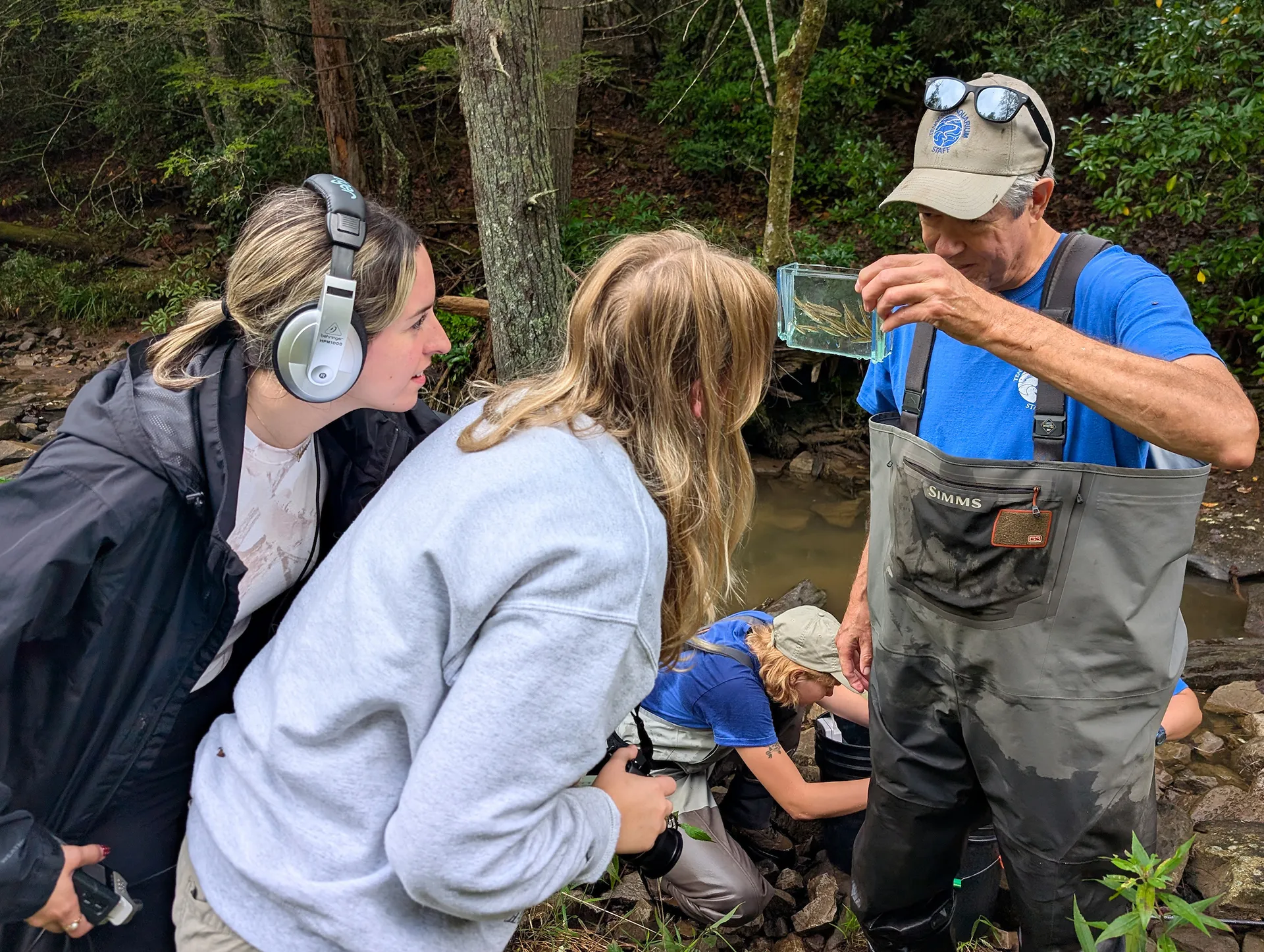
Standing near the edge of a gently flowing stream atop Walden Ridge north of Chattanooga, four journalists recently gathered around a small acrylic container held aloft in dappled sunlight beneath a waning canopy of leaves. Inside the acrylic viewer – affectionately called a “pho-quarium” by freshwater scientists with the Tennessee Aquarium Conservation Institute for its use in photographing fish – one of the most endangered fishes in the country gently swished its tail, cooperatively displaying its black, yellow and red coloration for the journalists to document.
These students from the University of Tennessee at Chattanooga were tagging along on this field outing to tell the story of the Laurel Dace — and the Conservation Institute’s effort to preserve the species — for Rising Rock, the university’s student-run multimedia publication.
Equipped with still and video cameras and audio recorders, they followed biologists as they sampled for adult and young-of-the-year fish to keep tabs on the health of the Laurel Dace population in Bumbee Creek, one of the last streams where this imperiled minnow can still be found.
Aquatic Conservation Biologist Dr. Bernie Kuhajda is always excited to introduce people to a species that only a handful of people in the world have ever seen in person. Having this group follow the team into the field was particularly special, though, thanks to the students’ enthusiasm for their work, he says.
“To actually get into the stream and see live Laurel Dace and see the babies, they were so stoked,” Kuhajda says.
You can read their story about the Conservation Institute’s efforts to protect and restore this critically endangered species on Rising Rock here.