On Exhibit
Delta Country
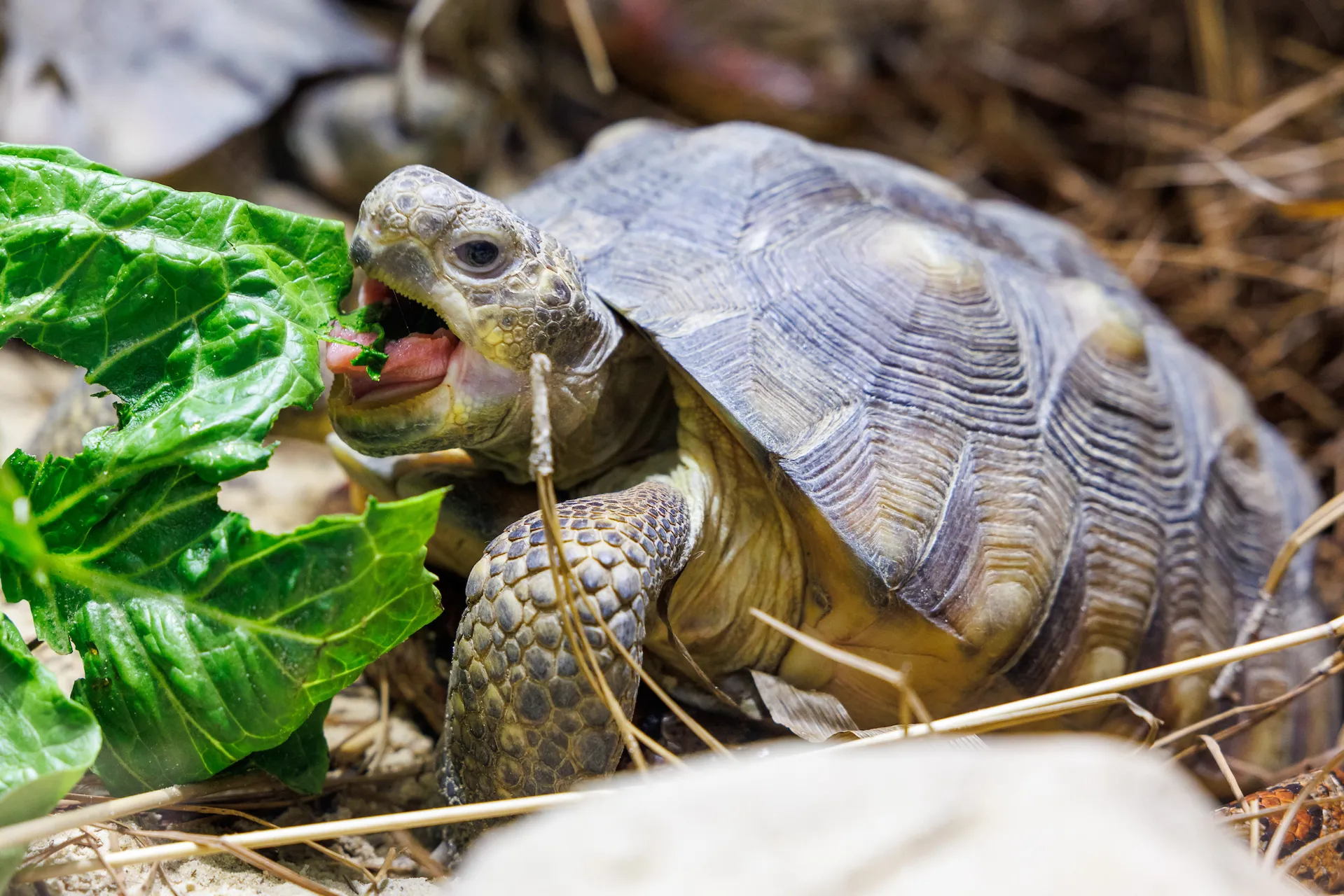
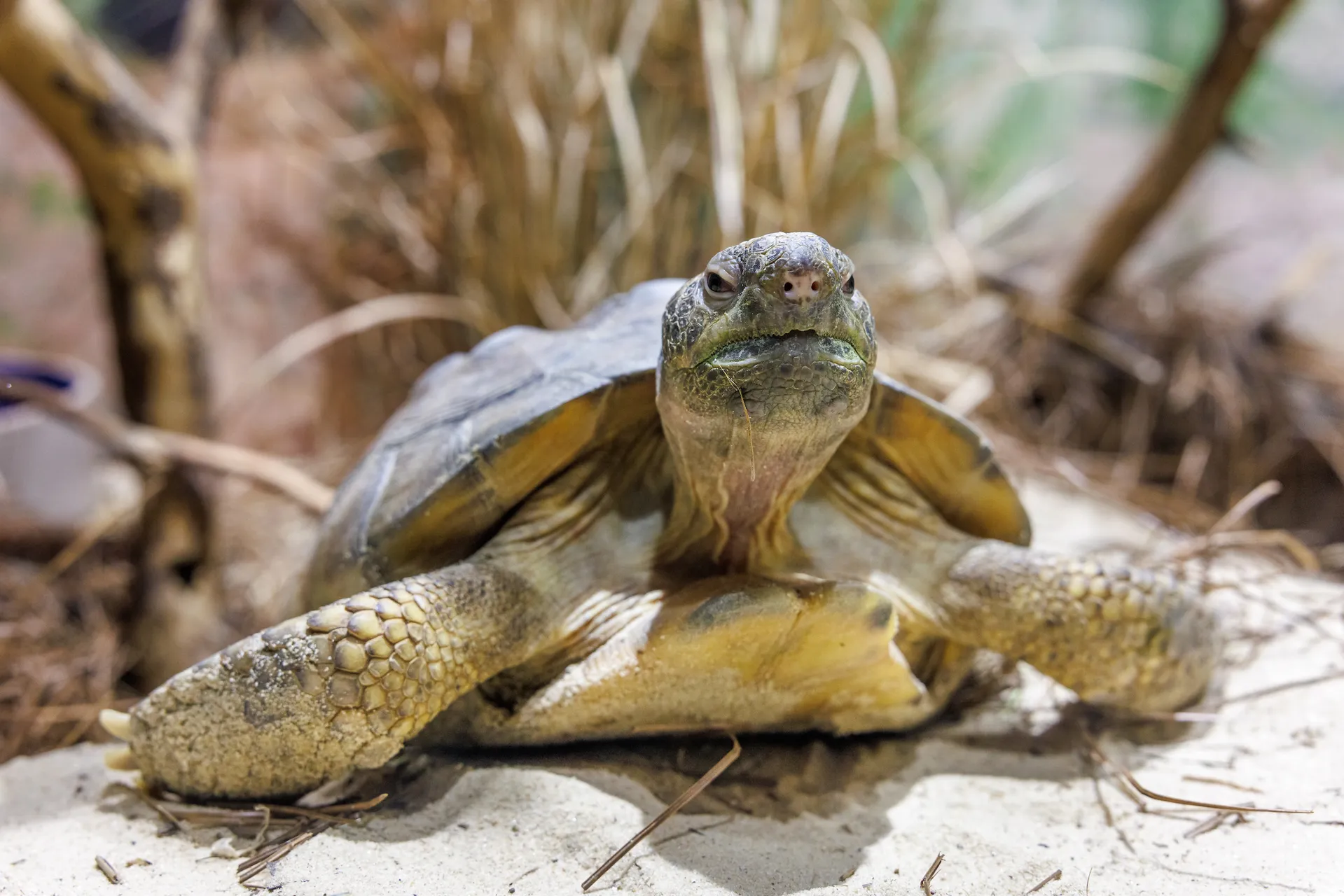
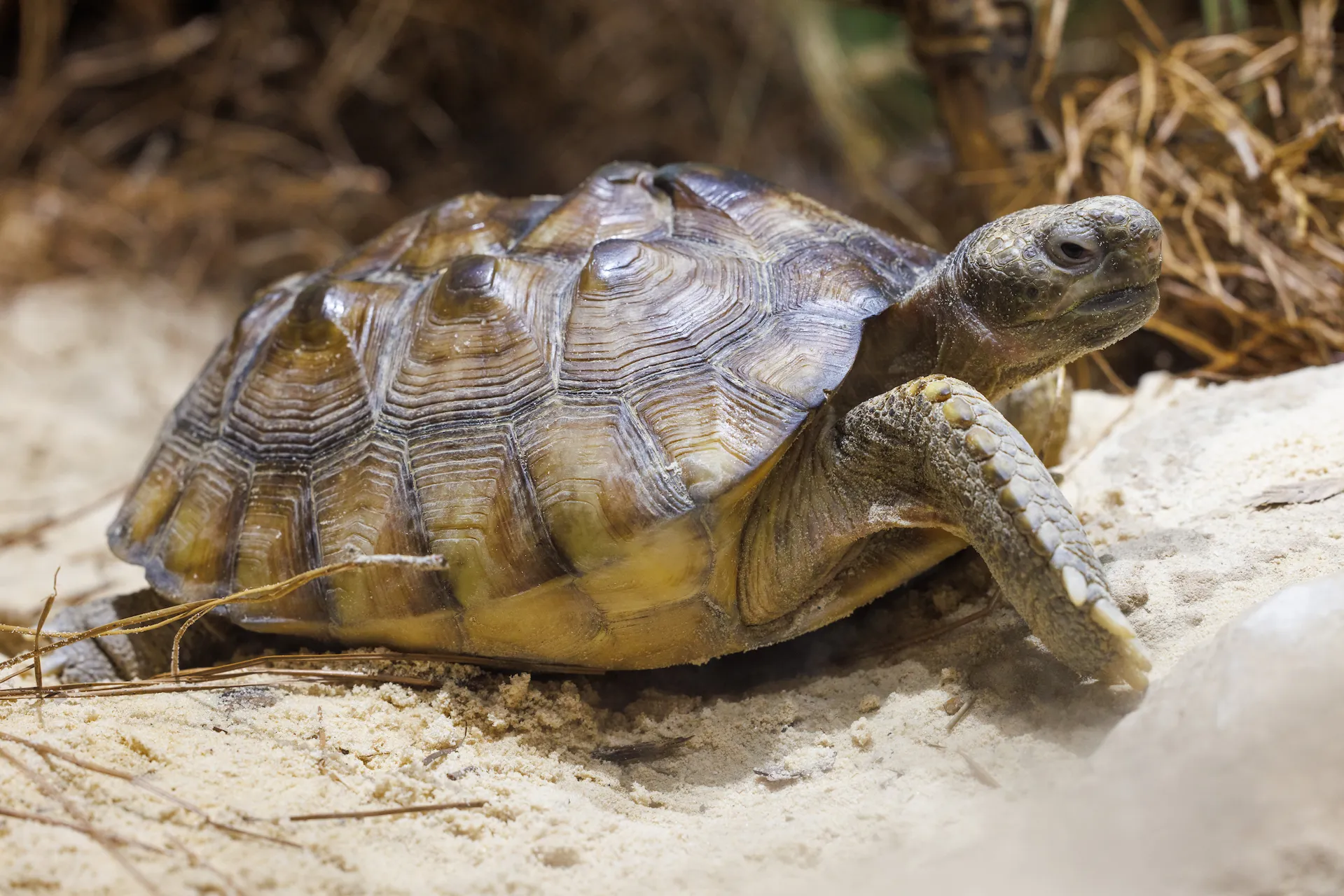
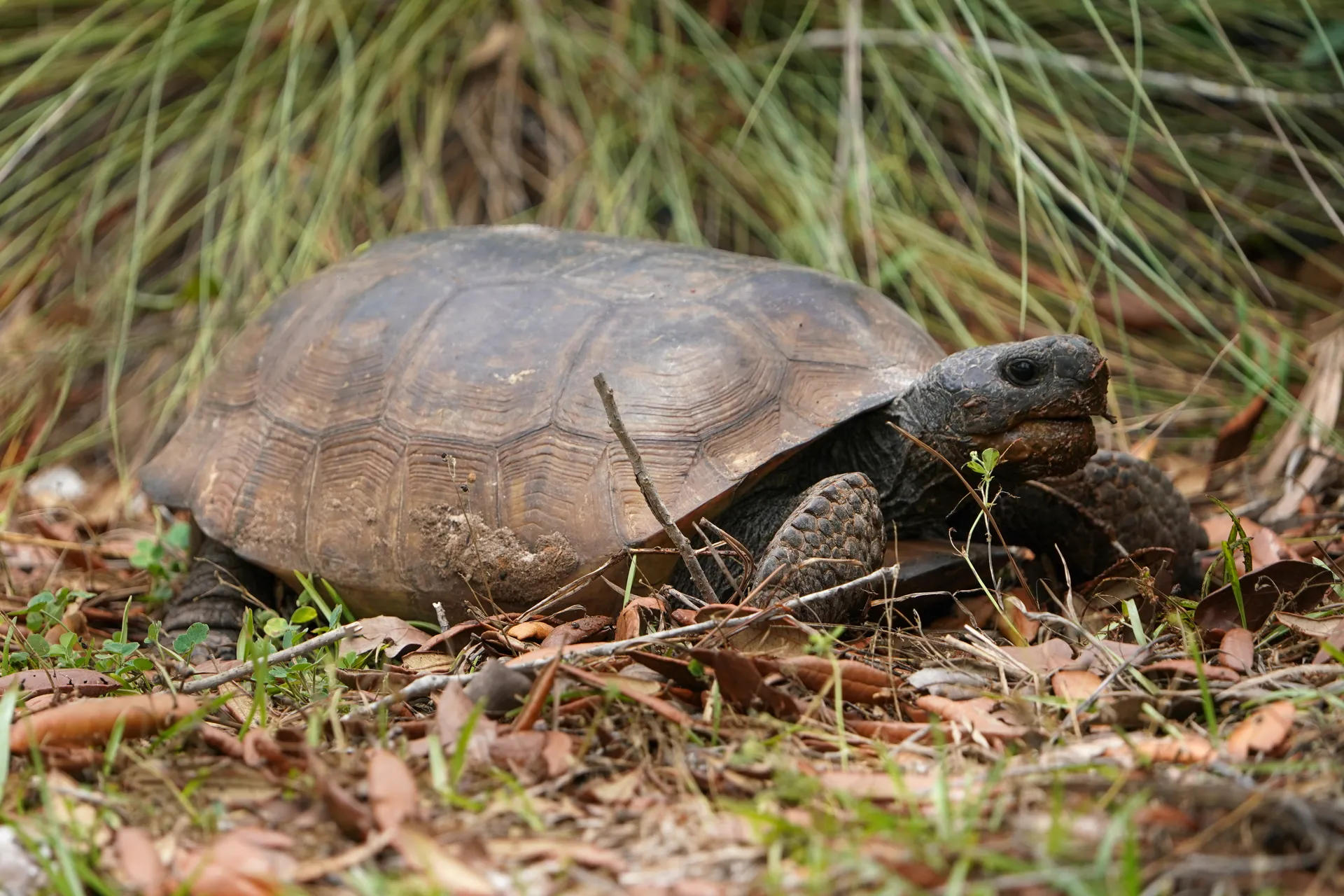
These stout reptiles top out at just 15 inches long but are built for a life of digging. Their powerful, flattened front legs easily scoop away earth like built-in shovels. Meanwhile, their hind feet act as tampers to firmly pack down soil and shore up tunnel walls.
A single Gopher Tortoise burrow can stretch up to 30 feet long and descend as much as 10 feet below the surface. The burrows are typically wide enough for a tortoise to turn completely around in and maintain relatively stable temperatures year-round.
More than 350 species, from Burrowing Owls and Gopher Frogs to the federally threatened Eastern Indigo Snake, use these burrows for shelter.
Because so many species rely on them, Gopher Tortoises are considered a keystone species when it comes to the health and stability of their ecosystem. Once Gopher Tortoises disappear, the effects are felt by dozens of other animals that depend on their burrows.
A distinctively southern species, Gopher Tortoises are found nowhere else in the world and are the only native U.S. tortoise species east of the Mississippi River. Protecting them means preserving a living piece of the Southeast’s natural heritage.