To most of our guests, the sum total of the Tennessee Aquarium is the River Journey and Ocean Journey buildings. In reality, though, our footprint is much larger than the galleries experienced by hundreds of thousands of visitors each year.
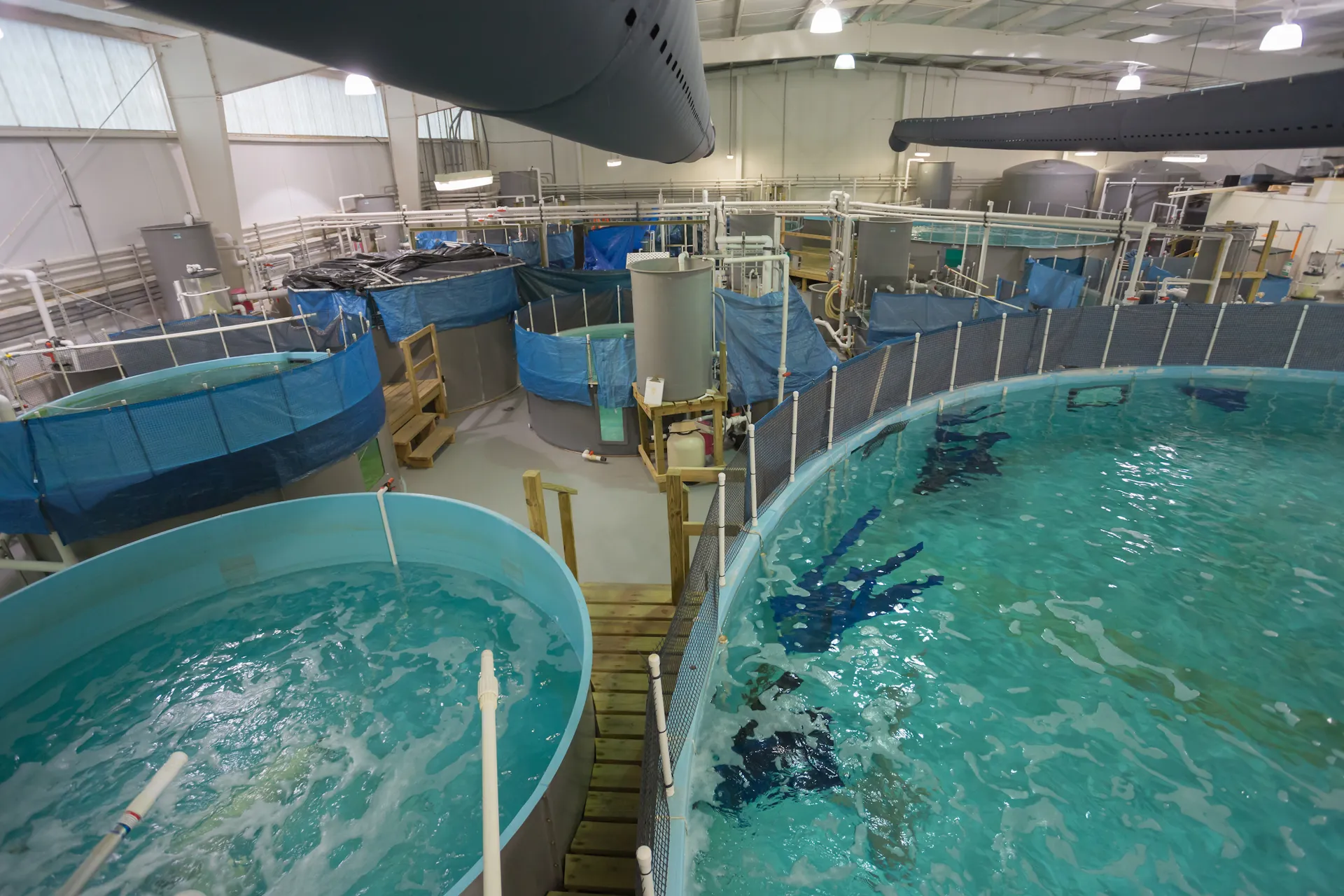
In addition to the Tennessee Aquarium Conservation Institute field station, the IMAX 3D Theater and the newly opened S.T.R.E.A.M. Learning Center, we also maintain the Animal Care Facility (ACF). This off-site space was constructed 20 years ago to host animals in need of more focused attention or to serve as their temporary home while they wait to move into or out of the Aquarium.
For three years, it has also been my office.
I first learned about the Aquarium’s off-site care facility while interning at the Aquarium in 2014. While shadowing an aquarist, a large school of bass and sunfish had finished their mandatory quarantine period and needed to be moved into an Aquarium exhibit. That day was my first visit to the ACF and, upon reflection, the experience that kick started my interest in animal quarantine.
Despite operating out of view of the public, working at the ACF is one of the most exciting jobs the Aquarium has to offer. The ACF is a dynamic place, with animals constantly changing and moving around. Seeing to their needs and navigating the logistics of those moves requires a level of independence that I find both challenging and rewarding.
Why quarantine?
Primarily, the ACF is a quarantining space. All the fish that join the Aquarium’s living collection go through a mandatory quarantine period. During this time, they are isolated, likely receive some kind of medical treatment to ensure disease does not break out in the exhibits, and get accustomed to life at the aquarium.
Each group of animals undergoes a quarantine plan based on set protocols and research into its life history and individual back story. One of the systems at the ACF is picked as the animal’s temporary home and is set up to meet their needs.
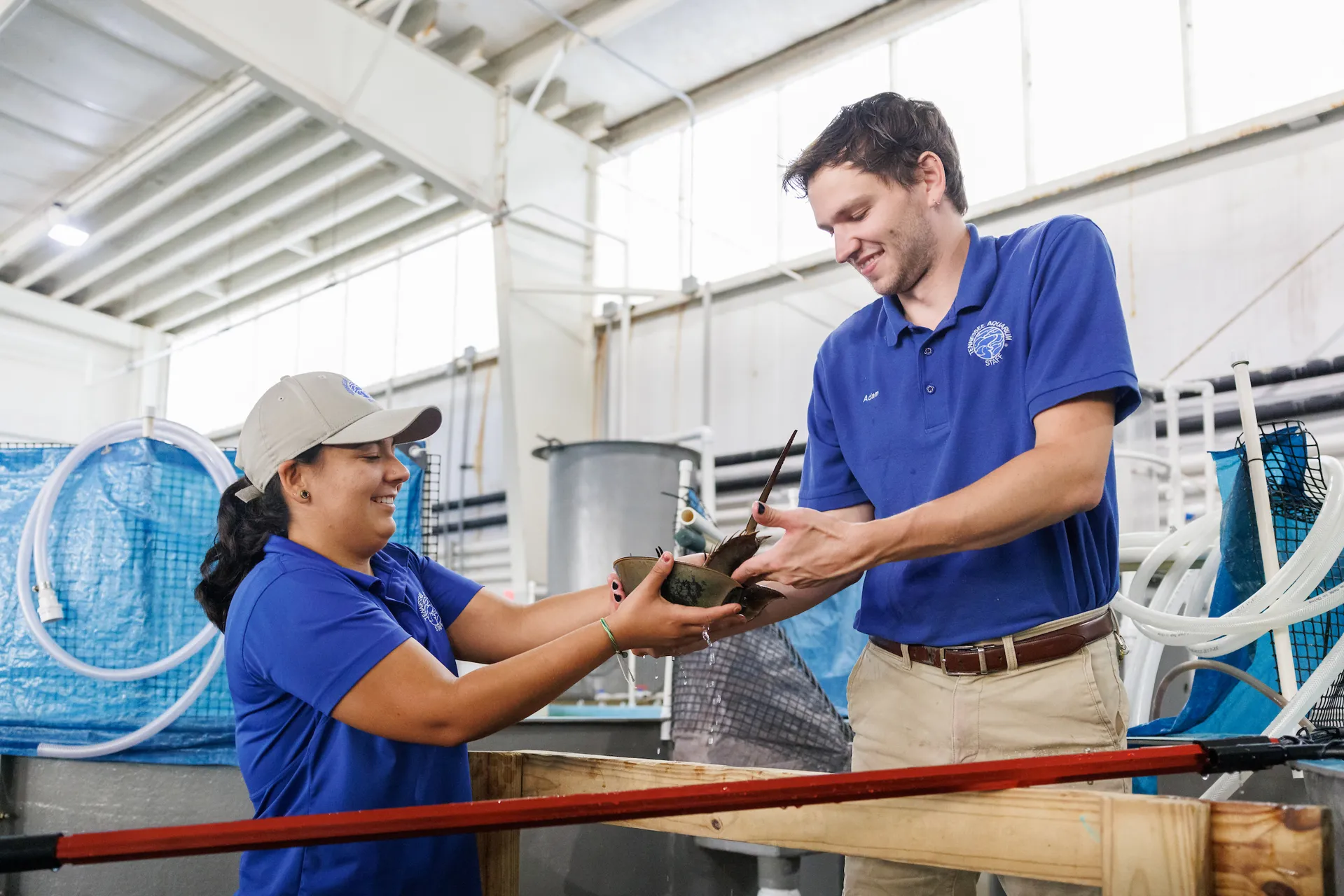
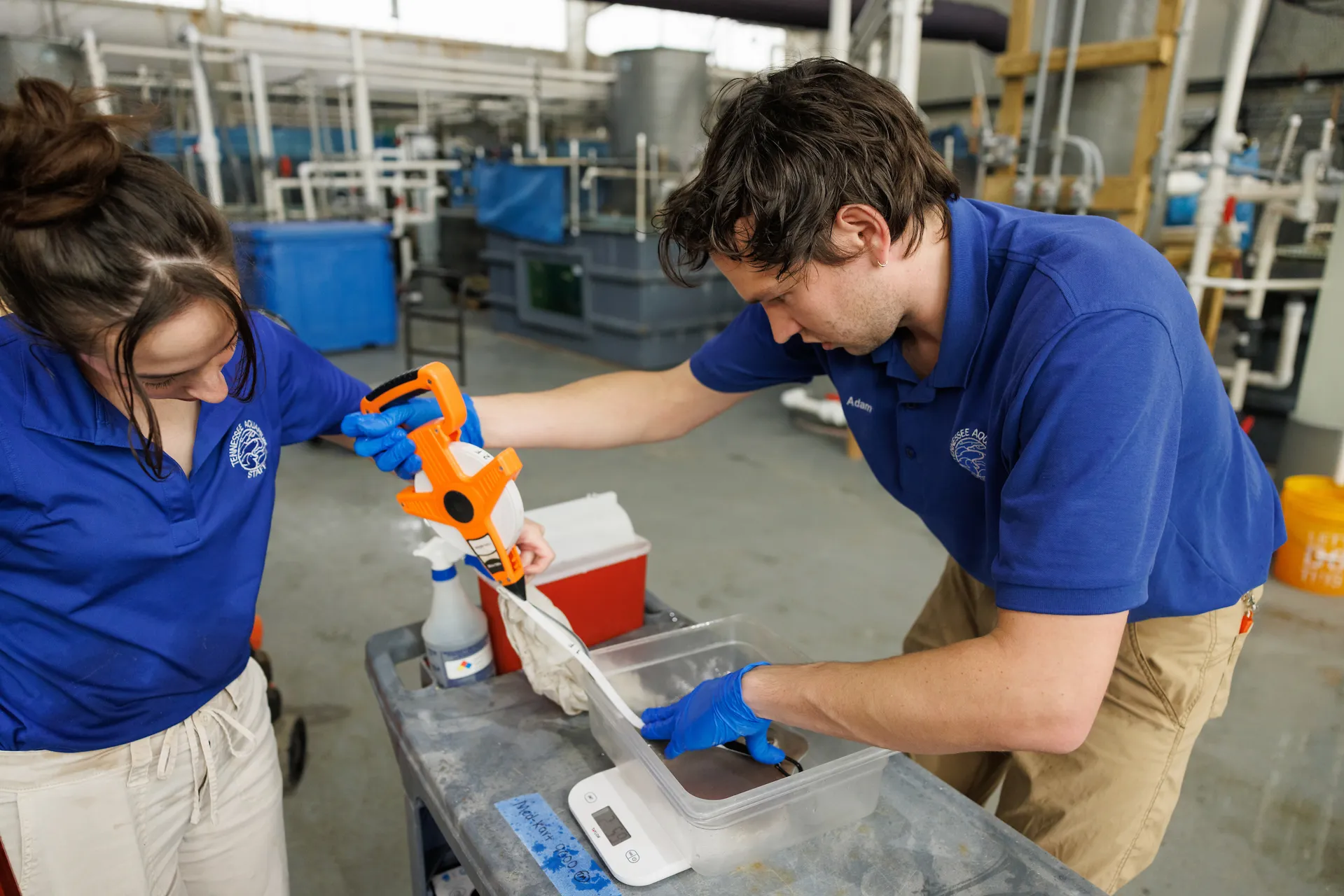
Once they arrive at the ACF, I sample each animal by taking a small clip of their gills and a sample of their slime coat to check for parasites that might be hitch-hiking along with them. Then, they are acclimated to their new system and aquatic environment and, in some cases, receive their first medical treatment.
Constant change
The animals undergo a quarantine period of at least 60 days, during which we monitor their behavior and eating patterns. The animals hosted at the ACF will also engage in training for behaviors that will be important to their wellbeing once on exhibit.
Since each system at the ACF can be easily converted to salt or freshwater, we are able to have a lot of flexibility to accommodate a large number of animals with a wide variety of environmental requirements.
This dynamism is my favorite part of the ACF. In one system, there might be a large female Sand Tiger Shark (Carcharias taurus) swimming by, and a few feet away, you can see a juvenile Arapaima (Arapaima gigas) watching you work.
Working at the ACF means flexibility is key.
Adam Johnson
Animal Care Facility Lead
The challenges of relocation
The most rewarding days come when animals have cleared quarantine and are ready to move to exhibit to start their role as an educational animal and a representative of their species.
A large part of my job is coordinating these animal moves. Animals are carefully moved from their home at the ACF into a mobile system for transport to the Aquarium, where they are acclimated to conditions in their new exhibit. This process can be really quick and easy or quite complicated.
Days where the team is moving a large shark, for instance, often involve upwards of eight aquarists to collect, transport and acclimate these powerful animals. While these days can be stressful, successfully introducing an animal to the public and seeing it thrive on exhibit makes the process of quarantining and transporting them worth it.
Working at the ACF means flexibility is key. There are only two aquarists that regularly work here throughout the week. Together, we coordinate moves, do the daily maintenance on our 13 systems, mix the salt water we use for our marine systems, and prepare and feed out the diets for all the animals.
We are also the front line in catching any infrastructural problems that arise, such as pump failures or leaks, since we are generally the only people monitoring these systems on a regular basis.

Oscar’s new home
While the main goal of the ACF is to receive animals and get them through quarantine as smoothly as possible, sometimes the facility also must become a long-term holding site for animals that require more specialized care.
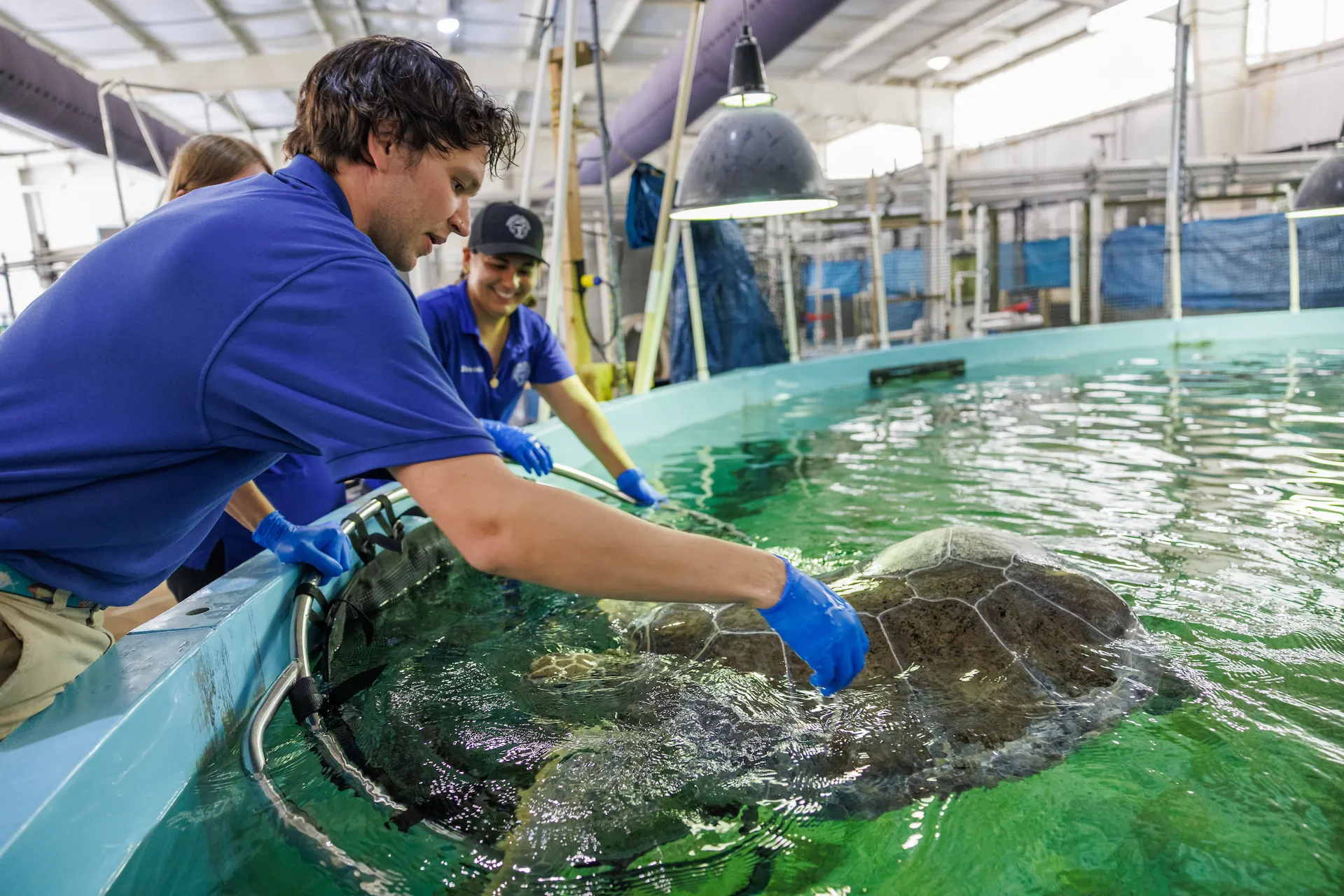
Our most-famous long-time resident is a Green Sea Turtle (Chelonia mydas) named Oscar. Oscar was rehabbed after a boat strike in 2005 and became a part of the Aquarium’s collection once it was determined that the lingering effects of his injury made survival in the wild unlikely.
After many years in the Ocean Journey building’s Secret Reef exhibit, Oscar was relocated to the ACF to make it easier for us to treat health complications stemming from that 2005 injury. Once we realized Oscar was not going back to exhibit for at least a few years, our plans for some of the ACF space began to shift to meet his needs.
An outdoor system where Oscar can spend his summers basking in the sun was completed in the late summer of 2024. He made some significant improvements from being outside, and his care regimen now includes relocating him to this alfresco pool with the return of warm weather each year.
Every morning when I pull in to start my day, I walk over to check on Oscar and am greeted with a little spray of salt water and some excited swimming. Those interactions are an ideal time to stop and reflect on why the ACF is so special and the role it plays in helping the Aquarium to accomplish so many of its goals. We are able to provide the best care possible for Oscar and our other — more temporary — guests at the ACF because we invested in a space that can adapt to our collection’s needs.
Conservation at the ACF
Another project that has taken up some ACF floor space is the Barrens Topminnow (BTM) (Fundulus julisia) ark project. This critically endangered little fish is found exclusively in Middle Tennessee on the Barrens Plateau and has been the subject of our conservation efforts since the late ’90s.
The Aquarium has been maintaining an ark group for this species to bolster its numbers through reintroductions and to safeguard it against the possibility of extinction in the wild. I have been lucky enough to have worked with our Barrens Topminnows since I started working here. The goal of this program is to keep a genetically healthy representative group in professional care so that we can reintroduce them to their native range as viable habitat is restored.
In a sense, the Barrens Topminnow and I have had a similar story arc at the ACF since the ark population project relocated to the ACF at the same time I did. Working with a native fish that the aquarium has working to protect for so many years is a daily reminder to me of all the conservation that is possible through an institution like the Aquarium.
No day the same
Every day at the ACF is different, which I find to be one of this space’s most appealing qualities. I am almost constantly researching something new, whether it’s how a certain pump operates or the internal anatomy of an eel.
There really are no boring days out here, and it’s time I wrap this up because I was just notified that a box of fish has arrived. Time to go unpack them and start another quarantine journey!