After decades of successfully breeding and rearing baby turtles, fish, lizards and penguins, the Aquarium recently welcomed a joyful bundle of a furrier variety.
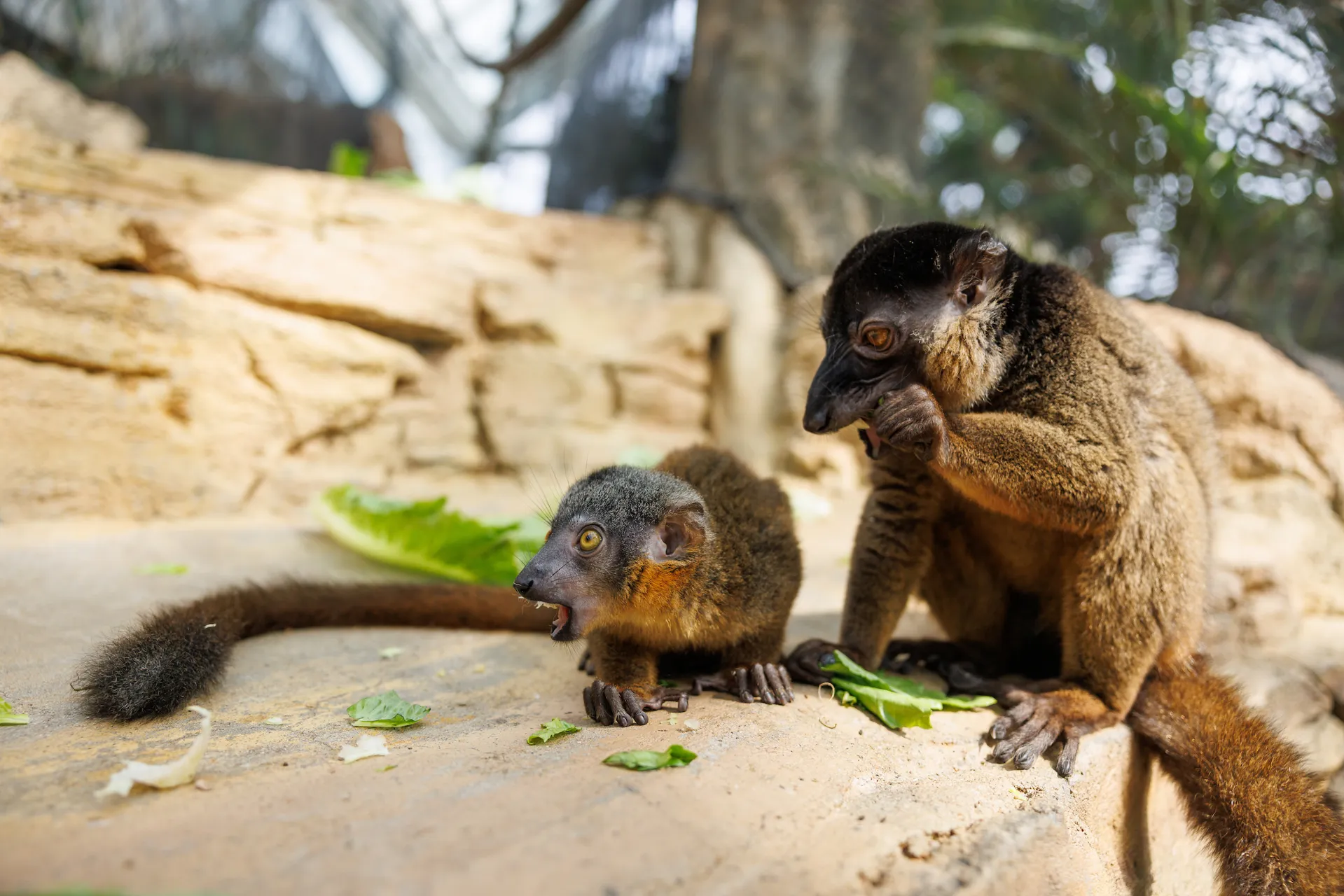
Earlier this spring, a pair of Red-collared Brown Lemurs, Kintana and John, residing in the Lemur Forest exhibit became first-time parents to an adorable and increasingly adventurous infant.
The baby’s arrival was cause for celebration, but despite months of hopeful preparation, the birth was largely unanticipated.
John and Kintana were seen breeding in late 2025, but Red-collared Brown Lemurs don’t exhibit many outward physical changes during pregnancy. Testing to verify if Kintana was expecting would have required the use of general anesthesia, which was deemed unnecessarily risky.
A big surprise
While delivering an early afternoon snack to the Red-collared Brown Lemurs on April 23, however, Senior Animal Care Specialist Sam Grote was surprised to see that, not only was Kintana indeed pregnant, she was actively in labor.
“I saw an arm sticking out — an additional limb that was not there prior — so that was very much a case of ‘OK, this is happening,’” Grote recalls, laughing. “It was a big surprise.”
Within seven minutes, the first baby born in Lemur Forest was delivered successfully under observation by Grote, Curator of Forests Kevin Calhoon and Director of Animal Health Dr. Chris Keller.
This birth marks a significant milestone in the Aquarium’s care for these charismatic mammals. The first lemurs arrived in the Ocean Journey building a decade ago in the leadup to Lemur Forest’s opening in March 2017. This sprawling habitat’s industry-leading backup facilities were designed from the ground up with future breeding and infant care in mind.
“This is something that we have worked for since lemurs arrived here,” says Ocean Journey Lead Animal Care Specialist Maggie Sipe. “We’re very proud and emotional about it, and it’s really fun to have come this far and finally see it happen.”
Keeping watch
Due to concerns with separating the baby from its parents for a checkup in the early days, the Aquarium’s specialists adopted a hands-off approach and closely monitored its behavior from afar.
Despite being new to their roles, however, John and Kintana have proved themselves to be tender, diligent parents.
“They’re just a big, happy family,” Dr. Keller says. “As a veterinarian, it’s hard to stand back and watch a young mother figuring things out as she learns to take care of a baby, but in this case, she’s been doing a great job.”
“We’re so proud of this birth. From how we care for them to the home we create for them here, this is a testament to the whole husbandry staff, from top to bottom.”
Here comes the Soleil
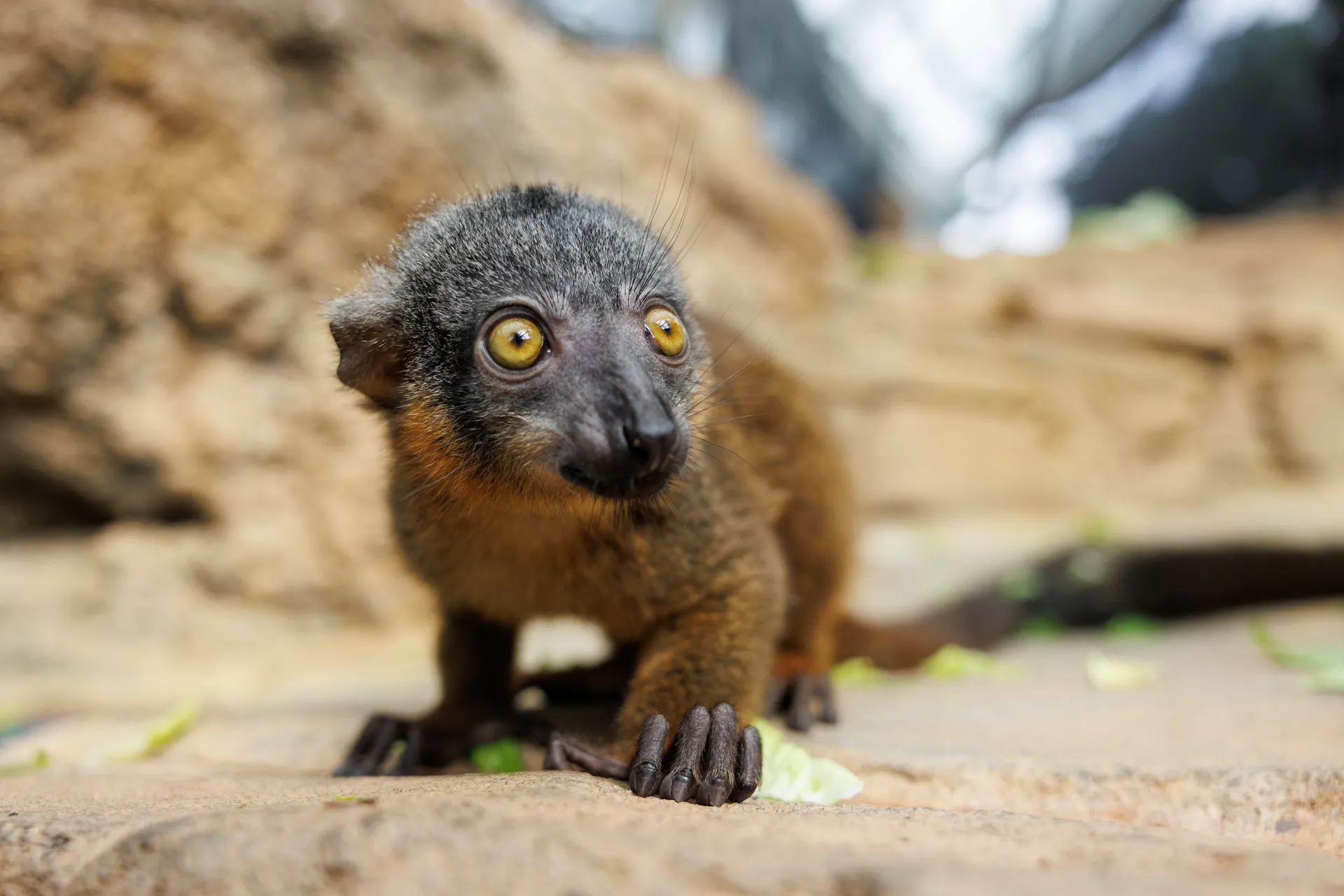
Red-collared Browns are one of only a handful of lemur species to exhibit sexual dimorphism, physical traits that distinguish males from females. Aquarium experts watched for changes in the baby’s appearance that would identify it as male or female.
Leading up to a “shower” celebrating the baby’s arrival, the public was invited to vote on a name for Lemur Forest’s newest addition via an online contest. The pre-selected pool of names — male and female options — were all French-derived. Themes like this ensure consistent naming for babies when a species is being managed across multiple facilities through an Association of Zoos and Aquariums (AZA) Species Survival Plan.
On July 9, the community gathered in the Lemur Forest gallery to learn the baby’s gender and which name had won the vote. After much guessing and amidst growing excitement, it was announced that the baby was female, and her chosen name would be “Soleil,” which is French for “sun.”
This name is extra fitting because Soleil was born around 1 p.m., an uncommon mid-day arrival for Red-Collared Brown Lemurs, which typically deliver their young overnight.
A rare romance
When the Lemur Forest exhibit opened in March 2017, the Aquarium initially exhibited only Ring-tailed Lemurs and Red-ruffed Lemurs. The first pair of Red-collared Browns arrived in 2019.
Like all lemurs, Red-collared Brown Lemurs are endemic to — exclusively found in — Madagascar. This species is classified as endangered by the International Union for Conservation of Nature and is rarely exhibited.
The entire American population of Red-collared Browns in human care comprises just 51 individuals across 14 facilities accredited by the AZA. In the first half of 2026, six Red-collared Browns were born at AZA facilities in what Sipe describes as a “baby boom.”
A story of loss and love
In early 2024, the Aquarium’s first female Red-collared Brown Lemur, Jessie, passed away due to medical complications. The loss of his mate left John alone, a situation that’s especially hard on highly social mammals like lemurs.
Red-collared Brown Lemurs aren’t widely exhibited among zoos and aquariums, and finding a female who could be paired with John was difficult and time-consuming. In the interim, his caretakers developed novel enrichment activities that simulated grooming behavior to provide the critical social interaction he needed.
In 2025, an ideal candidate to pair with John was identified. This female, Kintana, moved to the Aquarium from her previous home at the Dallas Zoo. She and John immediately hit it off, leading to the welcome addition of Soleil to their family.
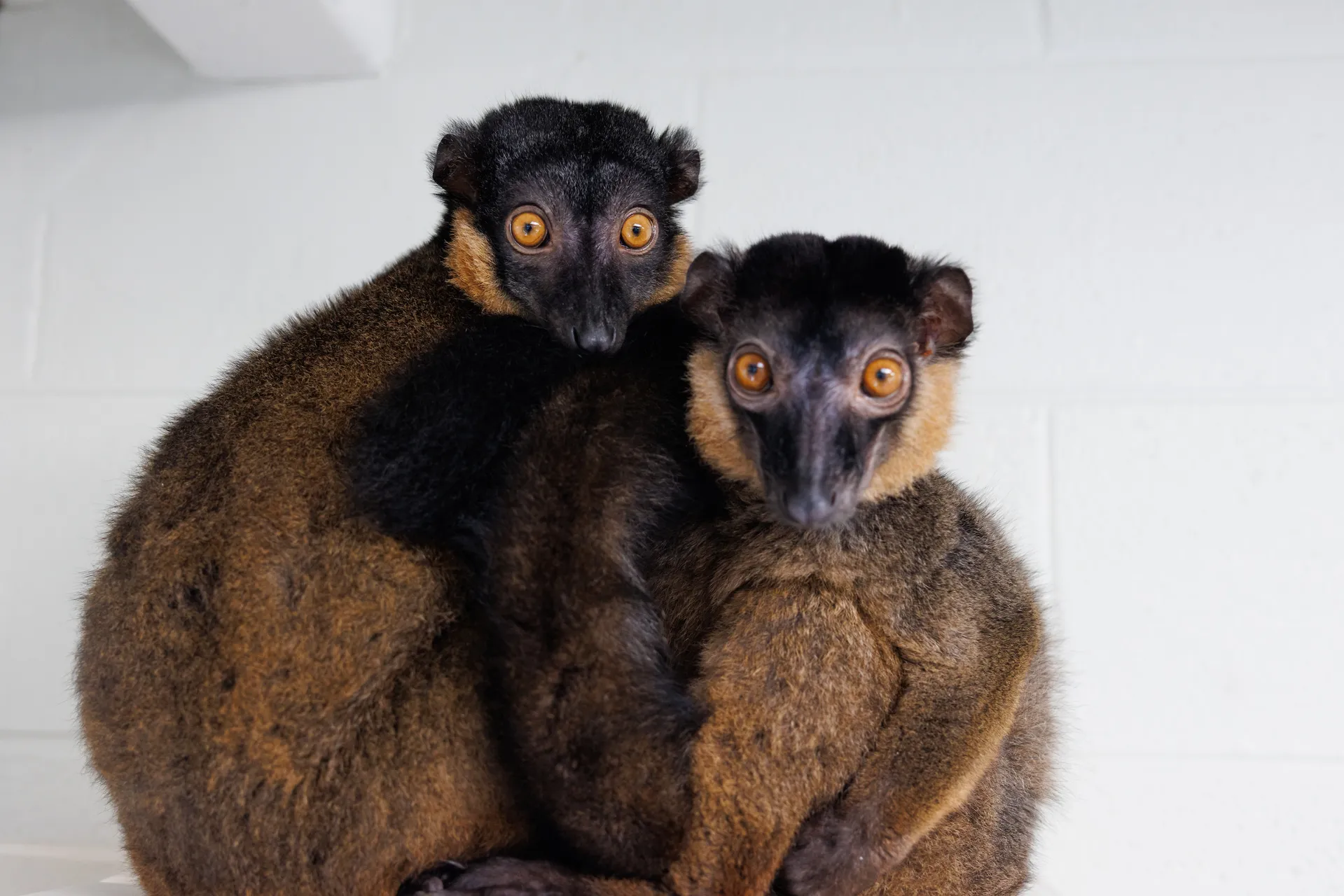
This is welcome news for Red-collared Browns. When John and his first mate, Jessie, arrived at the Aquarium, seven years ago, there were only about 30 of their species living in zoos and aquariums. By comparison, Ring-tailed Lemurs are far better-represented, with more than 600 in human care at AZA facilities.
In that sense, Soleil’s arrival is not just a celebratory milestone and a delightful surprise for visitors but a fulfillment of one of the Aquarium’s core principles, Calhoon says.
“One of our goals is to work with unique animals — species that people don’t see very often,” he says. “This is just another example of a very special species of animal people don’t see very often.
“And when they’re breeding, you can’t ask for more.”