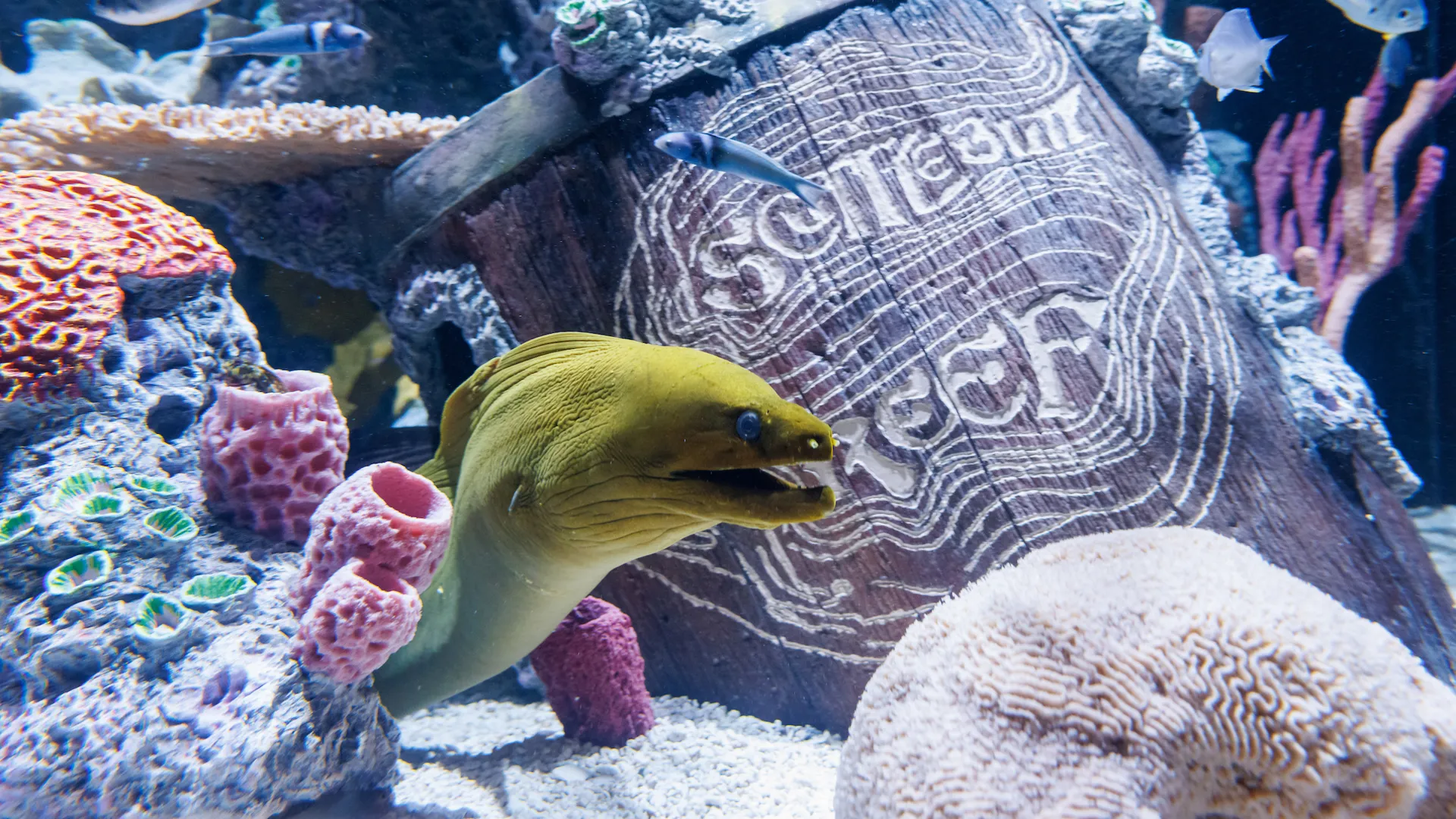
From punch-packing crustaceans to glow-in-the-dark sharks, our new Scuttlebutt Reef gallery is overflowing with unexpected marine life. As you explore this vibrant new addition to the Ocean Journey building, we invite you to slow down, look closer and discover some of the new animals that will challenge your expectations about the underwater world.
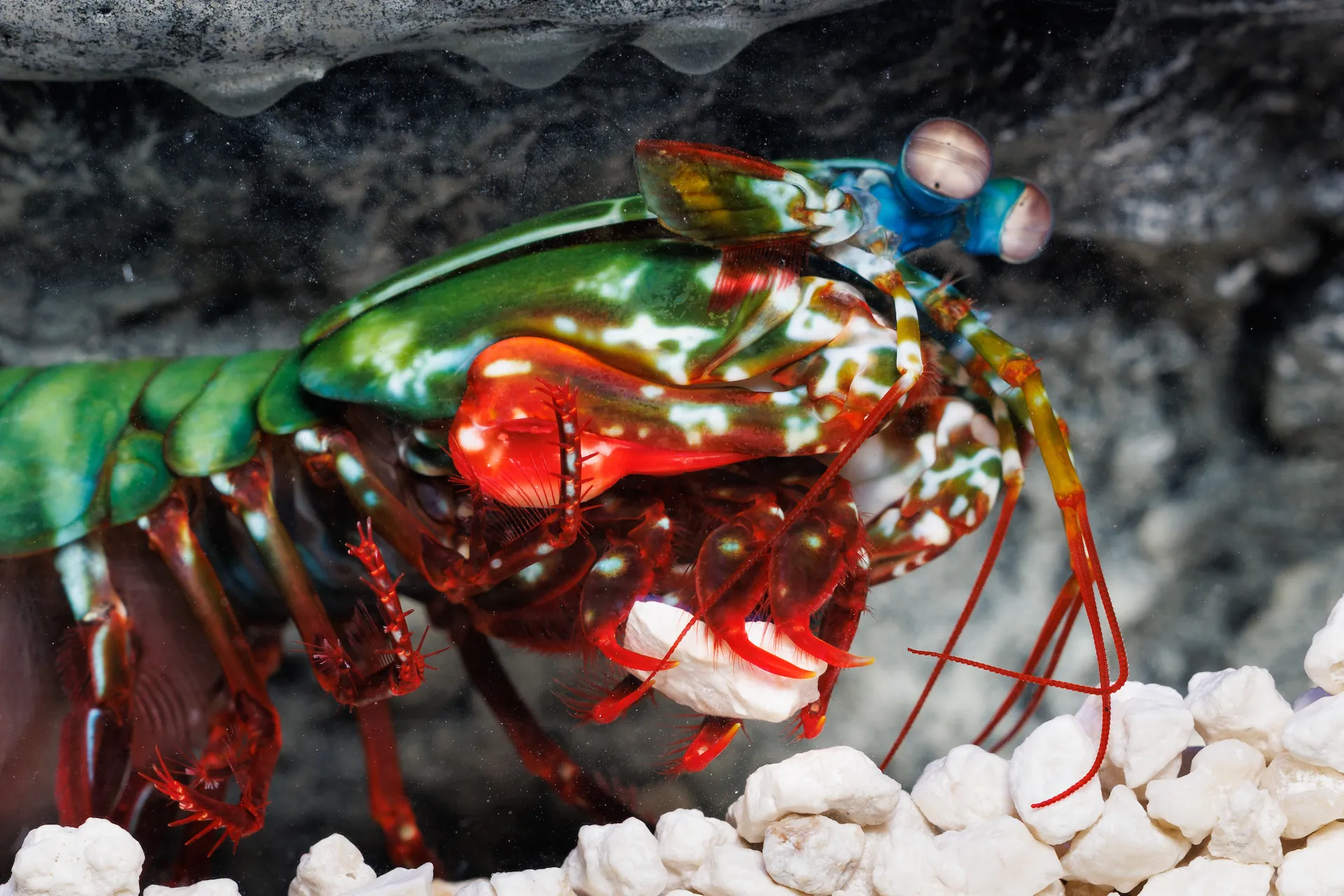
Peacock Mantis Shrimp
Peacock Mantis Shrimp are among the largest of mantis shrimps in the ocean, capable of reaching up to seven inches in length. (Never mind their similar appearance to true shrimps, the Peacock Mantis Shrimp — and other stomatopods — ditched other Malacostracans on the taxonomic charts eons ago to do their own thing.)
Ranging across the warm waters of the Indo-Pacific Ocean, the Peacock Mantis Shrimp inhabits coral reefs and sandy ocean bottoms, where it digs U-shaped burrows in the substrate to wait for unsuspecting prey to wander past.
These brightly colored crustaceans may be diminutive, but don’t be fooled by their small stature. They boast the most powerful punch in the animal kingdom.
Peacock Mantis Shrimp are equipped with a dactyl club — a dense, hammer-like appendage they use to strike prey or defend themselves against predators. Using this formidable weapon, the shrimp can strike at more than 50 miles per hour with as much as 340 pounds of force.
Their strike accelerates so quickly — at about the speed of a .22 caliber bullet fired from a handgun — that it heats the surrounding water around strike. This super-fast movement vaporizes the surrounding water, creating an implosion known as a cavitation bubble. This further weakens the “shrimp’s” prey and makes it easier to break through the tough exteriors of marine invertebrates like crabs, mollusks and (actual) shrimps.
[During your visit: Test your might versus that of the Peacock Mantis Shrimp by hitting a pressure-sensitive pad near its exhibit. The readout will show how strong your “punch” is in comparison to this diminutive prizefighter.]
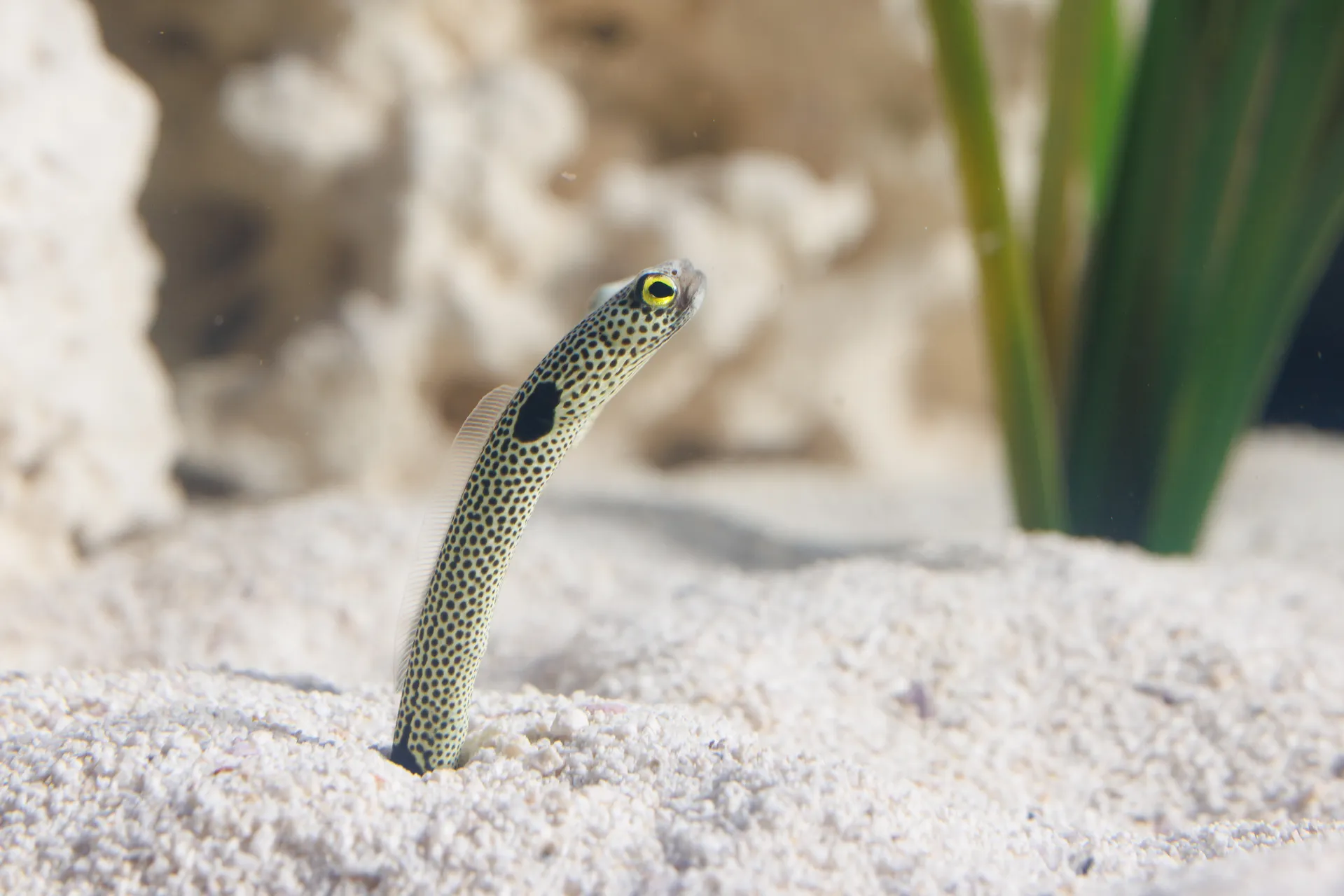
Spotted Garden Eels
You might be forgiven for thinking that these slender, swaying creatures are nothing more than a bed of seagrass moving in the ocean current. In fact, they’re counting on it.
Spotted Garden Eels are small marine eels that live in groups (aka a “colony’ or a “bed”) along the sandy ocean floor. They stake out spots with a strong current, where they dig burrows in the sand with their tails to create a haven they can retreat to when predators approach. Their skin secretes a slime coat that hardens the walls of their burrow, preventing its collapse.
From these subterranean hideouts, the eels extend their heads into the water’s flow to feed on zooplankton carried along the ocean current. Their creative camouflage as seagrass — combined with the safety of their burrows — protect them from any passing predators searching for a quick snack.
They range across the Indo-Pacific region from Australia to Africa in the sandy flats that typically border coral reefs.
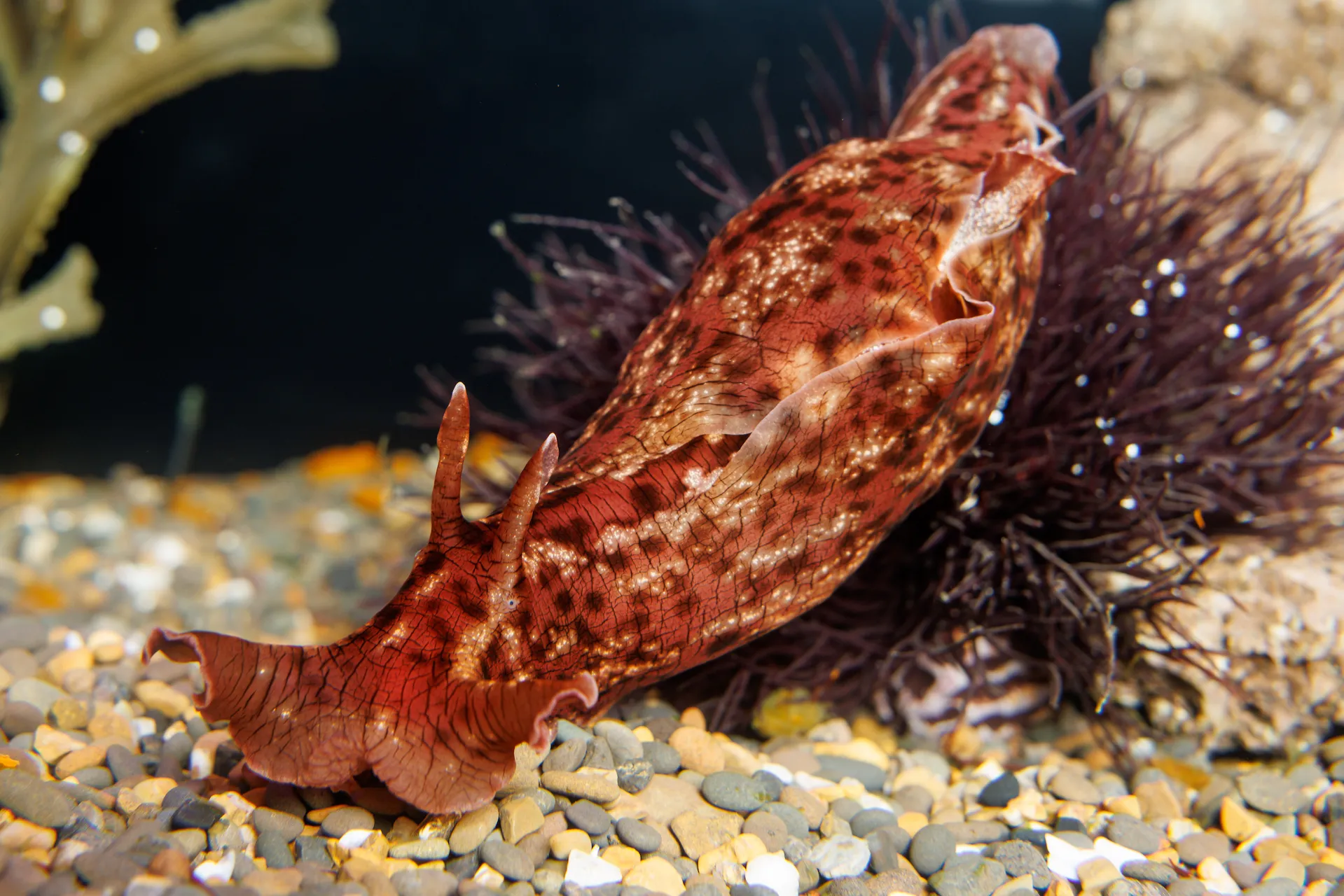
California Sea Hares
Definitely NOT a floppy-eared underwater rodent, these enormous marine slugs range along the West Coast from Northern California to Mexico’s Gulf of California. With a gelatinous, reddish-brown body made up of
folds called parapodia and four sensory tentacles on the head and mouth, they’re standouts in a gallery already filled with unusual creatures. (They can also weigh more than a kilogram, about 2 pounds!)
Though they are technically sea slugs, California Sea Hares possess an internal shell that helps protect their organs. Their tiny eyes are useful only for distinguishing between light and dark, and they eat only macroalgae. Their diet imparts some of the algae’s toxins into the sea hare. This, in turn, makes them an unpleasant meal for predators. They can also expel a toxic, purple ink for some added defense.
The namesake ear-like appendages on sea hares’ heads help them navigate their environment by sensing chemicals in the water released by other sea hares, especially during mating season. All California Sea Hares are hermaphroditic, which means they possess both male and female reproductive organs.
[During your visit: Look for the sea hares’ eyes, which are look like extremely small white dots near the base of their ear-like tentacles.]
Siberian Lumpsuckers
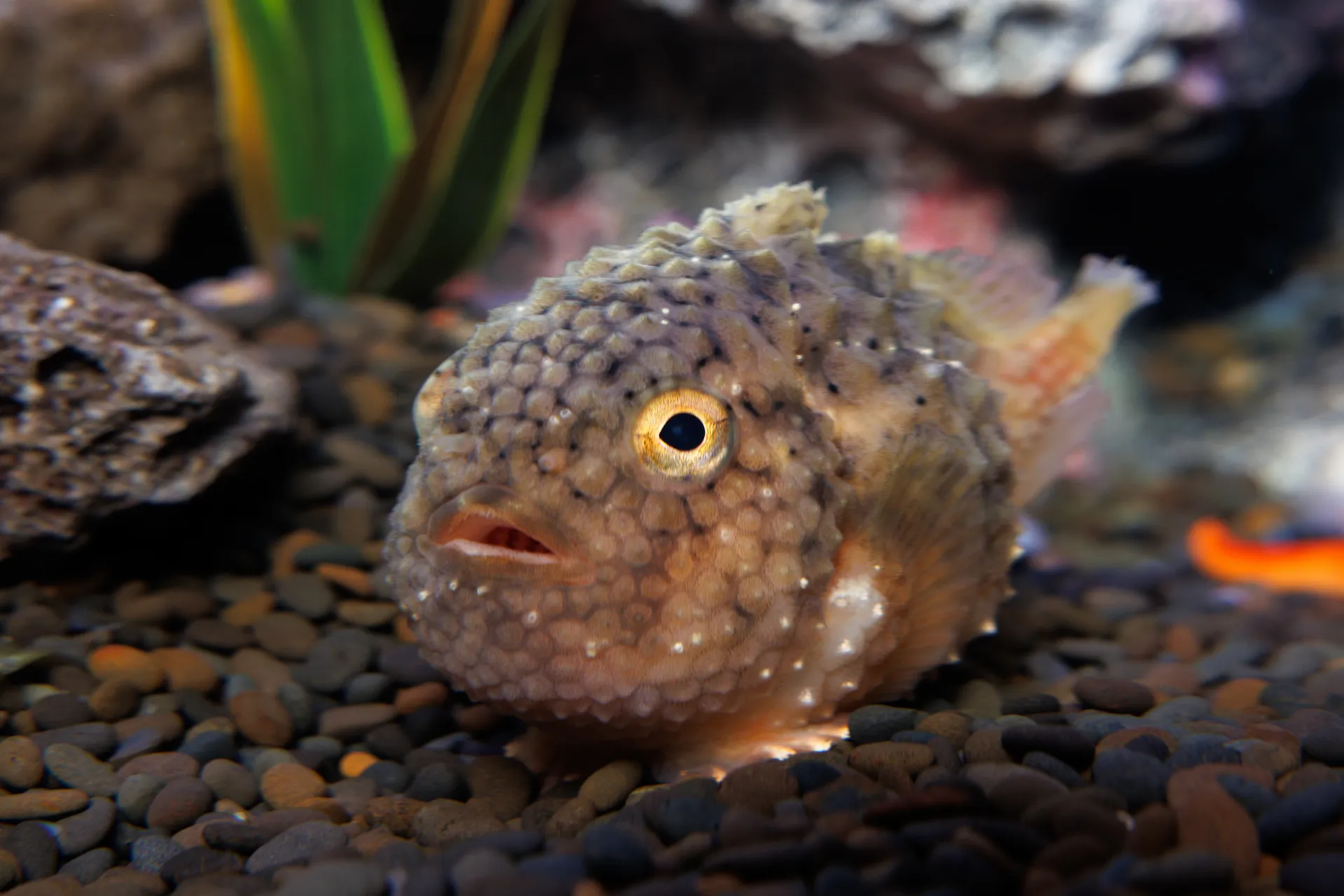
These adorable round lumpfish dwell in the icy-cold waters of the Northwestern Pacific Ocean from the Bering Sea to Alaskan Coast. They can grow to nearly five inches long, and their bodies are studded with spiky tubercles.
Lumpfish lack the swim bladder used by many other fish species to regulate their buoyancy in the water. Instead, they flap their stumpy fins to swim until they find a place to perch. When they arrive, they use a suction disc formed by their pelvic fins to anchor themselves in place along rocks or other undersea surfaces, an especially handy adaptation to ensure their stability in areas with fast-flowing currents.
Warty Frogfish
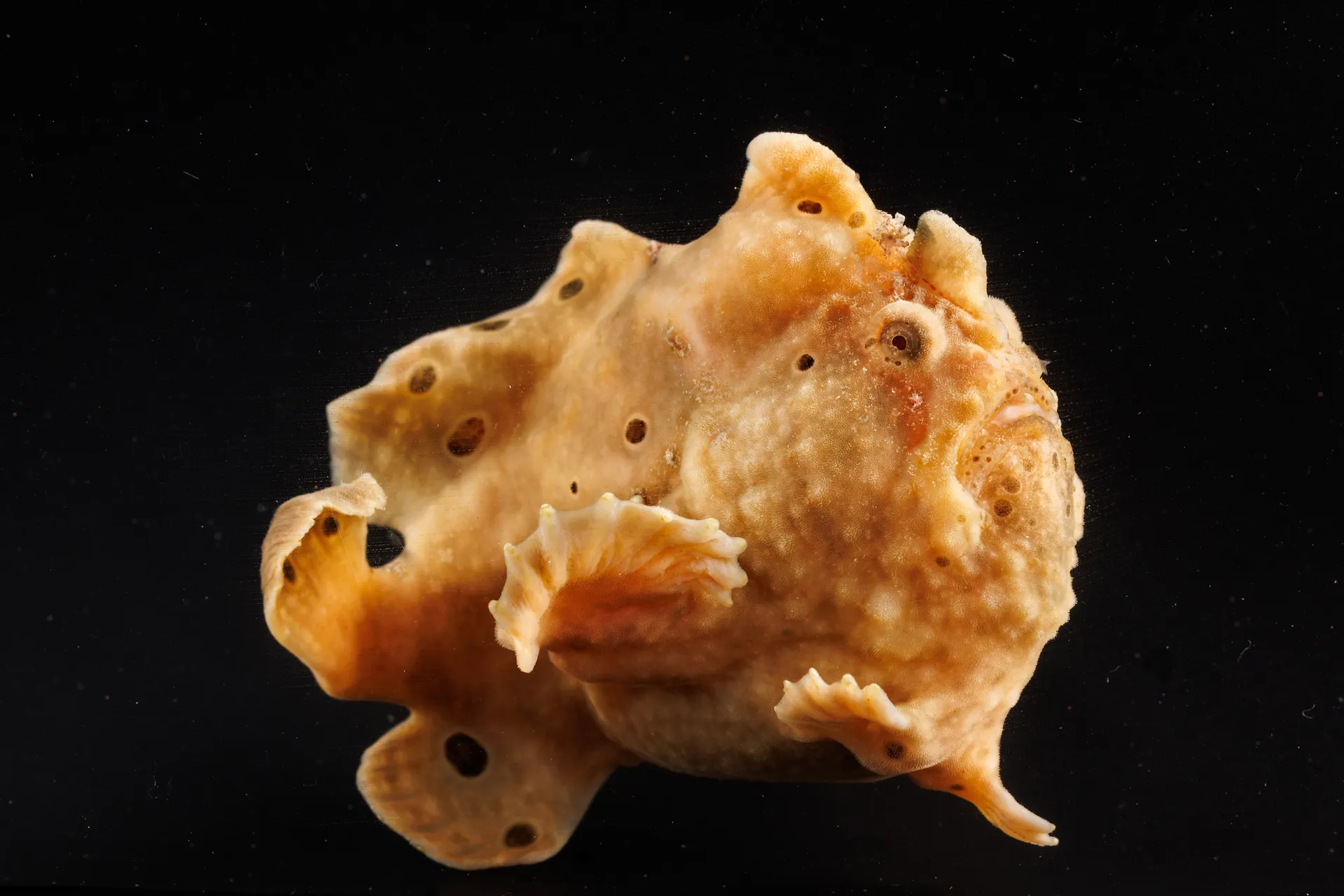
These Indo-Pacific dwellers (and members of the anglerfish family) can come in a variety of colors, from yellow to red, cream, pink, brown and even black. They are covered in strange, warty protrusions, and they are equipped with their very own fishing rod: a modified dorsal spine that they use as a lure to attract prey.
Not content with simply swimming through the ocean, Warty Frogfish use their unusual pectoral fins to “walk” along the bottom of the ocean or anchor themselves in place to wait for a meal to come by.
Voracious predators, frogfish species will ambush nearly any prey near their size that wanders too close. They are solitary for most of their lives and only stay with others of their species to mate.
Green Moray Eel
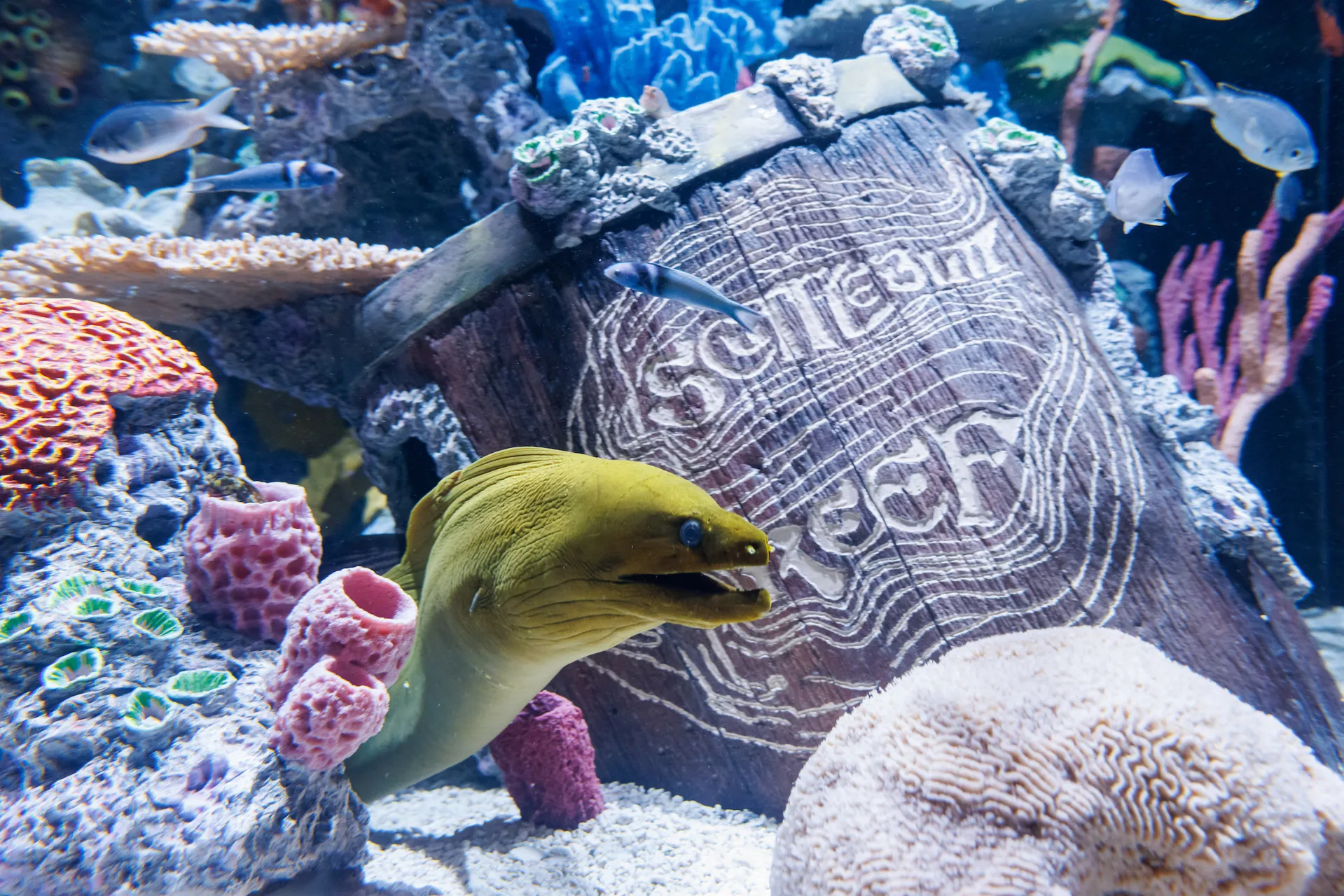
These western Atlantic-dwelling eels are best known for their toothy mouths and their gaping jaws, two characteristics that have given them an undeserved reputation as dangerous sea serpents.
Though they may appear snake-like, morays are classified as “true eels.” Green Morays can grow as long as eight feet, and their green coloration comes from a protective layer of mucus secreted from their skin, which helps keep them safe from bacteria and parasites in their environment.
Spending their days hidden away in rocky dens, Morays are opportunistic carnivores that hunt for prey at night. With a smaller operculum (the bony flap covering their gills) than other fish species, they can often be seen opening and closing their mouths to breathe by pumping oxygenated water across their gills.
Like something out of a space-age horror movie, moray eels possess an even more unusual adaptation: pharyngeal jaws. This second set of jaws located further back in the mouth — complete with its own set of teeth — is used to grab prey and move it further into the eel’s throat.
[During your visit: Keep an eye out for our Green Moray Eels in areas that are more sheltered, where they can often be seen poking their heads out.]
Swellsharks
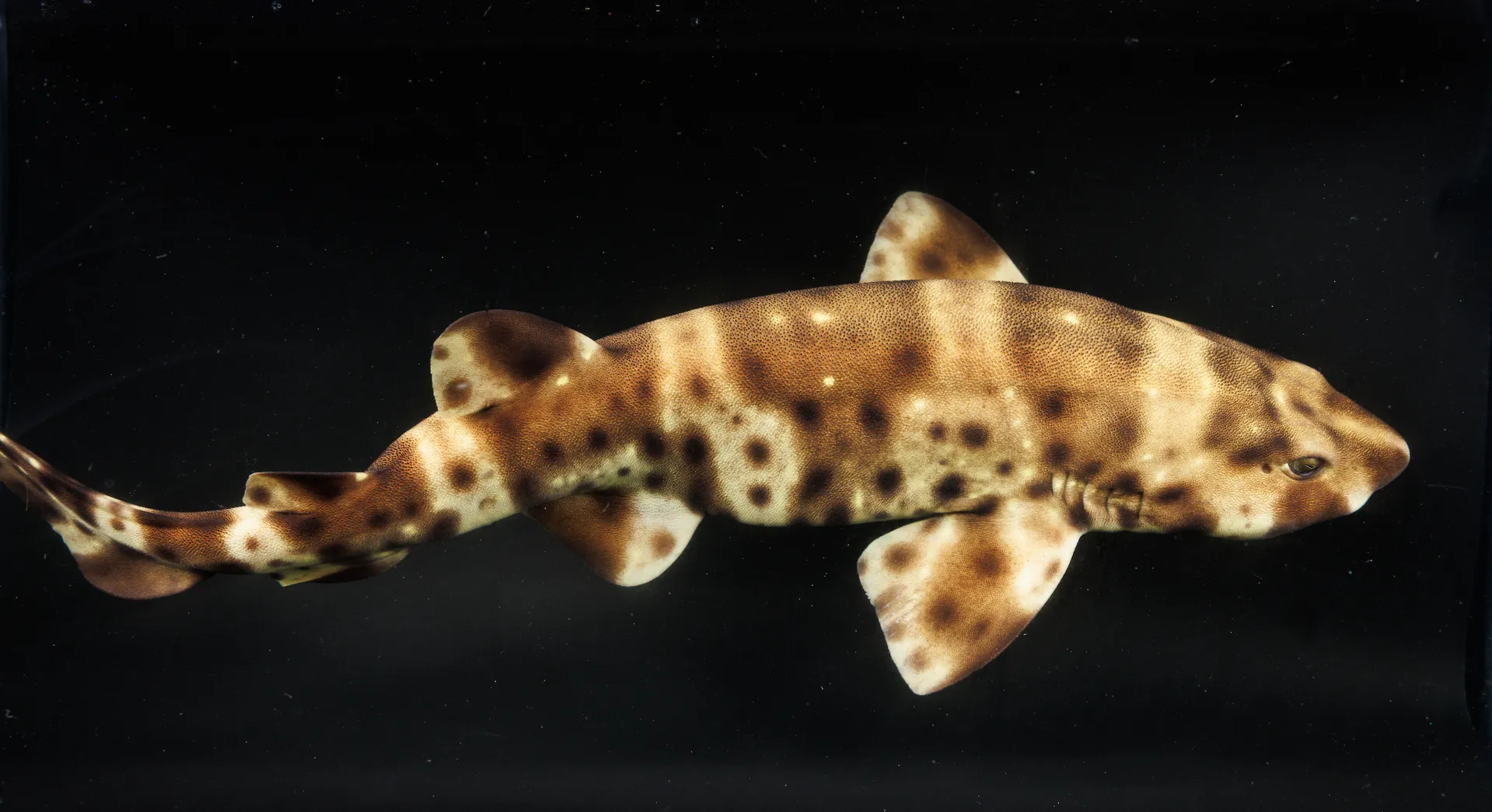
Swellsharks are a species of catshark ranging in the tropical Pacific Ocean from California to Southern Mexico. They’re named for their expansive defensive behavior. When threatened, Swellsharks can swallow water to expand to nearly twice their size, much like a pufferfish. They typically grow to about three feet in length as adults.
In typical lighting, such as can be found at the surface or in shallow water, Swellsharks appear brown with simple white spots. Under the right lighting, though, this dull appearance changes entirely.
Swellsharks are biofluorescent — appearing to “glow” neon green or yellow — when viewed under light in the bluer wavelengths that can penetrate into the deeper water where they can be found. Scientists believe this biofluorescence is used for intraspecies communication between swellsharks, which possess a specially adapted lens that can perceive these glowing patterns.
[During your visit: Want to see how these sharks view each other? You’re in luck. Scuttlebutt Reef gives you “shark vision” via a special, yellow-tinted slider that will let you see this biofluorescent glow for yourself!]