A hidden world exists beneath the grassy understory of the Southeastern United States’ once-abundant longleaf pine forests, and its creator might just surprise you.
There, bustling subterranean neighborhoods made up of twisting underground warrens shelter hundreds of animals, providing a safe, climate-controlled refuge from heat, cold and the elements.
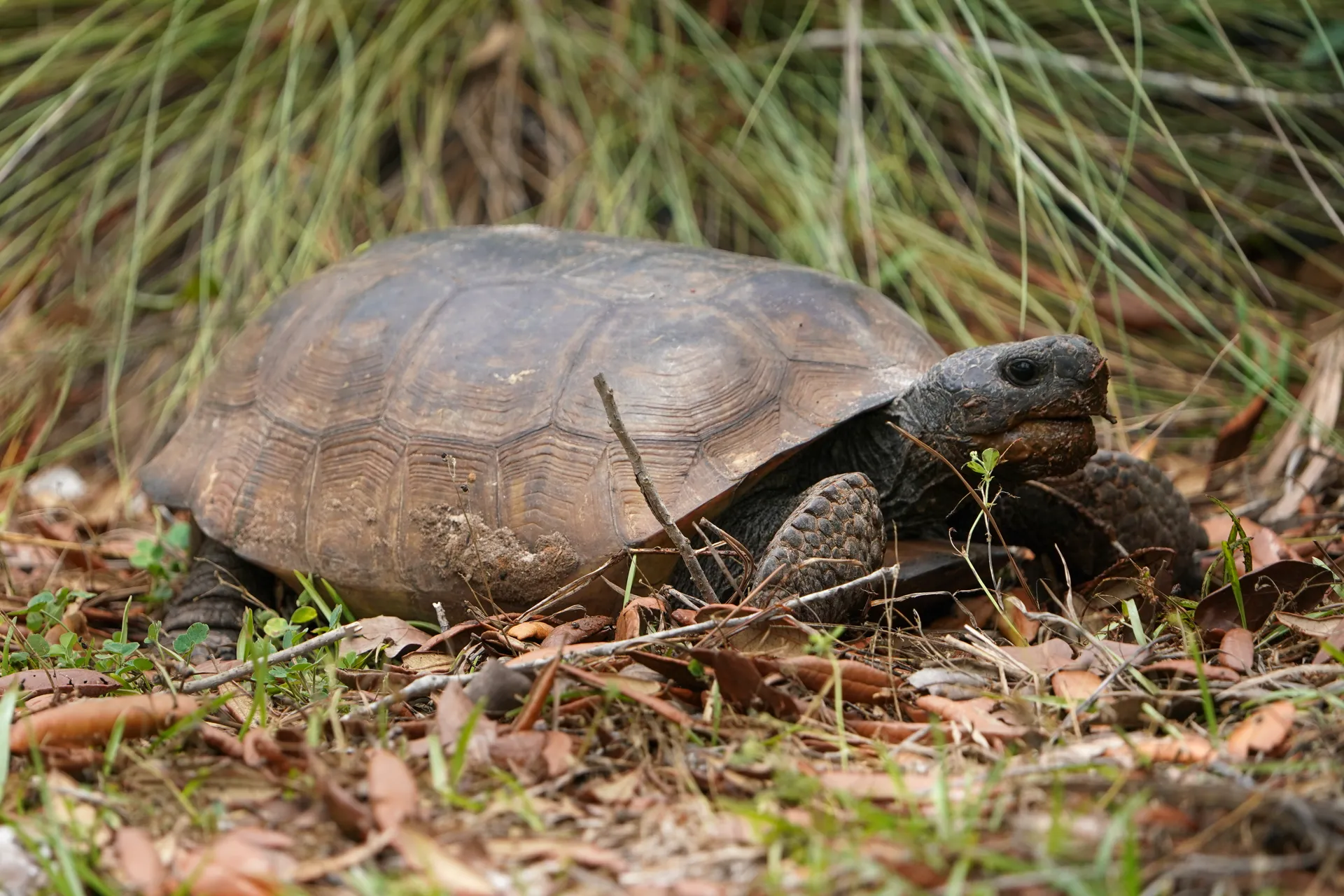
The extraordinary architect of these massive underground shelters is the humble Gopher Tortoise.
These stout reptiles top out at just 15 inches long but are built for a life of digging. Their powerful, flattened front legs easily scoop away earth like built-in shovels. Meanwhile, their hind feet act as tampers to firmly pack down soil and shore up tunnel walls.
“Those back legs look like little elephant legs to walk around and stomp down the sand as they are digging to make sure it doesn’t cave in,” says the Aquarium’s River Journey Lead Animal Care Specialist Jennifer McPheeters.
A single Gopher Tortoise burrow can stretch up to 30 feet long and descend as much as 10 feet below the surface. The burrows are typically wide enough for a tortoise to turn completely around in and maintain relatively stable temperatures year-round.
More than 350 species, from Burrowing Owls and Gopher Frogs to the federally threatened Eastern Indigo Snake, use these burrows for shelter.
In the longleaf pine forests they call home, frequent, low-intensity fires renew the ecosystem by recycling nutrients and managing woody vegetation. During these naturally occurring conflagrations, Gopher Tortoise burrows become lifesaving havens, allowing animals to escape the heat and smoke.
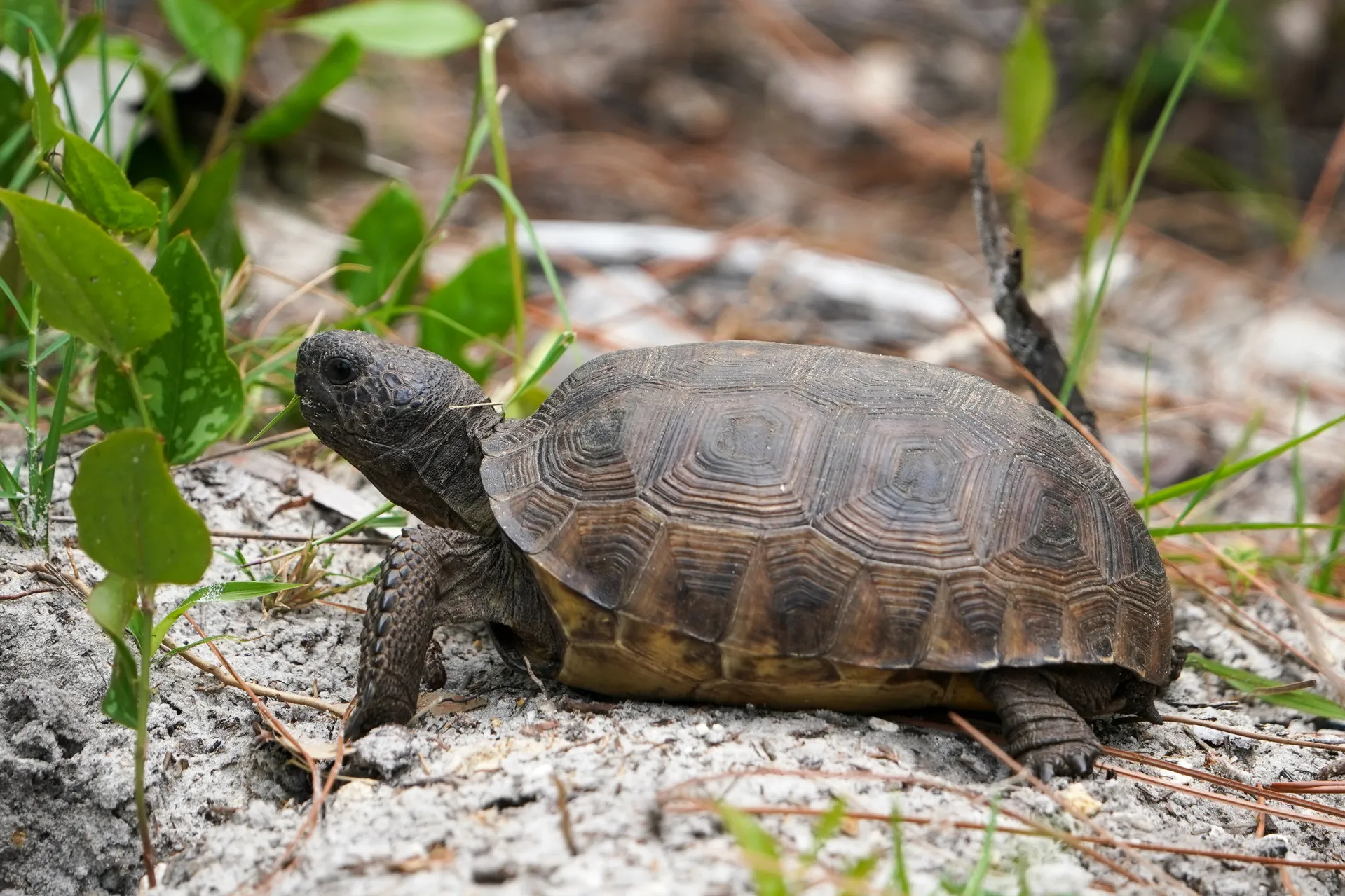
Because so many species rely on them, Gopher Tortoises are considered a keystone species when it comes to the health and stability of their ecosystem. Once Gopher Tortoises disappear, the effects are felt by dozens of other animals that depend on their burrows.
Today, their burrows are more important than ever. Longleaf pine forests once stretched across tens of millions of acres of the Southeastern United States, from East Texas to Virginia. This distinct ecosystem supported extraordinary biodiversity and provided critical habitat for plants and animals that could be found nowhere else.
Over the past two centuries, however, logging, agriculture and development have reduced longleaf pine forests to a fraction of their original range. As these ancient forests have vanished, so has the Gopher Tortoise’s natural habitat.
Today, these tortoises can be found across the Southeast’s coastal plains, from southern South Carolina, Georgia, Alabama and Mississippi into Florida.
Habitat loss and fragmentation have led to widespread decline in Gopher Tortoise populations. While the species is protected throughout its range — and federally protected west of the Mobile River — development continues to fragment wild populations. As a result, Gopher Tortoises can now commonly be found living in suburban backyards, open fields or other less-than-ideal locations.
A distinctively southern species, Gopher Tortoises are found nowhere else in the world and are the only native U.S. tortoise species east of the Mississippi River. Protecting them means preserving a living piece of the Southeast’s natural heritage.
If you live in their native range, you can help protect Gopher Tortoises by supporting longleaf pine restoration, respecting posted burrows and reporting Gopher Tortoises you see to wildlife agencies. Public monitoring helps scientists keep tabs on wild populations and protect their habitat.
Since Gopher Tortoises are herbivores, limiting your use of pesticides and herbicides can also protect this keystone species. Learn more and report Gopher Tortoise sightings in Florida at the Florida Fish and Wildlife Conservation Comission. If you live in Alabama, you can post tortoise sightings to the Alabama Gopher Tortoise Conservation Project on iNaturalist.
No need to hunt for a Gopher Tortoise during your Aquarium visit, though. You can see one in the River Journey building in the Delta Country gallery.