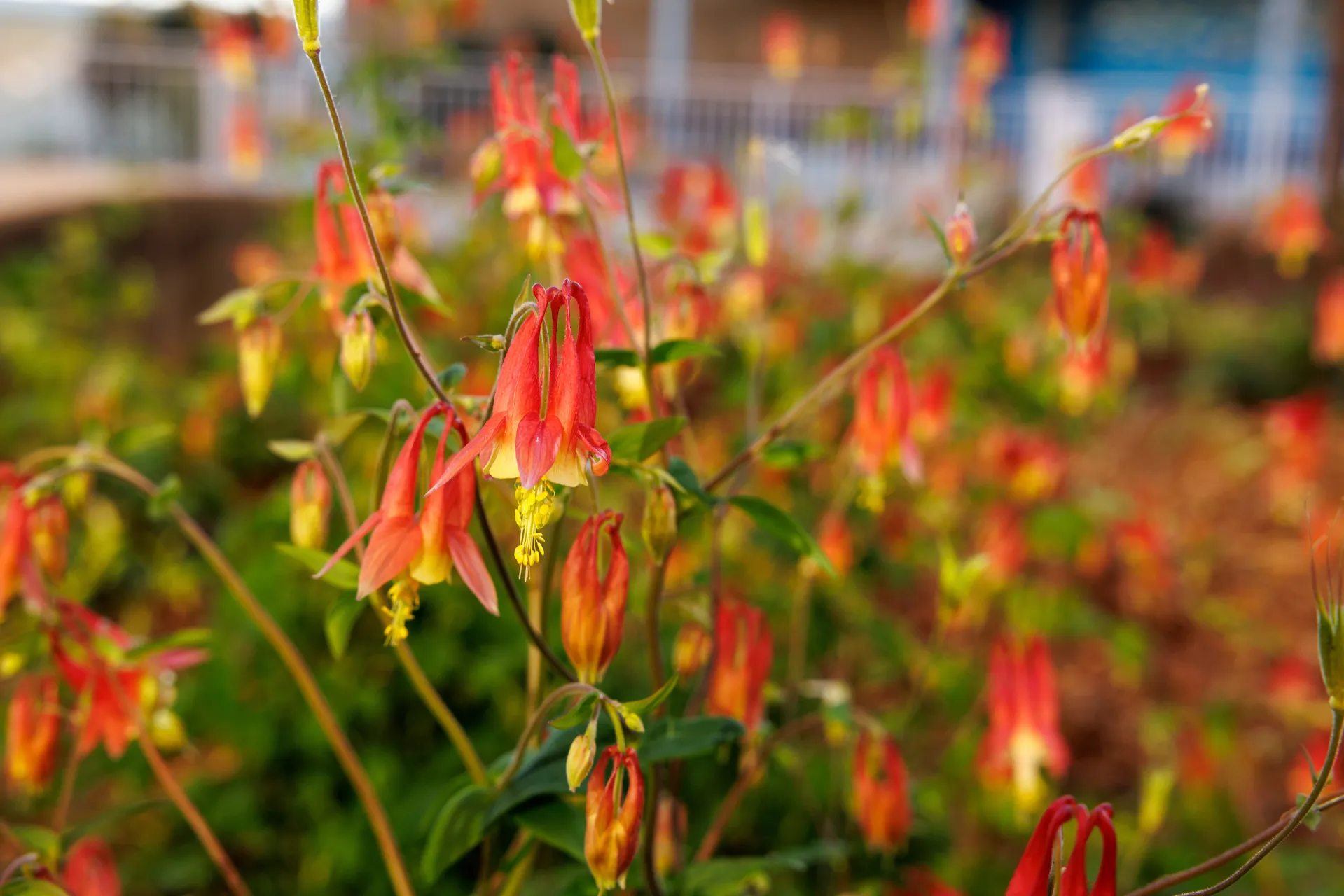
Spring is an exciting time of year for many people, but especially for the “plant people” on the Aquarium’s staff. Senior Horticulturist Austin Prater says the end of winter each year makes him feel “excited like [it’s] Christmastime.”
Those first bright green stems and leaves popping up are sure to bring joy to anyone who is getting tired of winter dreariness. Here are some tips for where to seek out blooms if you’re also feeling the need for spring.
First to bloom
Wildflowers are like nature’s little treasures. Sometimes overlooked, these little pops of color can be quite exciting to encounter after months of winter-bare woods.
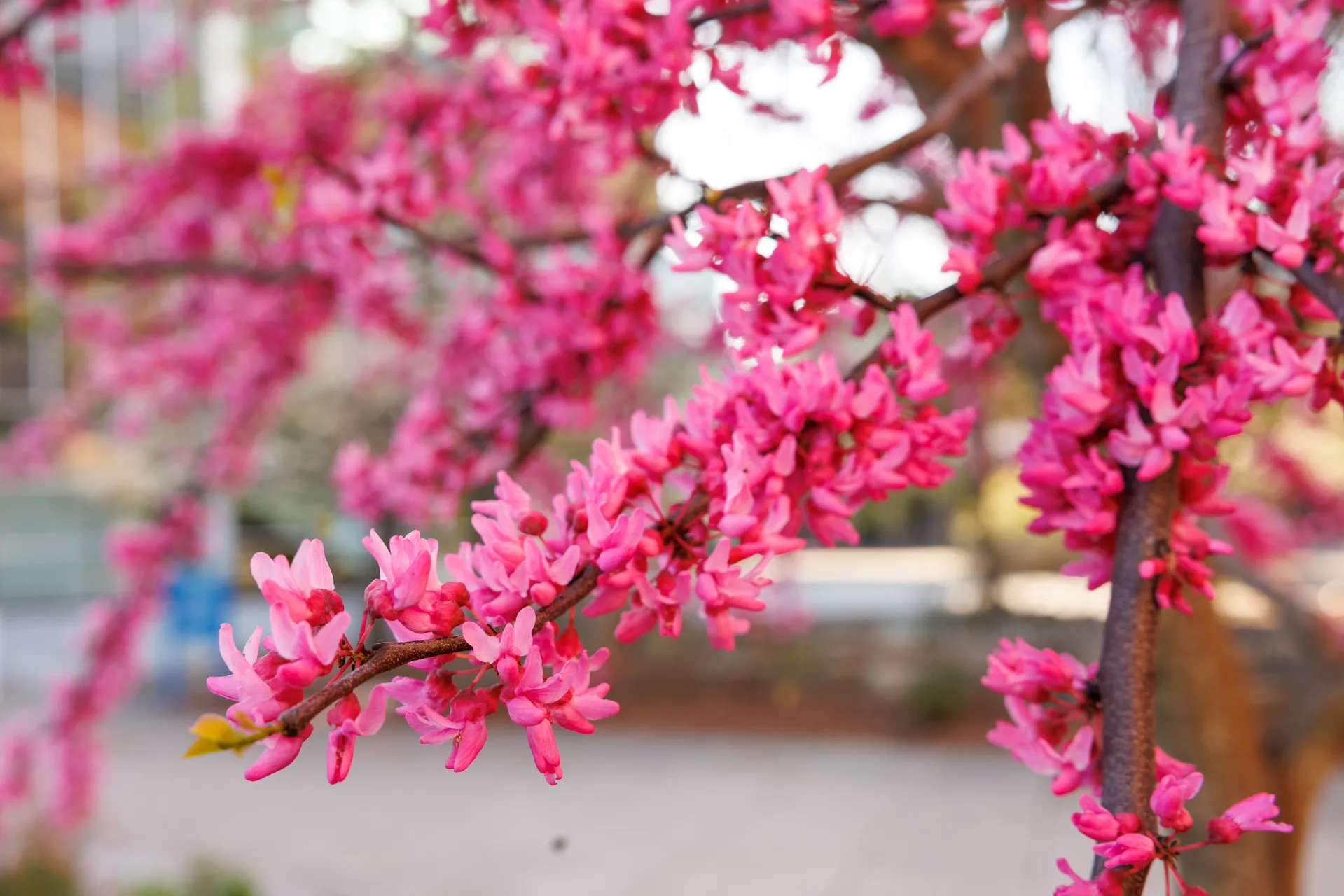
If you live in East Tennessee and look around your yard in early spring, you might see cream-colored Wild Daffodils (Narcissus pseudonarcissus, aka “Lent Lilies”), blushing White Clover (Trifolium repens) and pink-blossomed Eastern Redbuds (Cercis canadensis) in bloom.
Stray beyond your property, however, and you can find even more flowers growing in the woods and meadows, assuming you know where to look. Some of the most common wildflowers to find our area are Foamflowers, Phlox, Trout Lilies, Trillium, Spring Beauties and Dwarf-crested Irises.
Where the Wild Flowers are
Spring wildflowers tend to grow in mesic habitats — areas where the soil is consistently moist — and where they are protected from extreme winds and temperature fluctuations. You’ll often discover them carpeting north- or east-facing hillsides, since those sides don’t get as hot or dry in the summertime.
East Tennessee’s hidden coves, streams and hillside slopes are springtime havens for wildflowers. These areas offer the perfect conditions to harbor these delicate flowers.
When wildflowers find a place they like, they thrive. The plants will either reseed themselves or expand through root systems, which can create a large patch of a single species. Seeing a tapestry of dainty blooms on a hillside is truly breathtaking, especially on a warm spring day when the sunlight is dappling through the trees.
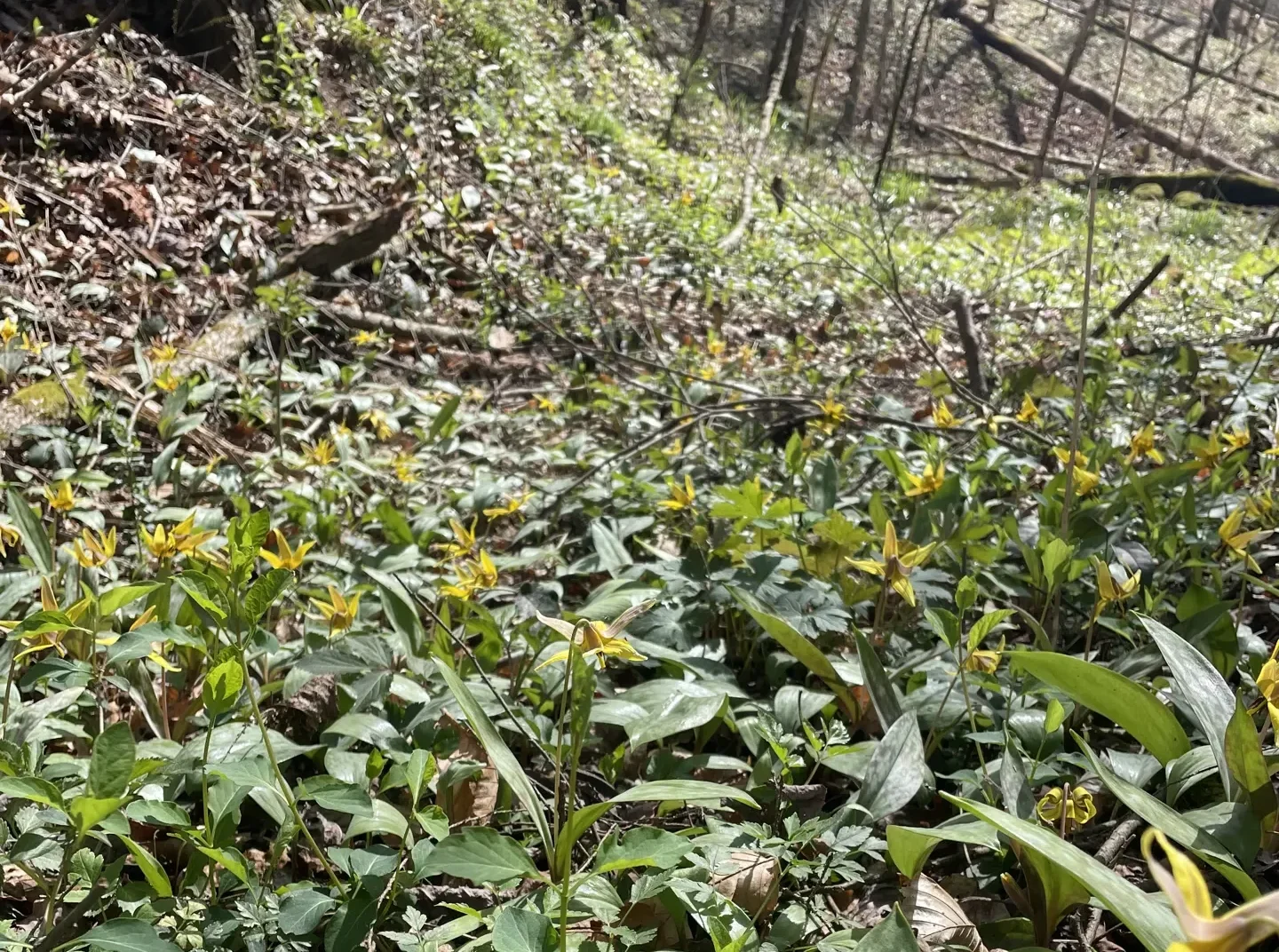
If you’re interested in seeing wildflowers in the Chattanooga area, our Senior Horticulturist (and wildflower hike tour guide), Austin Prater, has several recommendations.
Below are a few of the best parks and natural areas he suggests visiting to spot wildflowers:
Importance to pollinators, other wildlife
Since wildflowers are one of the first things to bloom in the spring, they are an important resource for pollinators.
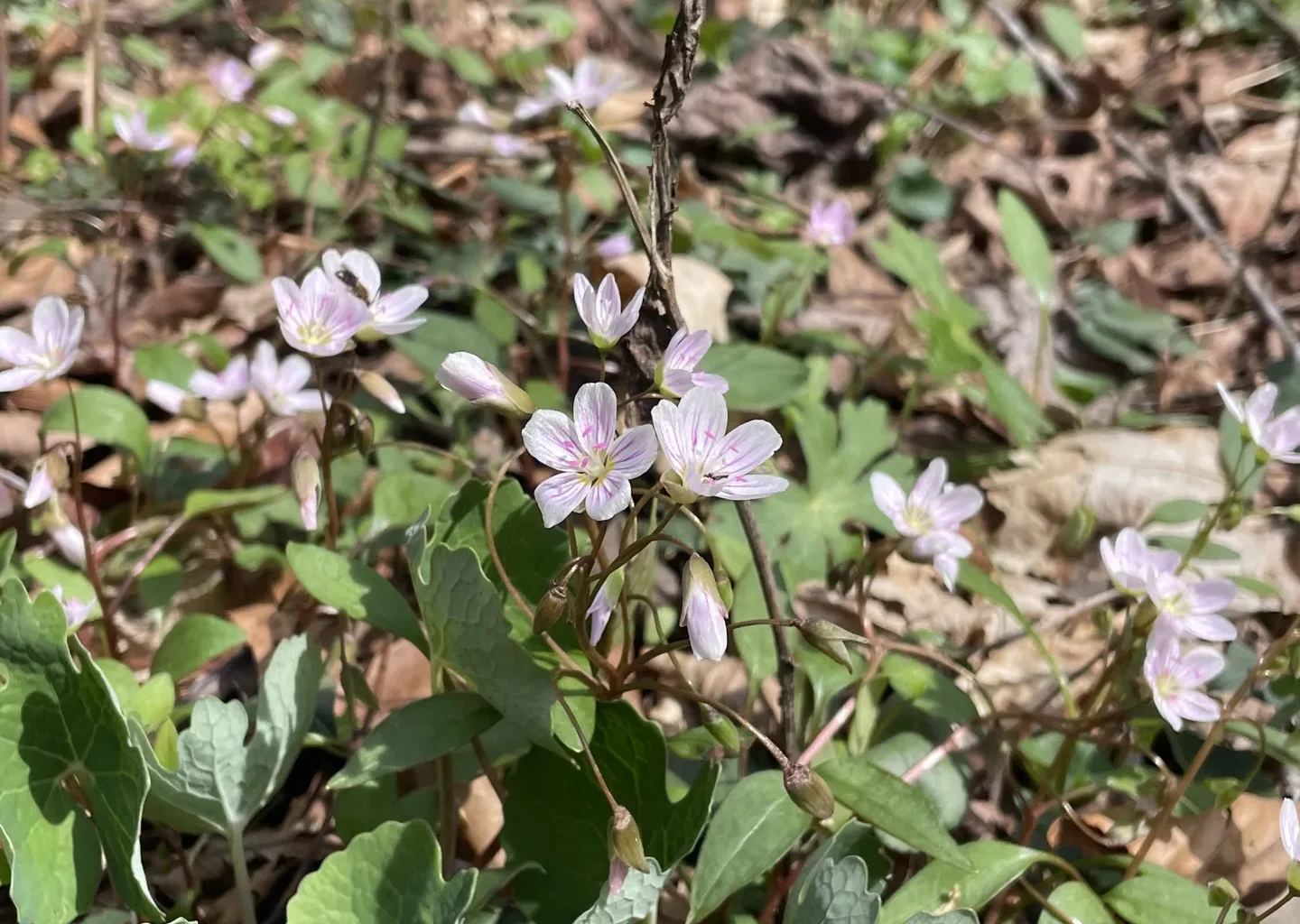
Here’s a fun fact: the “Spring Beauty Miner” is a bee that only collects pollen from Spring Beauty wildflowers, which produces pink pollen. As the Spring Beauty Miner collects the pollen, it builds up on its legs and looks like pants. Some people describe this cute phenomenon with the — admittedly not very scientific — term: “pollen pants.”
Because of the vital services they provide, pollinators like the Spring Beauty Miner are superheroes of the natural world, but they also need our help.
Scientists have measured an alarming decline of pollinators due to habitat loss, invasions of non-native plants and toxic pesticides. In a study published in the April 2025 issue of the Proceedings of the National Academy of Sciences, researchers found that more than one-fifth (22.6%) of 1,579 pollinator species in North America are at an elevated risk of extinction. Among the studied species, bees are the most-imperiled group of insects, with more than one-third (34.7%) of 472 species at risk of disappearing.
Luckily, there are some easy ways to provide a welcoming environment for pollinators, which you can learn more about in our article on what to grow to help attract pollinators.
Spring wildflowers can also impact bird migration. Birds often migrate based on seasonal temperature fluctuations, but some are also driven by where and when flowers appear (aka “following the bloom”). Some nectar-dependent (nectarivore) bird species, such as Ruby-throated Hummingbirds (Archilochus colubris), travel thousands of miles each spring to feed on wildflowers in East Tennessee after over-wintering at sites in Central America and Mexico.
Blooming in the Plaza
If you are visiting the Chattanooga area in the spring, but can’t get out on a hike, you can still see a wide variety of vibrant trees and flowers blooming on the Aquarium Plaza, which is actually a city park. Among the species you can feast your eyes on are Eastern Red Columbine, Lenten Roses, Eastern Redbuds, Flowering Dogwoods and Red Buckeyes — just to name a few. The native- and pollinator-friendly plants blooming here will change throughout the year, so a repeat visit will often include a new host of blossoms to appreciate.
Interested in learning more about spring wildflowers?
Find your local “Wild Ones” chapter. This nonprofit organization’s mission is to “promote native landscapes through education, advocacy, and collaborative action.”
If you’re in the Tennessee Valley, like us, you can learn more about our local chapter (Wild Ones Tennessee Valley) on their website.