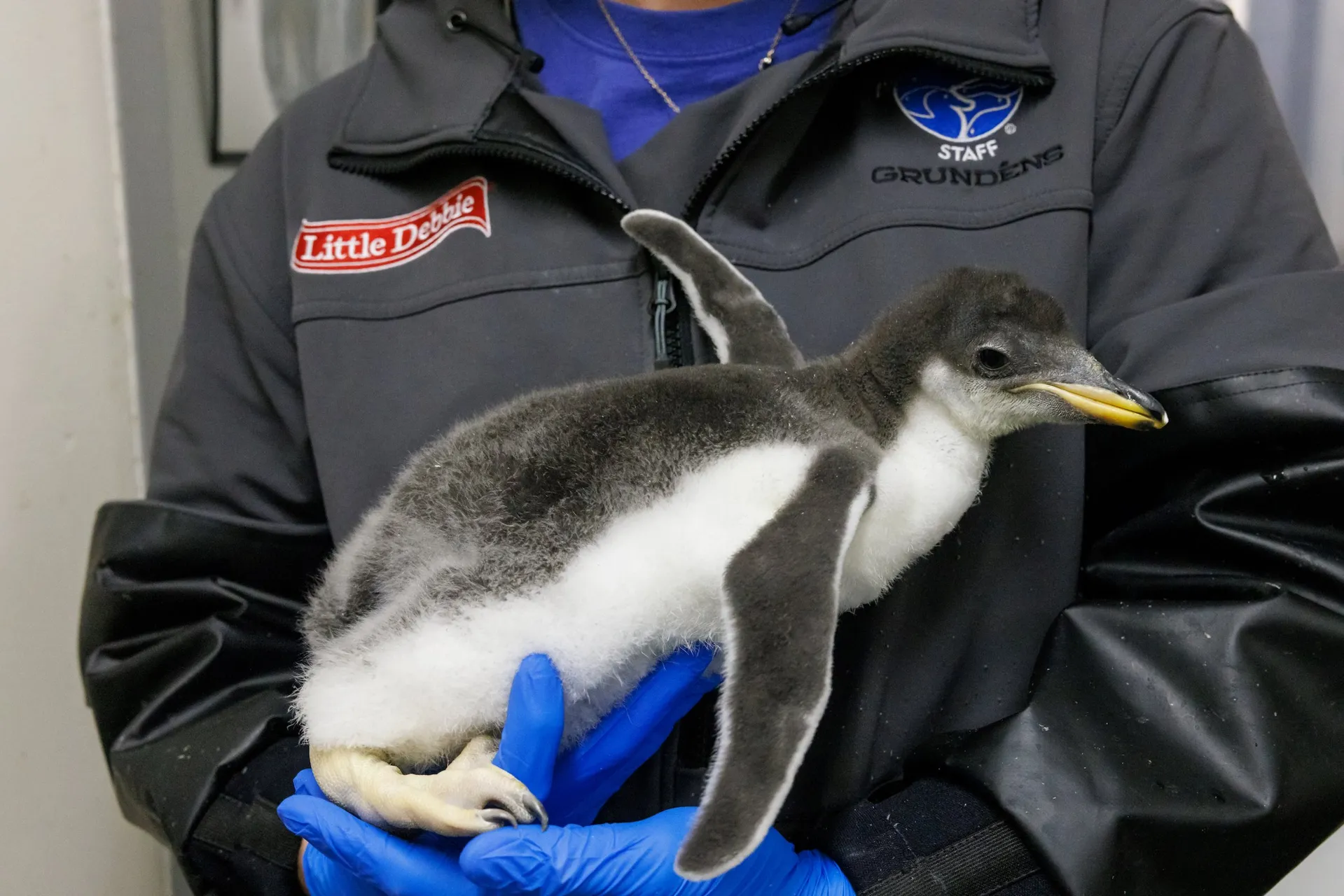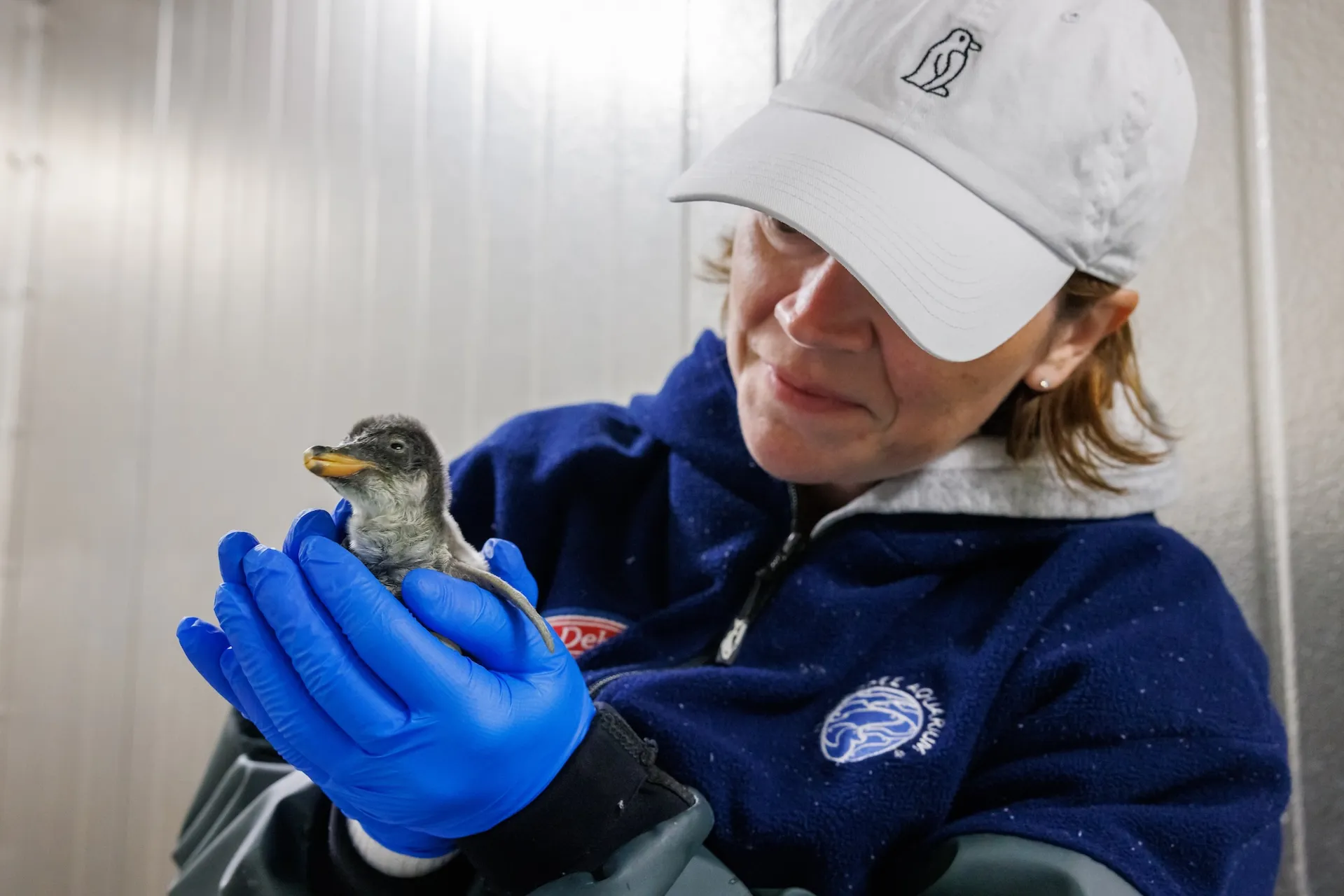
Chattanooga, Tenn. (July 24, 2026) – In perfect keeping with the low-key vibes of summertime, a surprisingly relaxed addition just joined the colony in the Penguins’ Rock gallery at the Tennessee Aquarium.
The as-yet-unnamed Gentoo Penguin chick hatched on June 25 to Nipper (dad) and Pebbles (mom). This veteran pair are also parents to Lizzie, a female that hatched in 2020, as well as chicks through pairings with other birds.
That wealth of experience makes a noticeable difference when it comes to raising a chick, says Loribeth Lee, the Aquarium’s assistant curator of forests and longtime penguin caretaker.
“This is their second time parenting together, and they’re fantastic at it,” Lee says. “Usually when the chick starts pipping and making noise, some of the parents get very excited, but the older, more experienced birds are more laid back about it.
“These guys are pros.”
So far, the chick seems to be mirroring its parents’ energy. Despite possessing a mischievous, exploratory streak, it has been noticeably more easygoing than past penguin babies.
“This chick has actually ended up being pretty chill,” says Senior Animal Care Specialist Holly Gibson. “It’s very sweet. It doesn’t really fuss when we pick it up to clean the nest, to take its weight or to give it a checkup.”
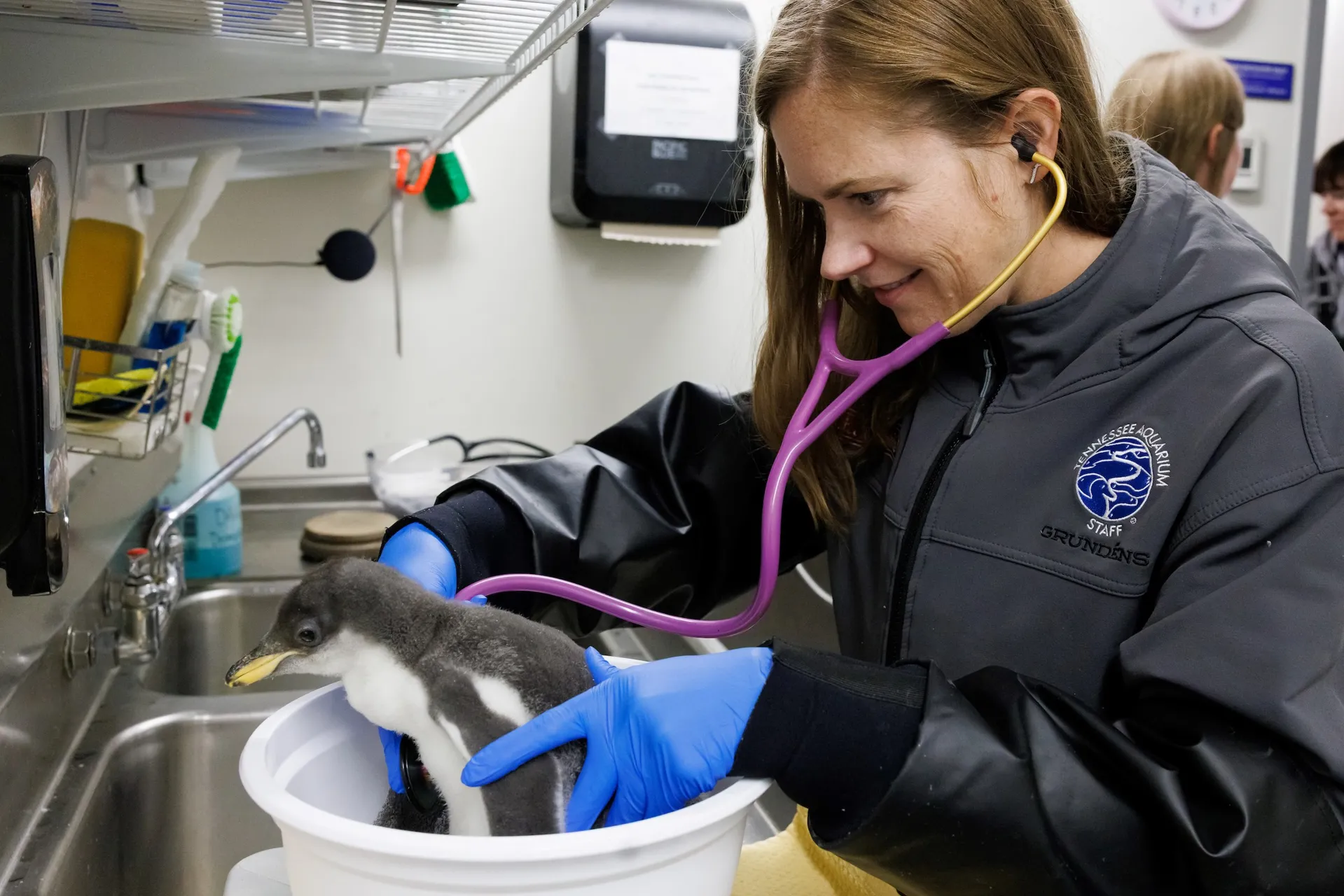
The chick’s health is being closely monitored by the Aquarium’s veterinary team and its caretakers during tri-weekly exams. Penguins are exceptionally quick to grow, with Gentoo chicks reaching adult size about 70 days after hatching.
With experienced feeders like Nipper and Pebbles in charge of meals, the chick has been putting on weight at a healthy clip, says Dr. Chris Keller, the Aquarium’s director of animal health.
“Its growth rate isn’t unprecedented, but it’s in keeping with the chicks that have done the very best out of all the chicks we’ve raised,” Dr. Keller says. “The parents have done a fantastic job. When they’re providing as much food as they have been, a chick is just going to thrive in that environment.”
The day after the chick emerged from its egg, it weighed 122 grams (4.3 ounces), a little less than a D battery. On Monday, it had already passed 2 kilograms, a 1700% increase from its hatch weight. To place this growth in context, that’s the equivalent of a 6-pound human infant weighing more than 100 pounds just 26 days after birth.
Despite its easygoing nature, Lee is quick to stress that the chick is far from quiet.
“This little bird — we heard it before we even saw the pip (first crack) in the egg,” she says. “It’s definitely a very vocal penguin.”
Unlike past chicks that have hatched in Penguins’ Rock, the chick is being kept off-exhibit in a special holding room in the gallery’s backup space. The decision was made in the interest of the wellbeing of the baby and its parents.
Nesting season, which begins in early April and continues through early summer, is a fraught time in a penguin colony. The birds are defensive of their nests and infighting often results from a generally heightened level of aggression once the birds pair off.
Compounding this, the arrival of chicks can be must-see news within the colony. The other residents can — through no ill intent — inadvertently cause harm in their desire to investigate a new addition.
This season, Nipper and Pebbles were isolated to make things easier for them. The chick stayed in its holding area while the parents took turns on exhibit to stretch their wings, Lee says.
“We really felt the best thing for this family of penguins was to bring them in the backup and let them avoid that drama,” Lee explains. “It was the calmest solution for the parents and for the chick, overall.”
The chick will remain out of view until it is ready to join the rest of the colony on exhibit. That will take place when it reaches about 70 days old and has passed a “swim test” administered after it has grown its coat of waterproof adult feathers.
For now, the chick’s gender remains unknown, pending a blood test that will be conducted in November as part of the birds’ routine physicals.
In keeping with a new tradition at the Aquarium, the right to name the chick will be auctioned off during the Aquarium’s online fundraiser this fall. Proceeds from this event contribute to the Aquarium’s ongoing conservation efforts and animal programs.
Aquarium fans can keep tabs on the colony at Penguins’ Rock by viewing an online live stream powered by EPB Fiber Optics at tnaqua.org/livestream/penguins-rock/