On Exhibit
NOW OPEN: Scuttlebutt Reef
This animal is coming to the new Scuttlebutt Reef gallery opening in March 2026!
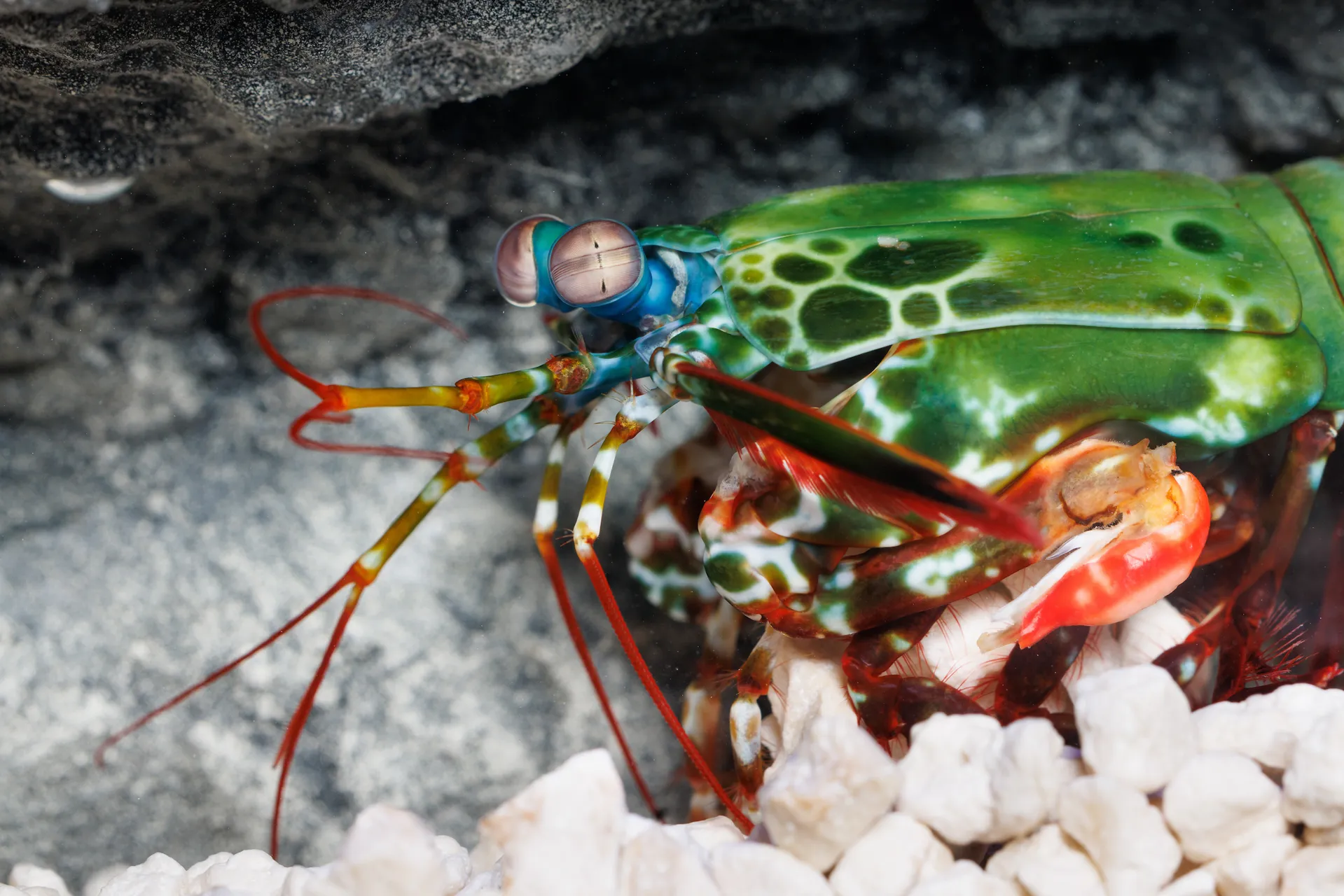
Peacock Mantis Shrimp only average six inches long, but pound for pound, they pack the biggest punch in the natural world. Their praying mantis-like claws (raptorial appendage) set an animal kingdom record by striking at speeds in excess of 50 miles per hour.
Peacock Mantis Shrimp clubs can produce and withstand such incredible force; researchers are studying these biological structures for creating stronger materials.
Spring to Action
When not in use, a mantis shrimp’s clubbed arm is fastened securely in place by a latch, allowing energy to build up. A “spring” within the arm helps store even more energy. When the latch is released, the spring propels the claw forward in a fraction of a second — 50 times faster than we can blink — to hit prey.
Featherweight, But Fierce
The impact of a mantis shrimp’s strike is only the beginning of a dangerous combination attack. A split second later, the movement of the claw causes the water to vaporize, creating a cavitation bubble. When this bubble collapses, it does so with a force more than 2,000 times greater than the shrimp’s bodyweight!
More Than Meets the Eye
Mantis shrimp can see objects with three different parts of the same eye, giving them “trinocular vision.” Unlike humans, who perceive depth best with information from a pair of eyes, mantis shrimp can see perfectly with either one of theirs. These unique organs can work both independently or together to scan the horizon as well as focus in on prey at the same time.