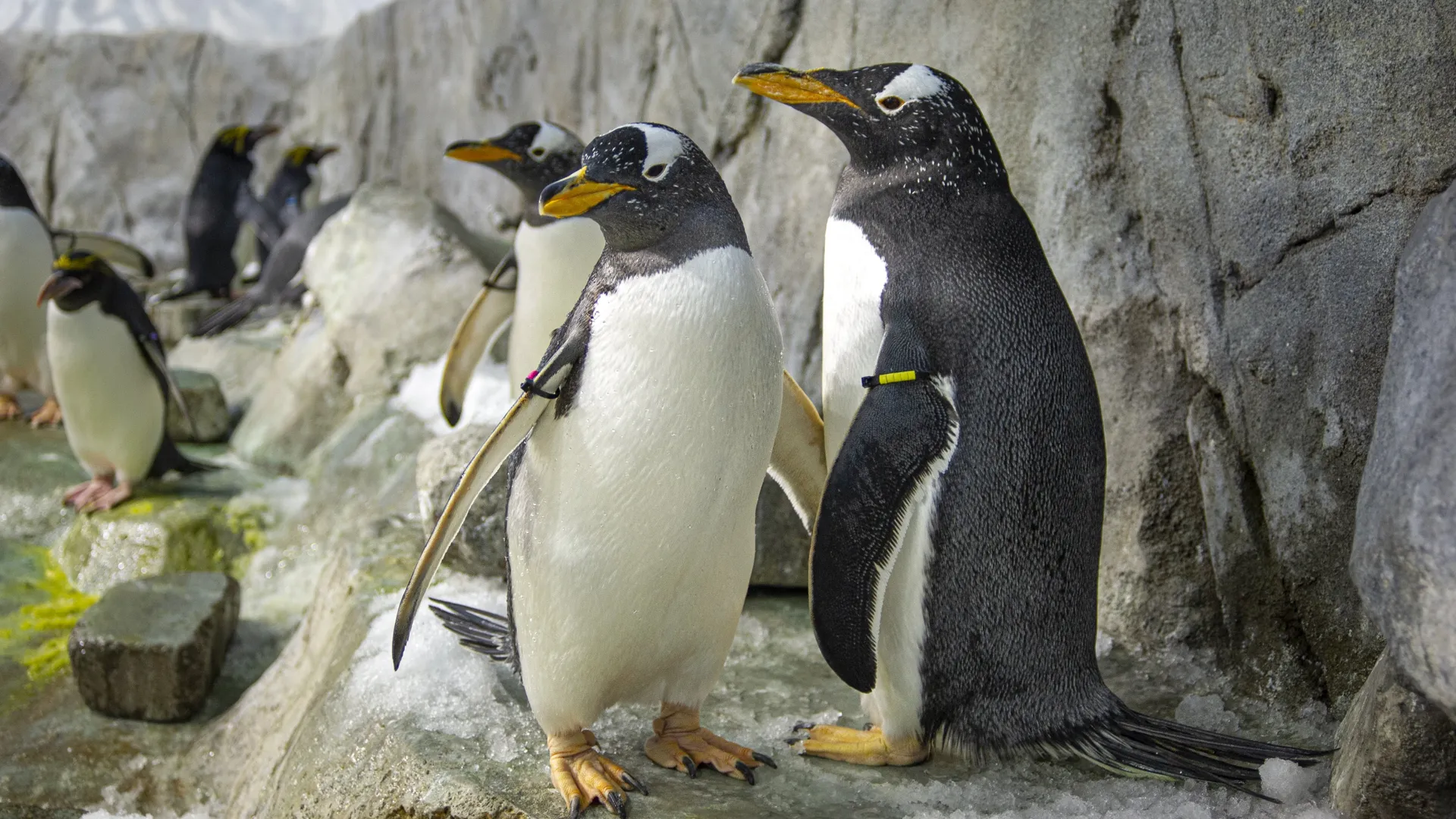
As excitement mounted at the Tennessee Aquarium in the lead-up to the opening of the Penguins’ Rock gallery in 2007, the new colony’s largest bird had already made an outsized impression on his caretakers.
“I carried Poncho in here the first time, and he hit me in the face, knocked my cap off and split my lip,” Curator of Forests Kevin Calhoon recalls, laughing. “So … of course, we bonded instantly.”
Gentoos are the world’s third-largest penguin species, trailing only Emperors and Kings. Yet even by the standards of his species, Poncho was enormous. Typically, a Gentoo tops out at just shy of 20 pounds. At his heaviest, Poncho was pushing 30.
“He’s the biggest Gentoo I’ve ever seen, and I’ve been to Antarctica,” Calhoon adds. “He was massive — almost like a small King Penguin.”
Making adjustments
As with many animals, including humans, a larger body size can carry associated health issues, especially in older individuals.
“Poncho was probably the largest penguin we’re ever going to care for, and he suffered a lot of changes associated with arthritis that were very significant,” says Director of Animal Health Dr. Chris Keller.
Because of the way their limbs are configured, a penguin’s legs absorb more impact from each step than animals with greater flexion (joint flexibility). After scrutinizing a computed tomography (CT) scan last summer, it became clear that Poncho was experiencing deterioration in his knees due to arthritis. This condition began to dramatically impact his ability to navigate his environment, affecting his quality of life.
To make him more comfortable, Poncho was prescribed an anti-inflammatory medication and sandbags were added to the gallery to provide a more forgiving surface on which he could stand. Additional modifications were made to improve his ability to swim, such as increasing the water level and adding rocks to make it easier for him to climb out.
Poncho also received “cold laser therapy” sessions, which employ tissue-penetrating wavelengths of light to increase circulation and reduce inflammation. This non-invasive treatment has been effective at improving quality of life for other older Aquarium residents experiencing diminished mobility.
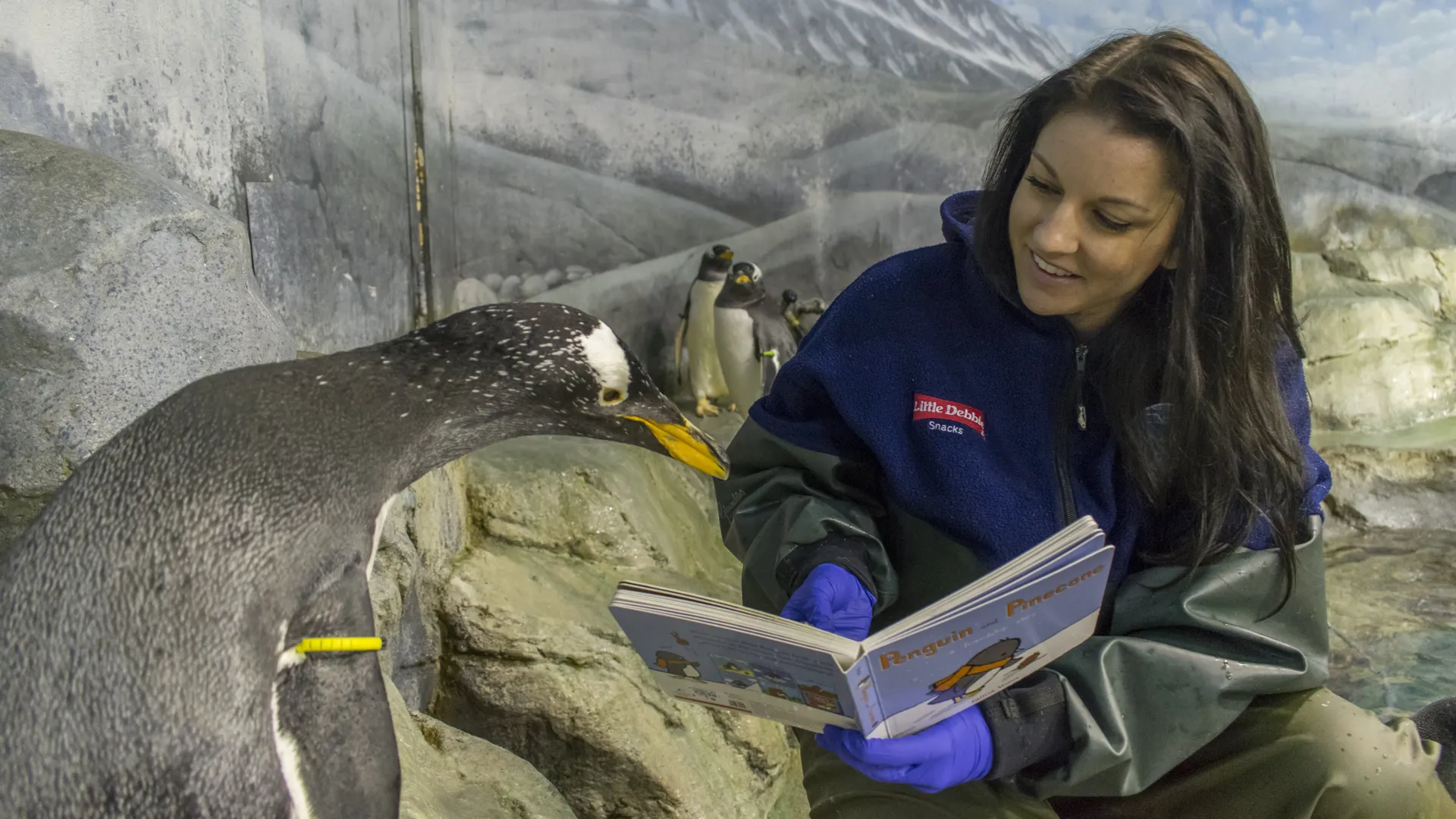
“It’s never easy watching animals we’ve cared for over many years deal with age-related issues, but we do everything we can to help them be comfortable,” says Senior Animal Care Specialist Holly Gibson. “Poncho seemed to enjoy beak scratches during his regular cold laser sessions, and I was happy to oblige.”
A difficult, compassionate decision
Despite his care team’s interventions, Poncho’s condition noticeably worsened in the last three weeks.
“You want a penguin to be able to check off all the boxes on what being a penguin is, and he couldn’t do that any longer,” Dr. Keller says. “Every step he took, if he was a human, he would have been wincing. And if he fell down or was knocked over by another bird, he couldn’t get back up.
“That’s just no way for an animal to live.”
On Monday, the decision was made to perform a humane euthanization on Poncho using an intravenous solution.
“He just went to sleep,” Dr. Keller says. “At that point, he was out of pain.”
He was a special bird who lived a good, long life.
Kevin Calhoon
Curator of Forests
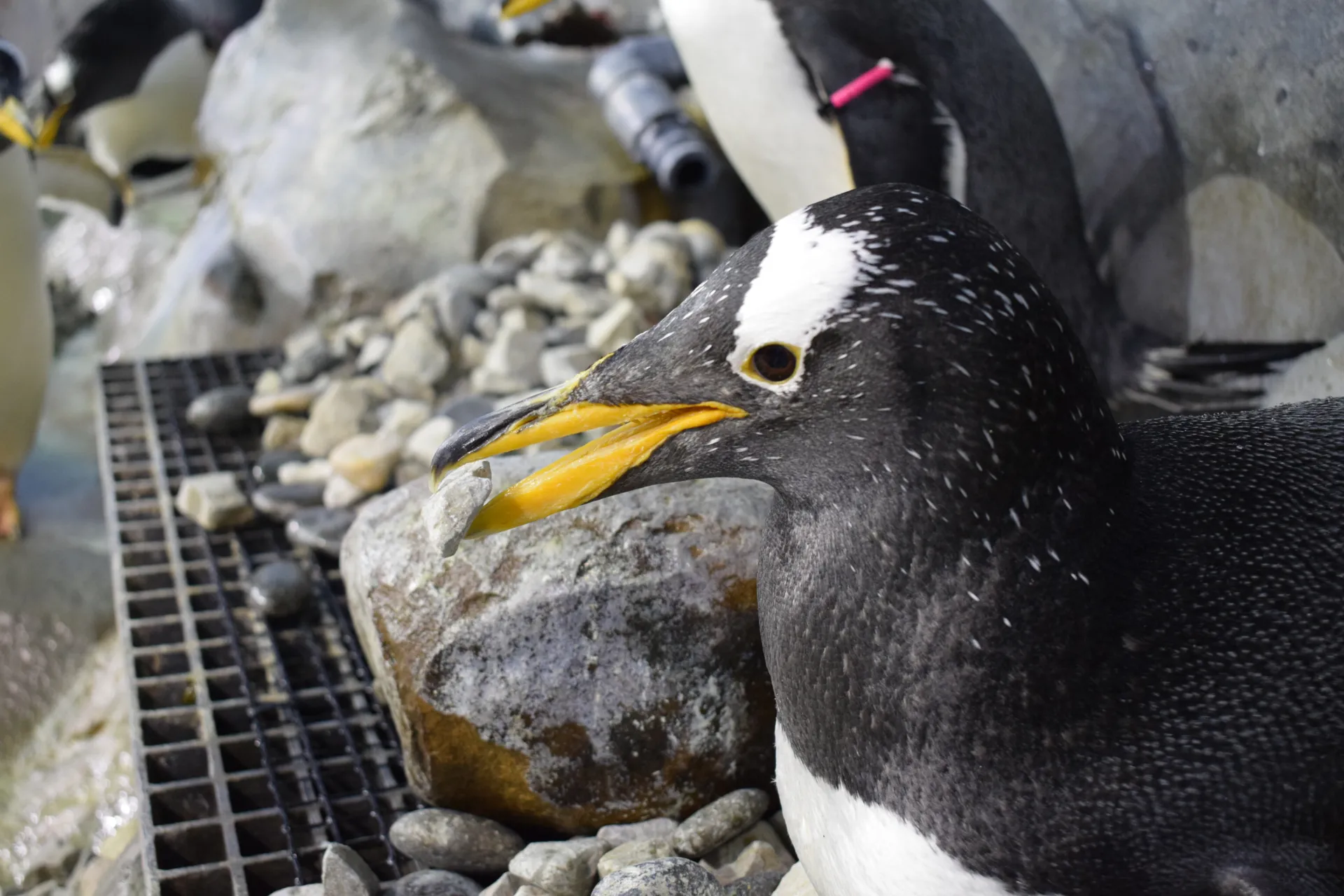
‘A good, long life’
Like all of the 20 birds that took up residence with the opening of Penguins’ Rock, Poncho came to Chattanooga from SeaWorld San Diego, where he hatched in 1994. At 32 years old, he lived much longer than the 28-year median life expectancy for Gentoo Penguins in human care at facilities accredited by the Association of Zoos and Aquariums.
Despite drawing Calhoon’s blood upon his arrival at the Aquarium, Poncho’s caretakers describe his personality as “sweet” and “laid back.” He was, however, a surprisingly picky eater for a bird of his size.
“Poncho didn’t always eat every day and would choose to fast some days and then have a large meal a few times a week,” says Assistant Curator of Forests Loribeth Lee. “That is unless you had herring, and then there was no stopping him.”
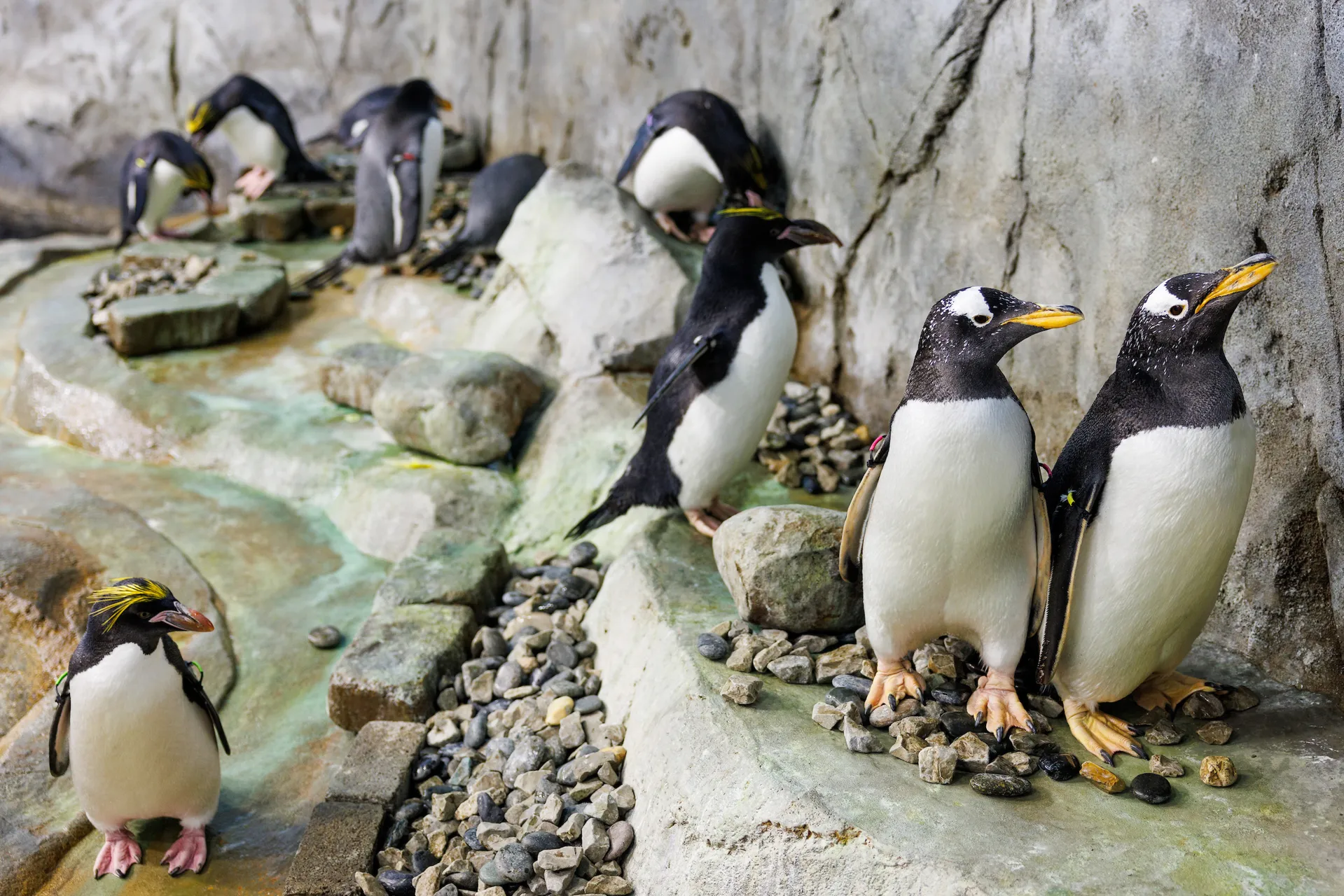
During his time in Penguins’ Rock, Poncho consistently paired up each spring with his long-time mate Peep, the gallery’s oldest female (35 years old). Despite their long-standing bond, the pair only produced one chick, Thor, who hatched in 2012 and now resides at the Detroit Zoo.
“Poncho loved ice cubes and spending time with Peep. Those were his favorite kind of enrichment,” Lee says. “He wasn’t the best nest-builder, but he was a great protector. He was a doting dad, feeding and looking out for Thor long after he left the nest.”
With Poncho’s passing, he leaves behind a lasting legacy as an ambassador for his species who inspired and awed more than 10 million guests from all over the world during his time on Penguins’ Rock.
“I always say ‘good care means old birds,’” Calhoon says. “He was a special bird who lived a good, long life.”