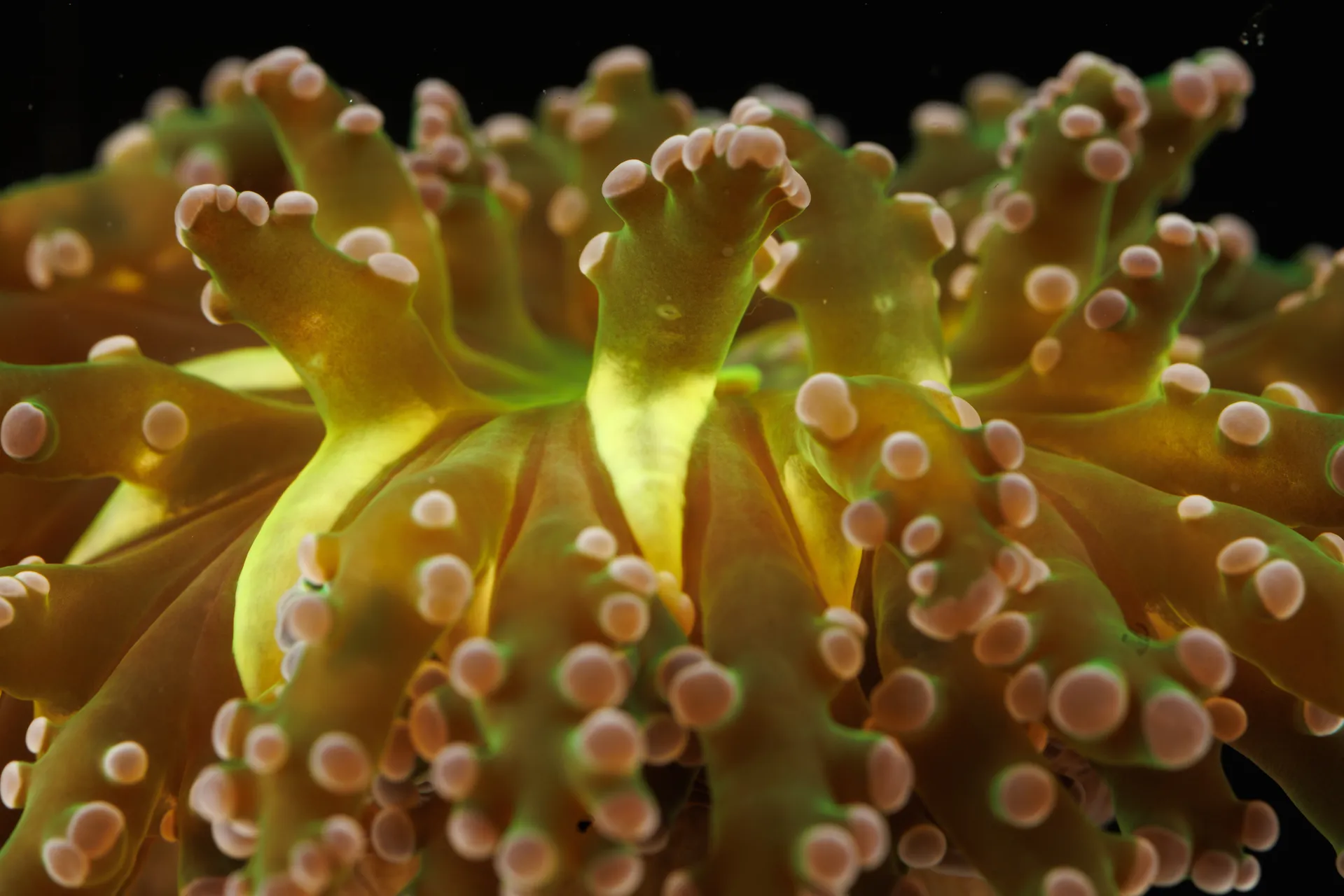
Below the ocean’s surface, coral reefs rise from the surrounding seabed like colorful, underwater gardens or sculptural exhibitions.
Some species sway gently in the current, their tentacles extending and withdrawing in slow, deliberate rhythms. Others aggregate in vast, textured structures that look more like stone than living tissue.
And when viewed up close, corals’ fissured surfaces, gaping mouths and translucent tissues make them seem alien — something that would be more at home under the light of some distant star than beneath the waves here on Earth.
What are corals, really?
Corals are colonial animals made up of thousands of tiny individuals called polyps. They are relatives of jellyfish and sea anemones and, like these taxonomic cousins, rely on stinging tentacles to capture prey.
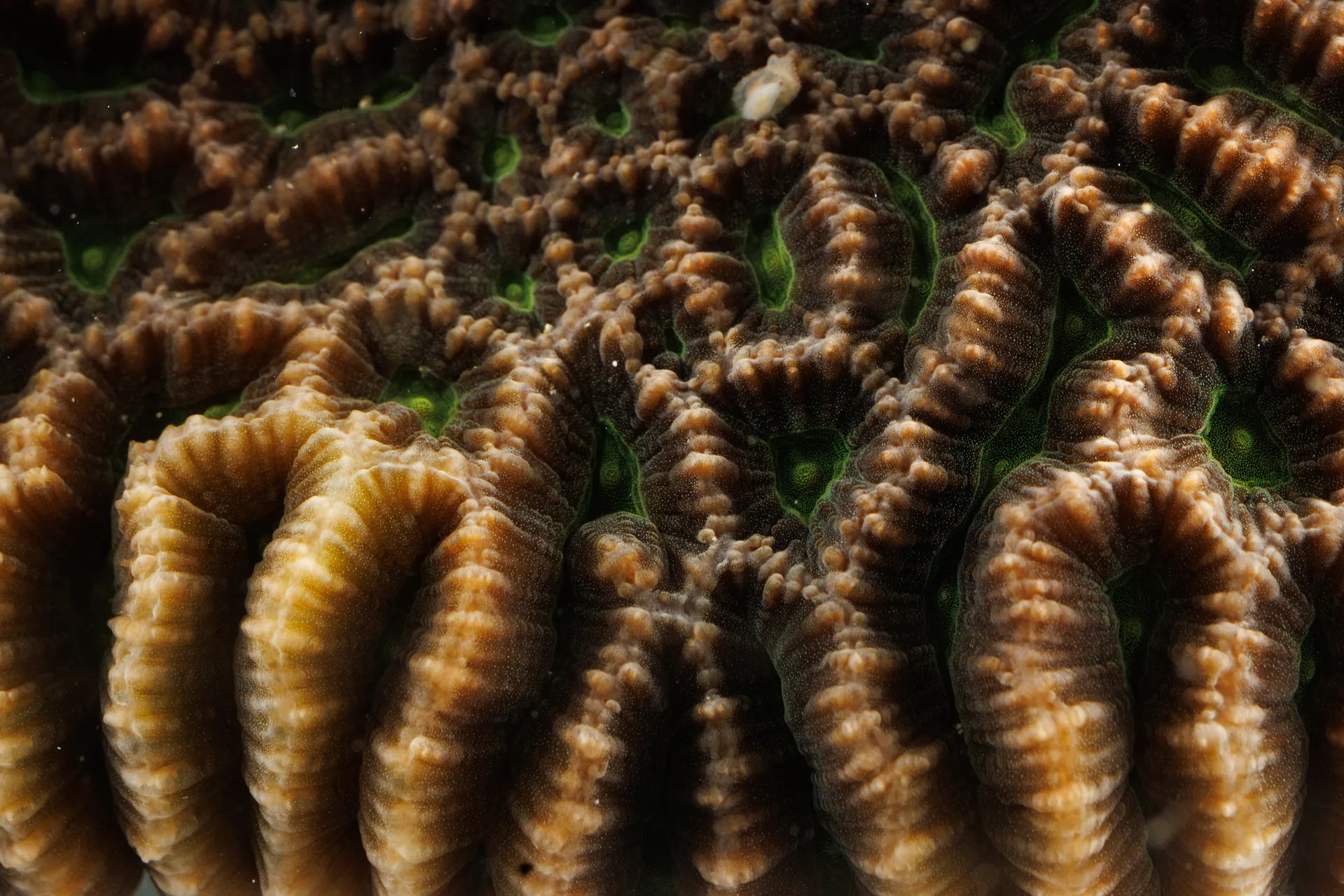
Coral polyps live together in a colony and are divided into two types: stony and soft. Stony corals employ a process known as calcification to create rigid, crystalline skeletal structures out of aragonite. (Aragonite is also the foundational material mollusks such as oysters and mussels use to create their shells and pearls.) The polyps produce this mineral by chemically bonding calcium and carbonate ions that they extract from the surrounding water.
Over time, the corals’ rigid skeletons accumulate to form coral reefs that support an incredible diversity of marine life.
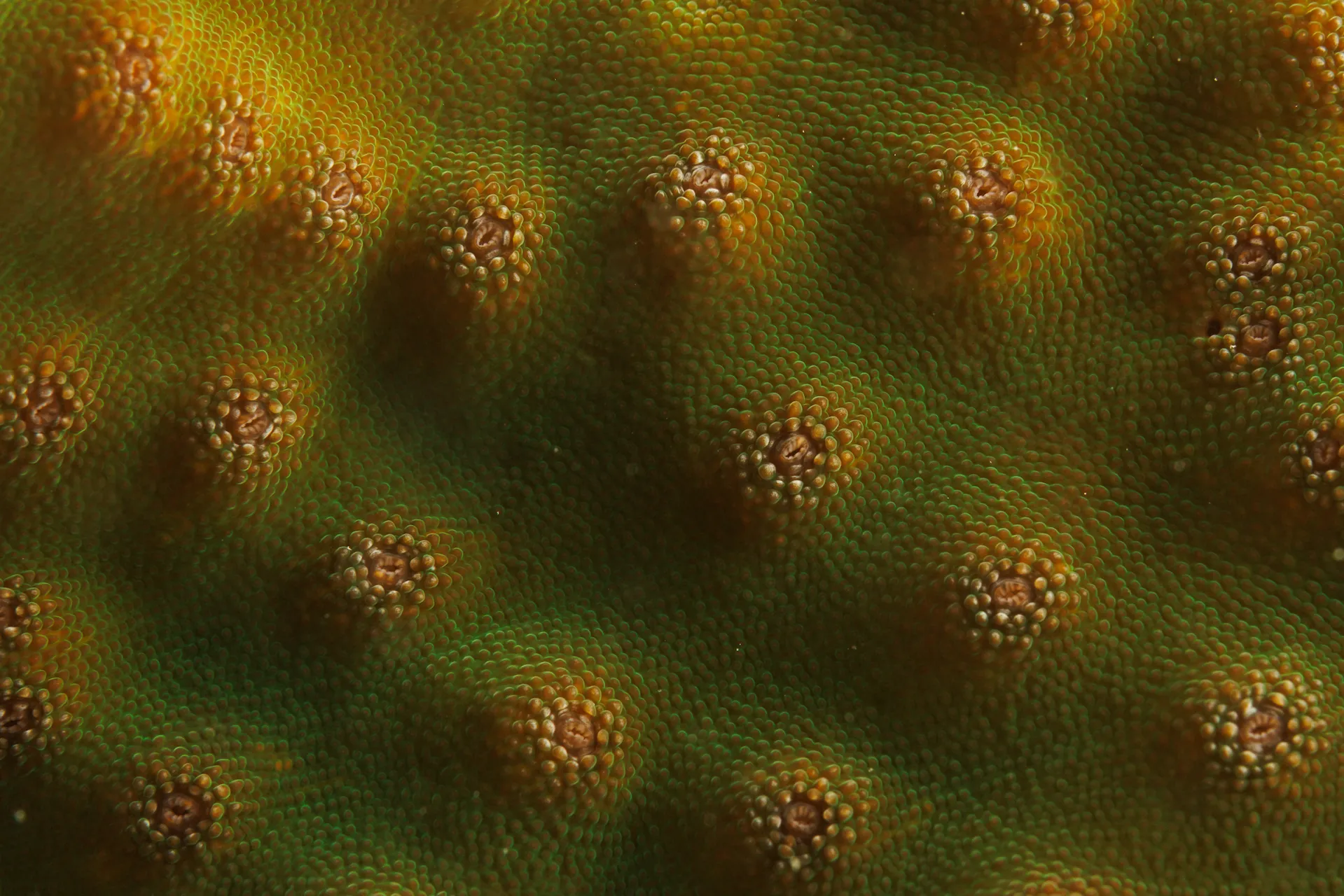
Coral polyps feed by capturing microorganisms like plankton using their tentacles, but that isn’t their only energy source. They also form a symbiotic relationship with microscopic algae, called zooxanthellae, that live in their tissues. The zooxanthellae are photosynthetic, meaning that, like plants, they convert absorbed sunlight into chemical energy. The zooxanthellae also help to give corals their various vibrant hues.
“If they didn’t have any zooxanthellae, a coral’s tentacles would be a whitish, clearish color,” says Life Support Systems Lead Aquarist Kyle McPheeters, who cares for the 6,000-gallon living coral exhibit in the Aquarium’s recently opened Scuttlebutt Reef gallery.
The zooxanthellae provide a significant amount of energy to the coral. In return, the coral provides shelter and carbon dioxide waste for the algae to use to create oxygen and sugars through photosynthesis.
What are we looking at?
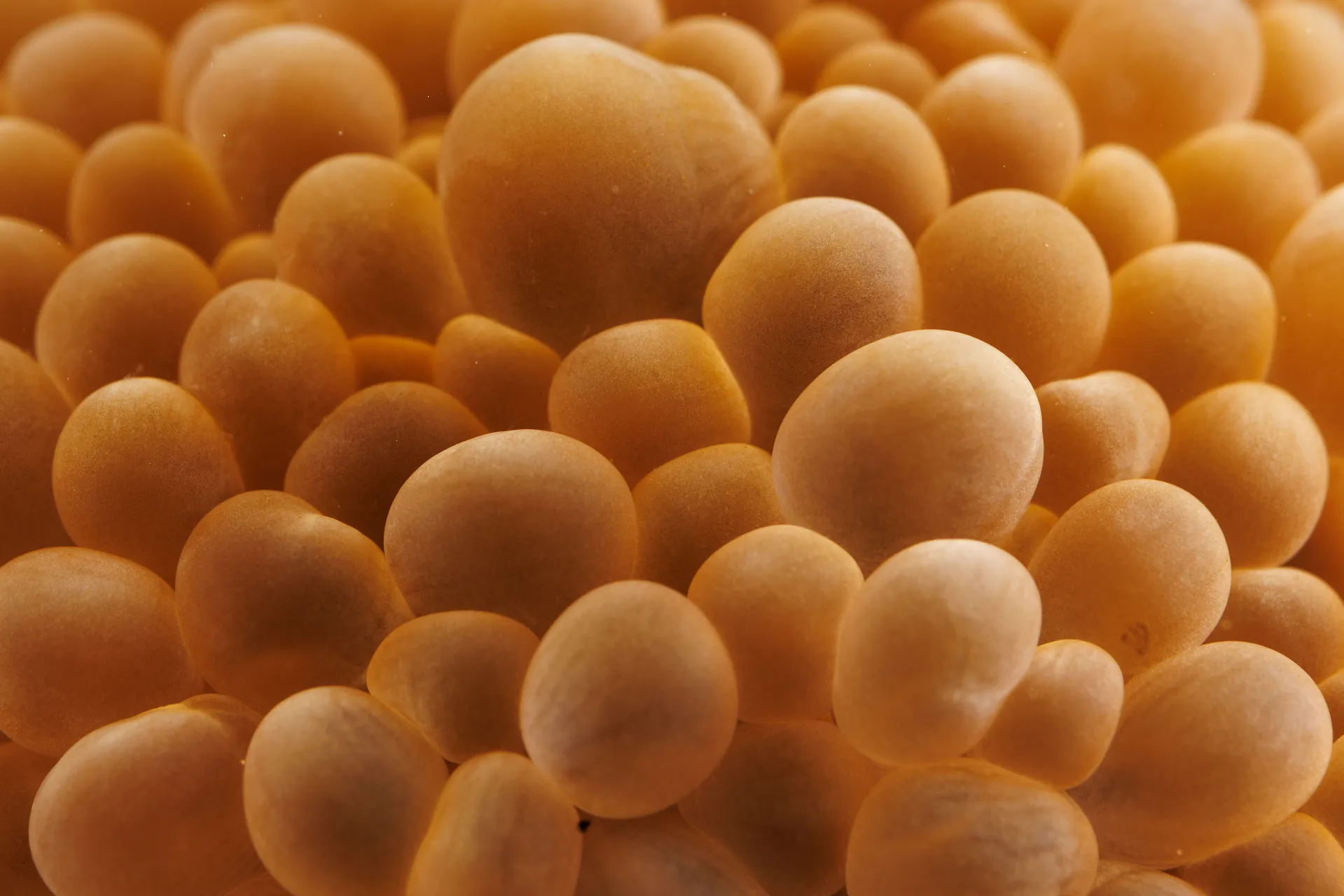
These up-close photos were taken in the leadup to the opening of the Scuttlebutt Reef gallery in March 2026. When creating a new exhibit, photographs are taken using specialized lighting and background setups to provide color-accurate images that guests can use to identify the species in exhibits. For the new reef habitat, ID photographs were taken of more than 30 corals.
During the ID imaging process, the Aquarium’s photographer also captured macro (close-up) photos that reveal minute details of different coral structures.
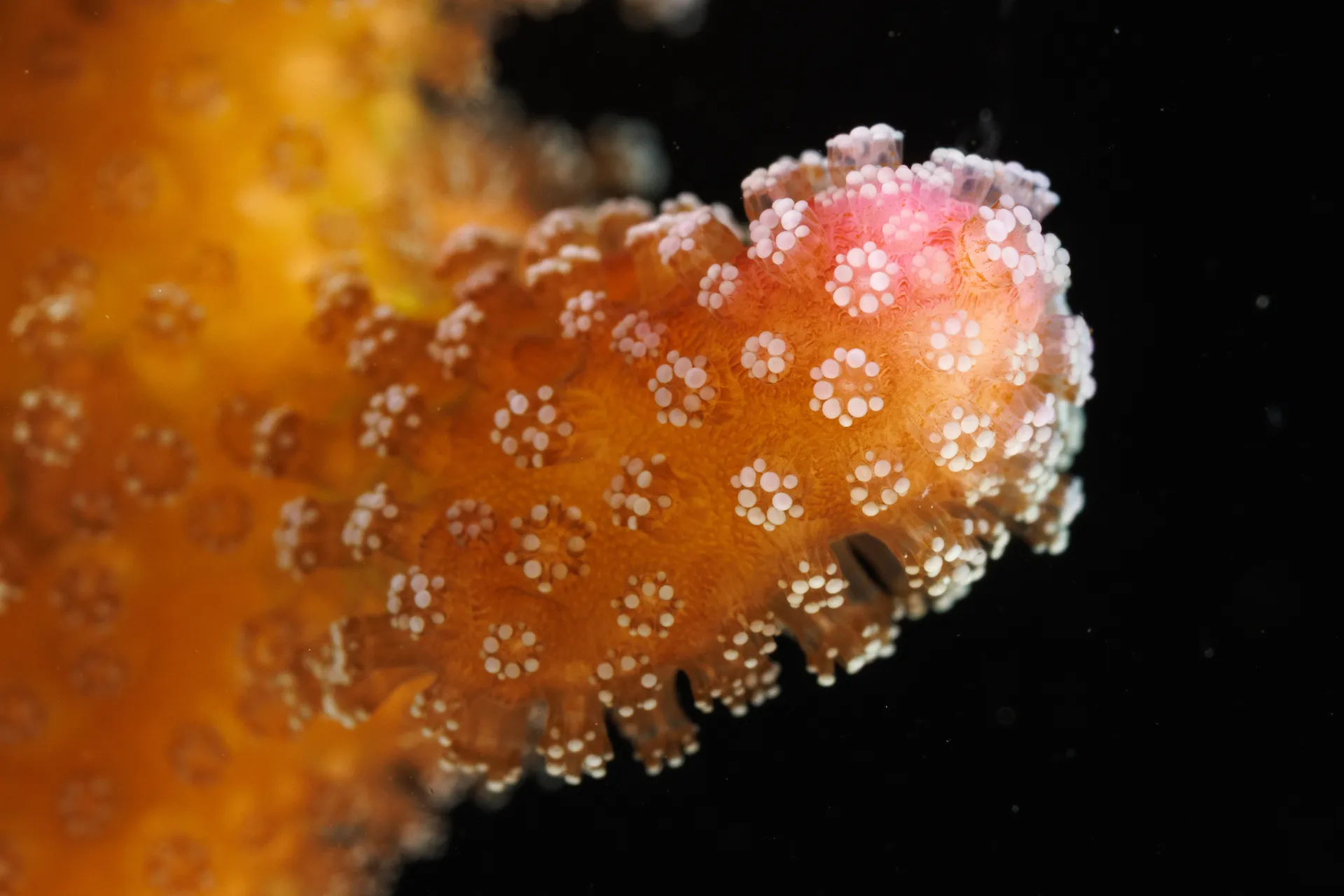
Polyps: the living animals
Each visible “flower” or “star” is a coral polyp with a cylindrical body, a mouth at the center, and tentacles arranged in a ring. They can vary in size from a few millimeters to several inches, but each polyp functions as a complete animal. Whether large or small, the polyps all share the same structure.
Tentacles: hunting tools and sensory organs
The tentacles of a coral are more than just decorative. They are equipped with stinging cells called nematocysts that paralyze or trap microorganisms, such as plankton. They are also used to move food toward the coral’s mouth.
Coral tentacles often appear translucent, glowing or textured. Many corals’ tentacles are visible only at night — their primary feeding time — and retract into the polyp during the day.
Mouths: the center of the polyp
The circular openings at the center of a coral polyp. Coral mouths serve double “duty” as a mouth (to consume food) and an anus (to excrete waste).
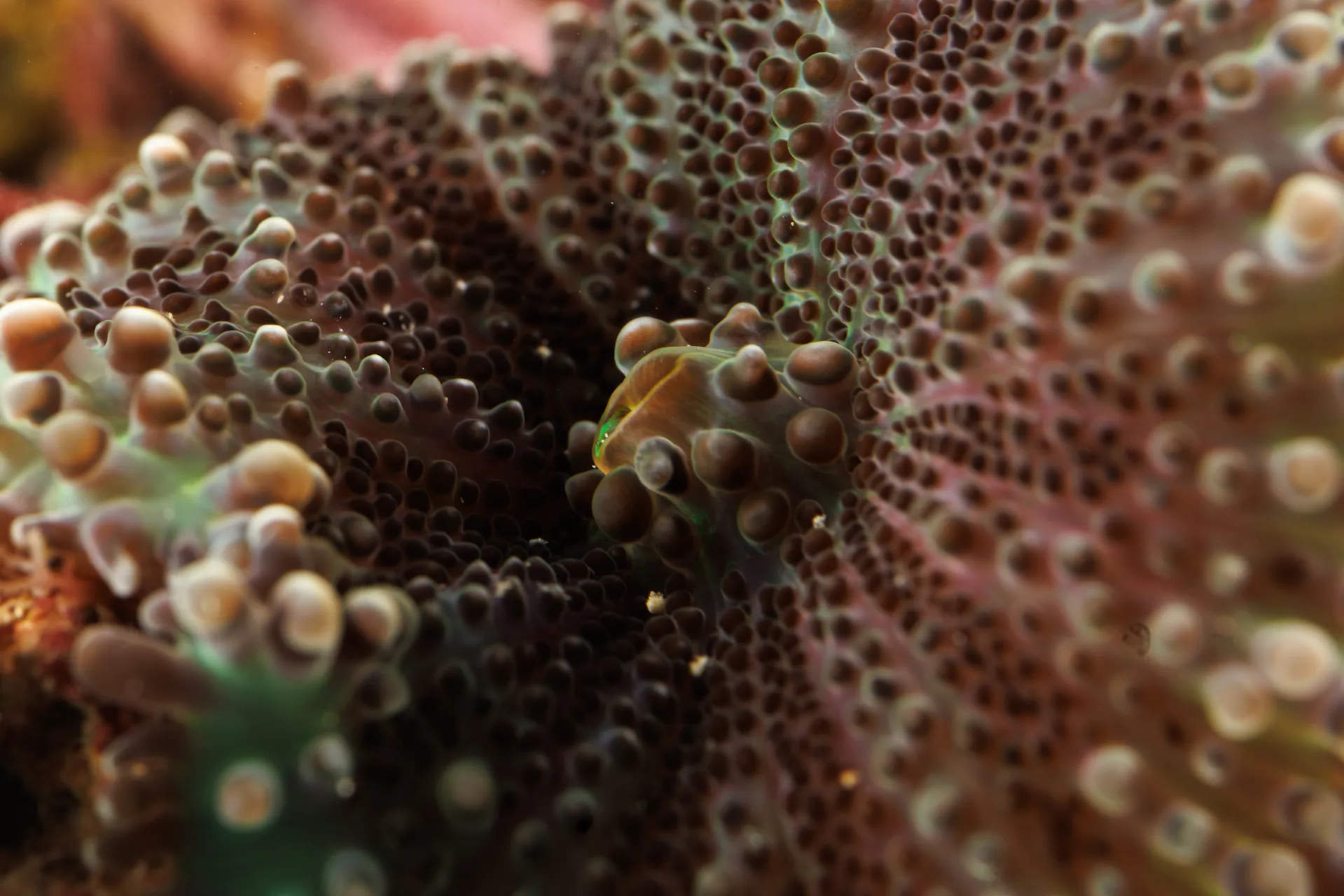
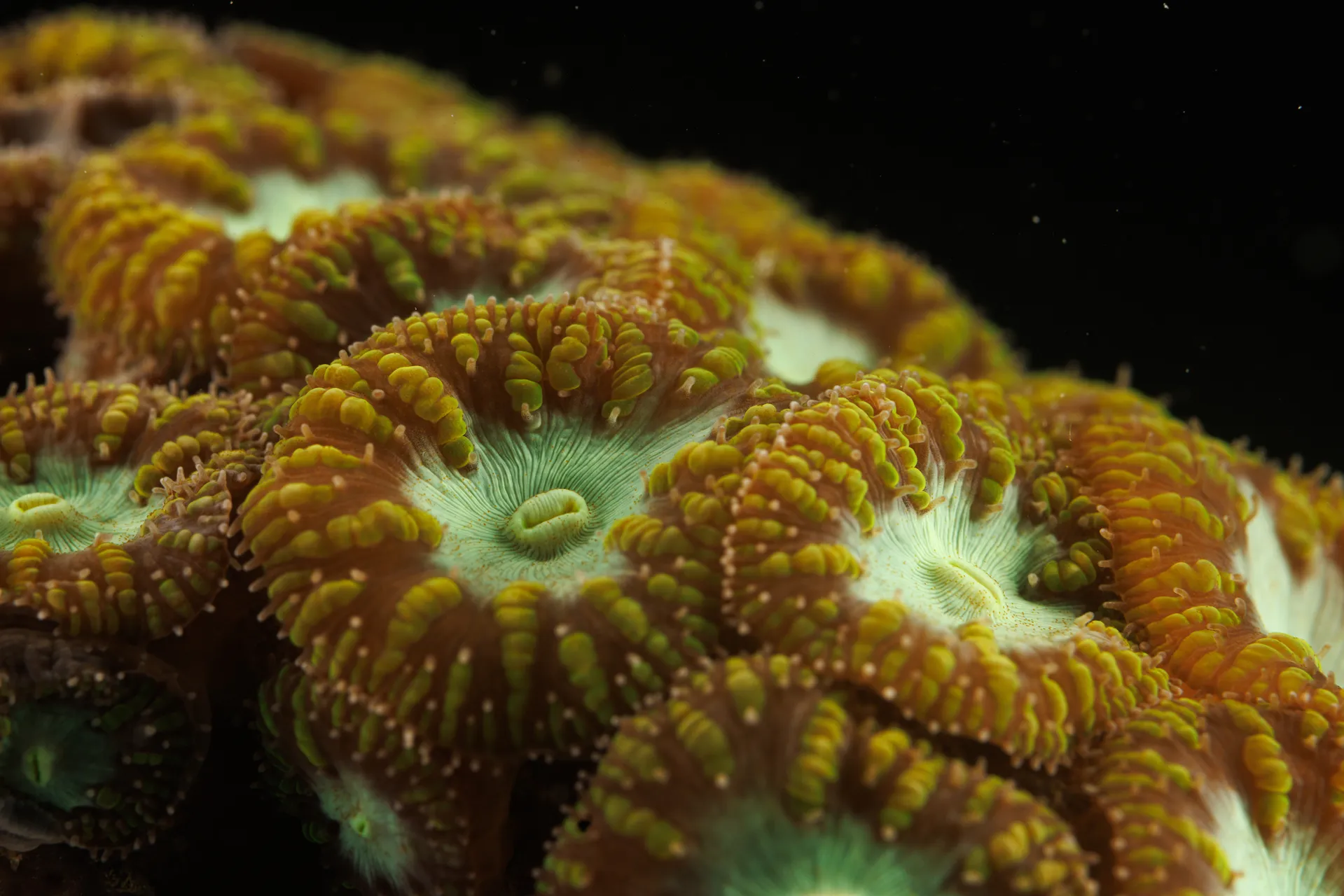
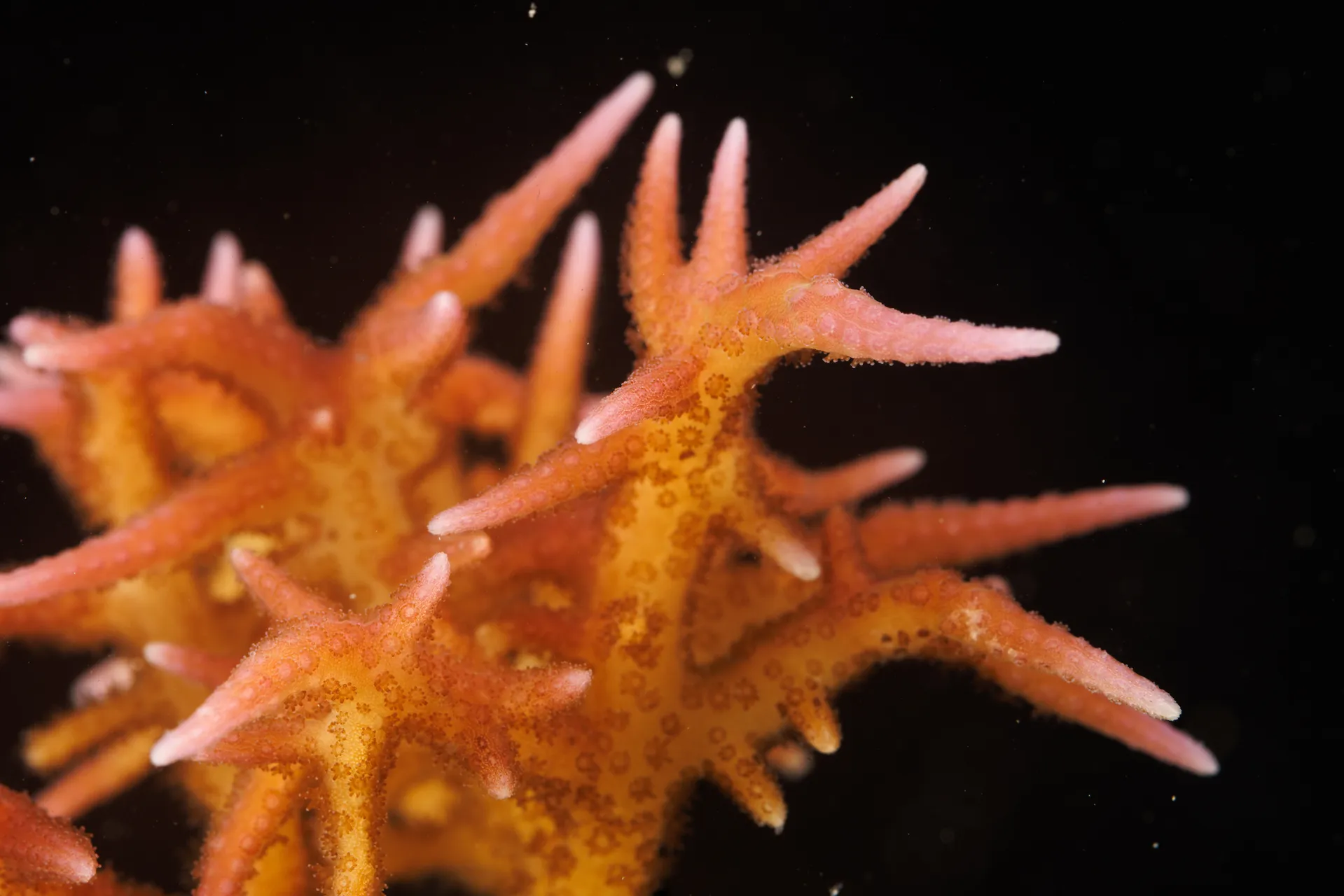
More than just decoration
Seen at this scale, corals are more than just window dressing for underwater landscapes; they are individuals. The tentacles, mouths, textures and colors in these photos are a reminder that reefs are not just static structures but living, dynamic communities shaped by countless animals working in unison.
What may look like abstract works of art are, in fact, the building blocks of some of the planet’s most important marine ecosystems.