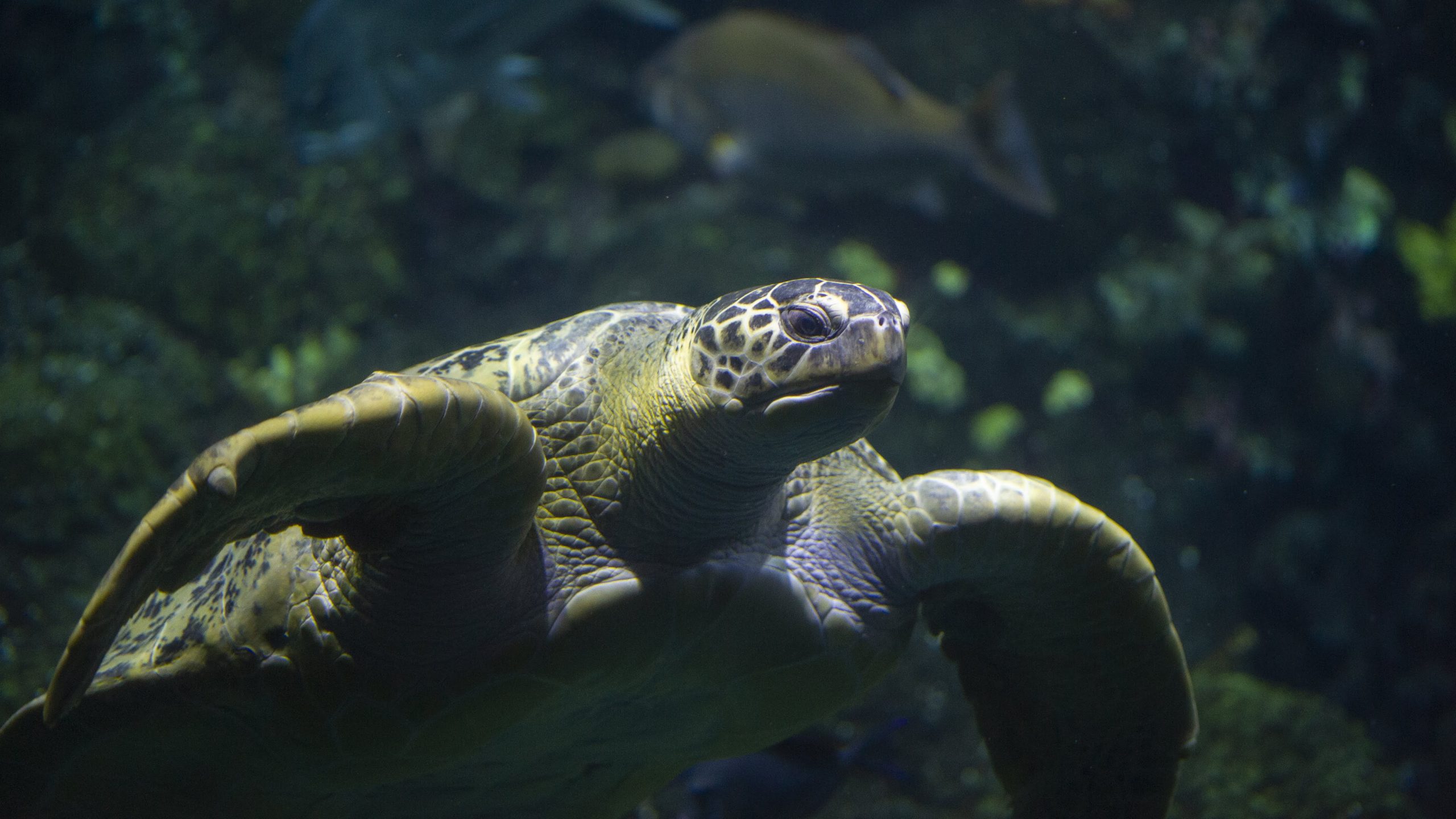
This year’s Turtle Month celebration plodded to an end as the sun set on World Turtle Day (May 23), but cultures across the world have long imbued these shelled reptiles with significance far greater than a single day — or even a month — could adequately reflect.
Much like catfish, turtles may strike some as unassuming, but they have left an indelible mark on world culture and history as models of acceptable behavior, sacred symbols, and even deities. Here are a few of our favorite examples.
The World Turtle
The concept of a massive turtle supporting the world on its back — or even acting as the world itself — has appeared independently in many mythologies. Anthropologist Edward Burnett Tylor pointed to ancient Hindu mythological texts as the originator of the concept, specifically the tale of Kurma, an avatar of the deity Vishnu. In this incarnation, Vishnu took on the form of a great turtle whose shell acted as the stable foundation for sacred Mount Mandara. The World Turtle myth appears again in North America among the Ojibway/Anishinabe people as a “turtle island.” Like many cultures, the Ojibway/Anishinabe have passed down stories of a world-ending flood. In their version of this intercultural tale, the world is reborn from soil that expands to enormous size on the back of a turtle (mishiikenh).
Among more modern texts, readers may also be familiar with the cosmic turtle Maturin, a significant figure in the mythology of author Stephen King’s novels. While King doesn’t describe the world(s) in his novels as resting on Maturin’s back, the giant space turtle is responsible for creating it/them.
“Honu”
The indigenous people of the Hawaiian Islands have a special relationship with sea turtles. The Hawaiian phrase “hanau ka po ia honu kua nanaka” translates as “from the darkness of time came the sea turtle with its plated back.”
Hawaiians’ sacred connection to these aquatic turtles is clearly shown in Kauila, a goddess who can appear as a human but whose parents were a Hawksbill Turtle (honu’ea) and a Green Sea Turtle (honu).
Kualia made her home in a freshwater spring near the black sands of Punalu’u Beach on Hawai’i (“the Big Island”). She was believed to be able to take the form of a young girl who would watch over and protect children who play at the beach.
Punalu’u Beach is noteworthy for underwater freshwater springs that flow up from the ocean bottom. Historically, free divers would descend to these upwellings with gourds that they would fill with drinkable water.
In Hawaiian mythology, Kauila was said to be able to make the waters of her freshwater pond surge up to quench the thirst of visiting children. Legend states that if you see bubbles at Kauila’s pond, it means she is nearby. Even today, children who visit Punalu‘u Beach often go in search of Kaulia.
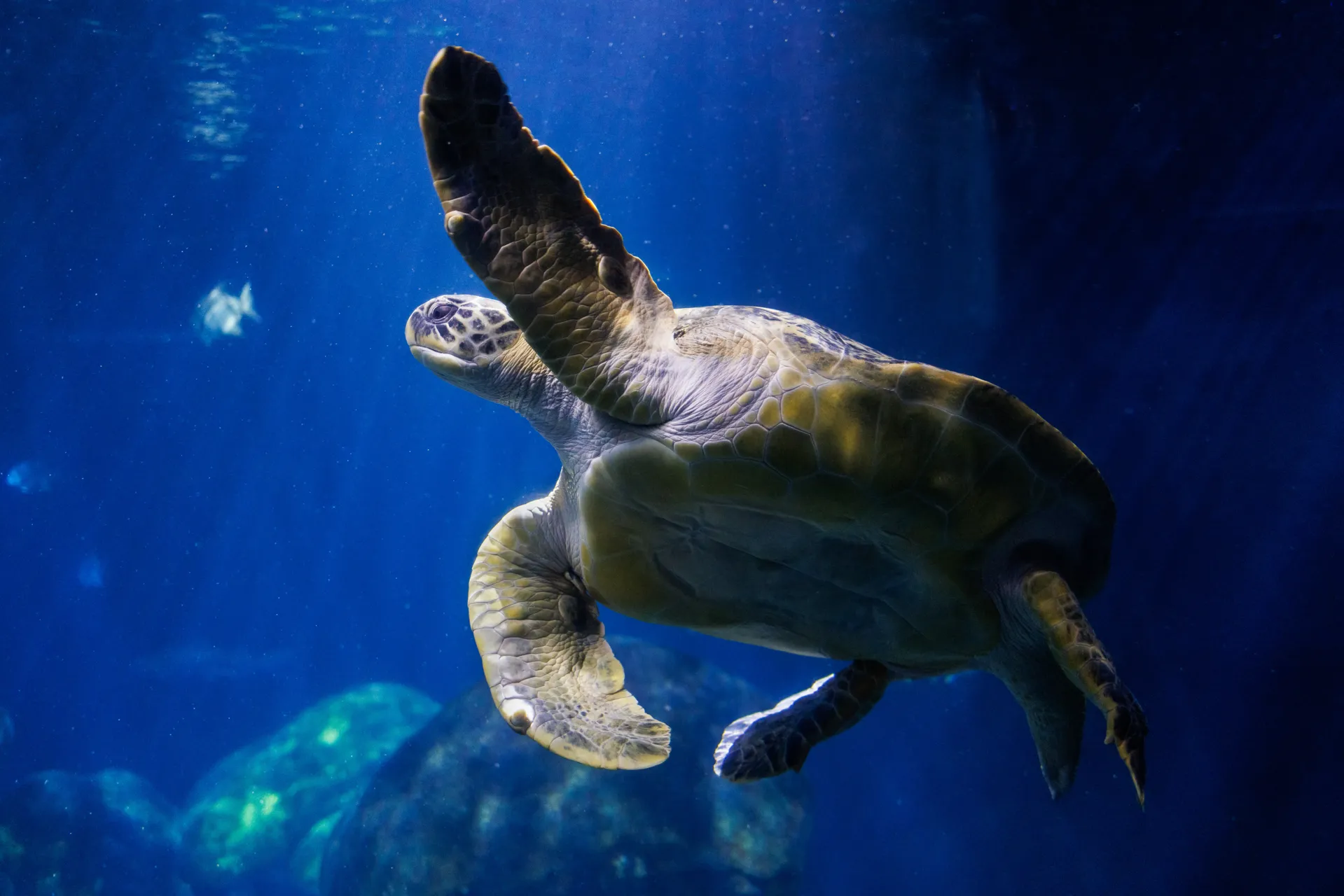
In 1995, a monument of a young girl sleeping safely on the back of a giant sea turtle was installed on Punalu’u Beach, which — fittingly — is often visited by Green Sea Turtles and Hawksbill Turtles.
The Tortoise and The Hare
You may think you already know this one, but the famous story of a steady turtle outracing a speedy hare doesn’t belong solely to the Greek storyteller Aesop. This tale has appeared in different cultures, and in different contexts, around the world. For example, in West-African folktales, tortoises are sometimes portrayed as tricksters. In one telling of the story from the region, the tortoise and its family devise a plan to beat the hare by
pretending to be the same tortoise, vanishing from behind him, while another is already crossing the finish line, “beating” the hare with ingenuity and teamwork.
The Igbo people hold up tortoises as symbols of knowledge. Tortoises appear so often in their folktales that they often say: “there’s got to be a tortoise in it” (or the story isn’t finished).