To some people, the outdoors are not appealing at all during the coldest months of the year.
Whether it’s the leafless trees, the drab, gray skies, the scarcity of animals or the chill, winter might not seem to have much going for it.
Well, bundle up, because I think this season gets a bad rap.
My name is Natalie, and I’m the Aquarium’s web administrator. I wanted to write this post to try to shift folks’ perspectives on winter and show that there’s beauty outside even during the colder months.
I grew up going on family hikes and was raised to appreciate nature, but as a teenager, I developed a strong distaste for winter. This lasted until 2020, when I decided to give the season another chance.
Up until this point, I hadn’t given cold-weather hiking much thought, but I set aside my distaste for the season and discovered that there’s beauty to be enjoyed on wintertime treks.
That winter, traversing iconic trails like Charlie’s Bunion and Alum Cave in the Great Smoky Mountains and Twin Arches in Big South Fork helped me realize why hiking during the coldest months could be just as rewarding as during the spring and fall. But there are more reasons winter is worth getting out to experience, so let’s run through a few.


The chill may bug you; insects won’t
First of all, I think it’s beneficial that some things are asleep in the cold. Ever notice how bugs invade your personal space in the summer? What about winter? Nope!
I spoke with our curator of forests, Kevin Calhoon, and he confirmed that most insects are dormant during the winter or haven’t begun their life cycles yet due to the colder temperatures.
I have recently learned to appreciate some bugs, but I don’t know if I’ll ever come around on mosquitoes and ticks, so I’m very glad those insects are less active in the winter. To me, there’s not much worse than hiking in the heat of the summer with 90% humidity and gnats swarming my face. Winter offers a peaceful break from these unwelcome guests on my hiking adventures.
Some folks may also be comforted to know that certain slithering reptiles are “asleep” during the colder months. Snakes, turtles, and other reptiles and amphibians use brumation — a less active, hibernation-like state — to conserve energy when sunlight is in short supply and the weather is cold. This may be disappointing to animal lovers who are keen to spot them while hiking, but I know many people who will be glad to learn that snakes, in particular, quasi-hibernate during winter.
(If you’re interested in learning more about how all types of Southeastern animals make it through the winter, check out our post “Winter Wildlife” on Riverwatch.)
A bare landscape, not a barren one
You may not notice them as much at this time of year, but plants are almost all still “alive” during the winter. After chatting with our staff horticulturists, I learned that the behavior of plants in the colder months depends on their distinctive life strategies.
Deciduous trees use a lot of energy to grow their leaves in the spring and summer. This broad, flat foliage re-absorbs energy, which these trees store through the winter by remaining dormant. This annual cycle restarts each spring with the appearance of buds that eventually unfurl to produce a new set of leaves.
While their deciduous counterparts become dormant, evergreens keep going strong during the winter. Evergreen trees don’t grow as much in spring and summer as deciduous species, but they conserve energy to survive the colder months. These trees have leaves that are built to withstand cold weather, wind and ice, so unless the tree is dying, they never lose them. (Hence, the name “evergreen.”)
Thanks to their persistent foliage and colorful fruits, evergreen shrubs and trees like Winterberry and Eastern Red Cedar tend to stand out a bit more in the winter landscapes of East Tennessee.
While hiking during this season, it’s always so nice to see a pop of green from evergreen plants when so much of the landscape feels zapped of color. I have often wondered, though, how plants like mosses and ferns also make it through winter.

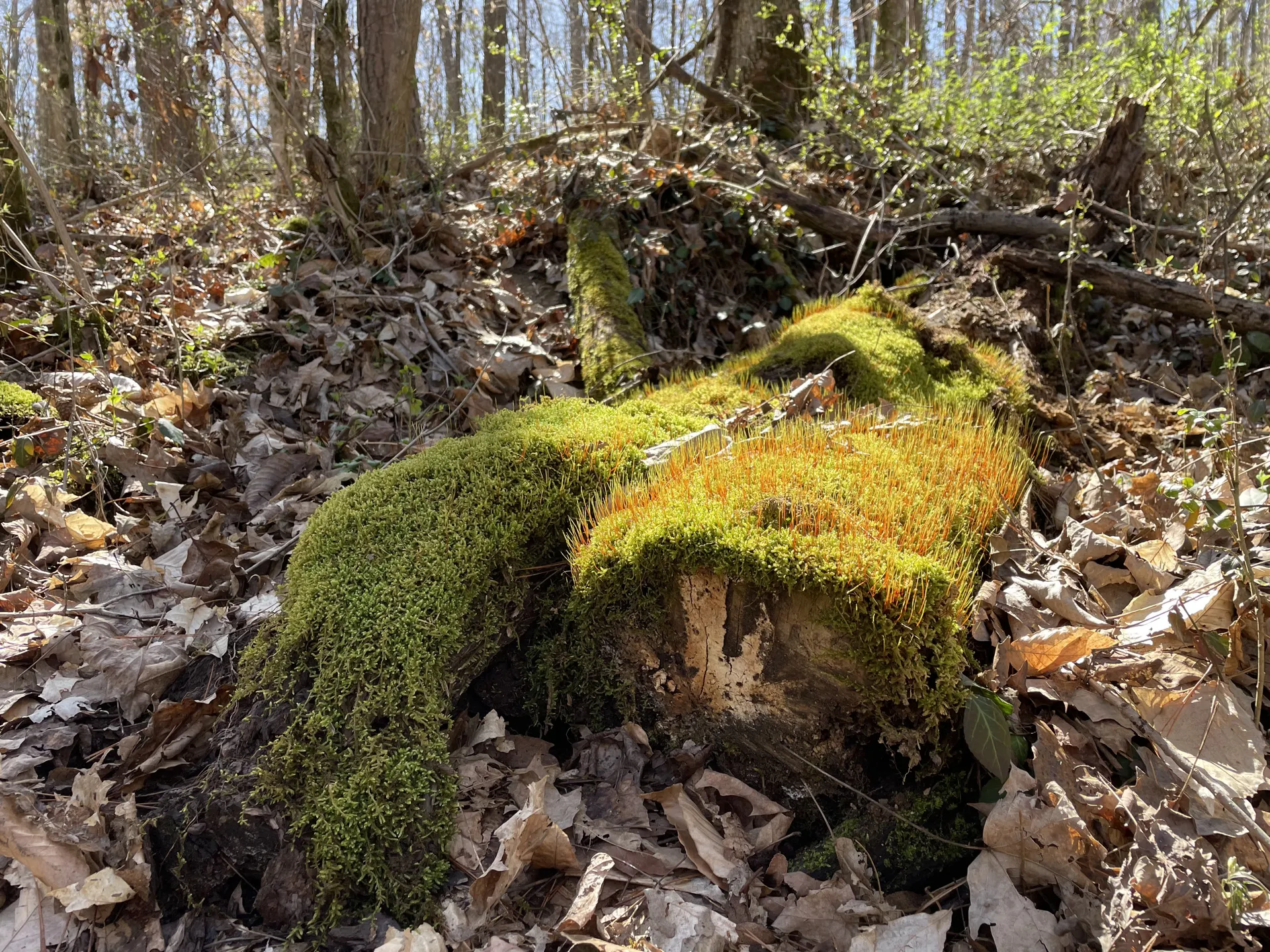
Our senior horticulturist, Austin Prater, tells me some ferns (primarily Christmas ferns) and many mosses have developed strategies to survive in colder climates with less light. Mosses — scientifically classified along with liverworts and hornworts as “bryophytes” — are famously cold-weather resilient. They can be found on every continent, with dozens of species that thrive even in the frigid, seemingly barren landscape of Antarctica.
In fact, a 2015 study published in the journal New Phytologist reported that the arrival of colder temperatures triggers significant changes in more than 3,000 genes in some species of moss. These genetic changes are linked to the rise in hormones that trigger production of cold-protective proteins and sugars.
Here in East Tennessee, you can often find moss in protected areas such as in coves, on ridge slopes and along north- or east-oriented hills facing away from direct sunlight and sheltered from harsh winds.
Barking mad for bark
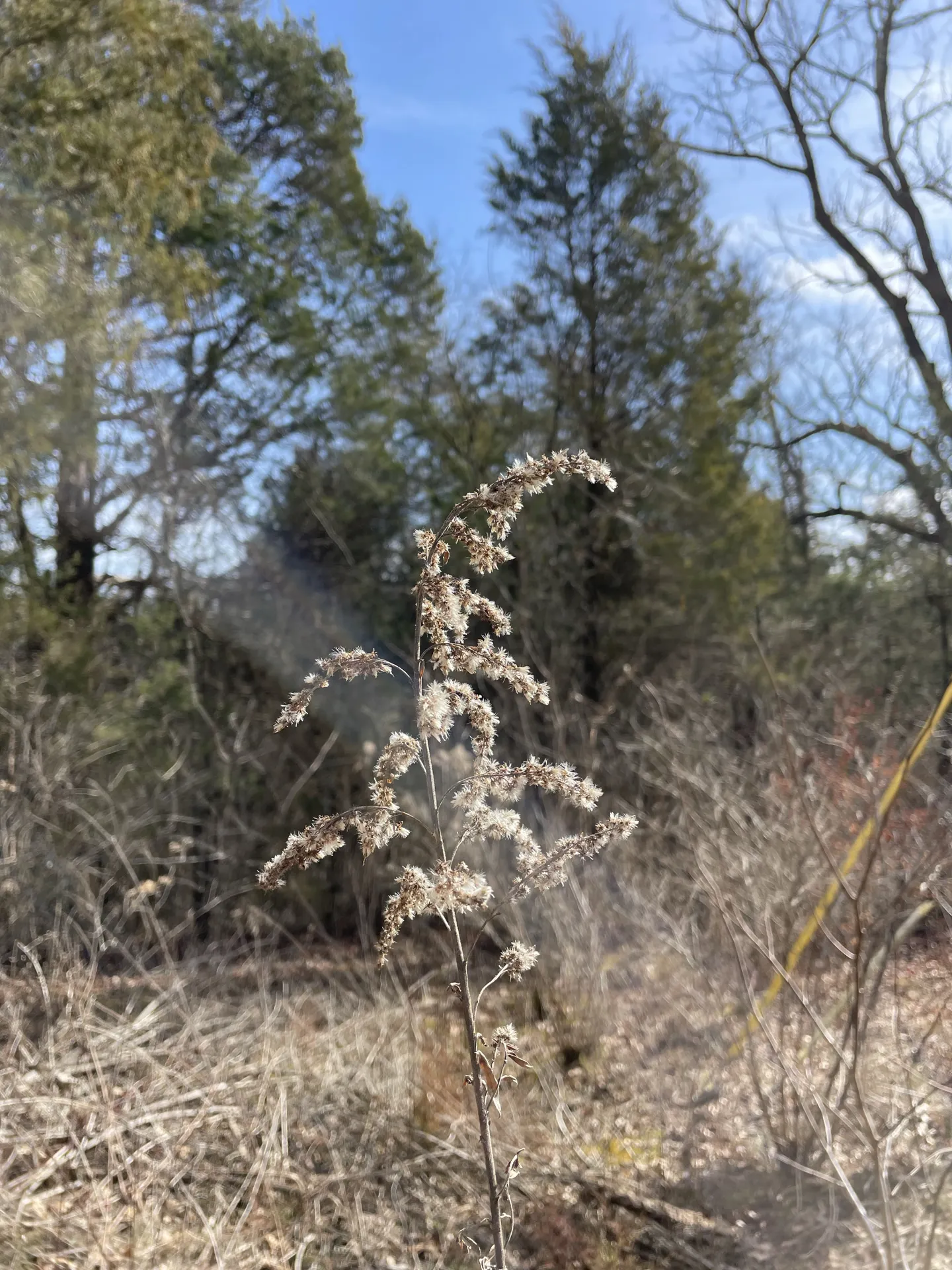
Even dormant plants can be remarkably beautiful in the winter. Some perennial wildflowers retain their shape while dormant. Keep an eye out for dried goldenrods, ironweeds and Queen Anne’s Lace (aka Wild Carrot and Bird’s Nest) when you hit the trails in the winter.
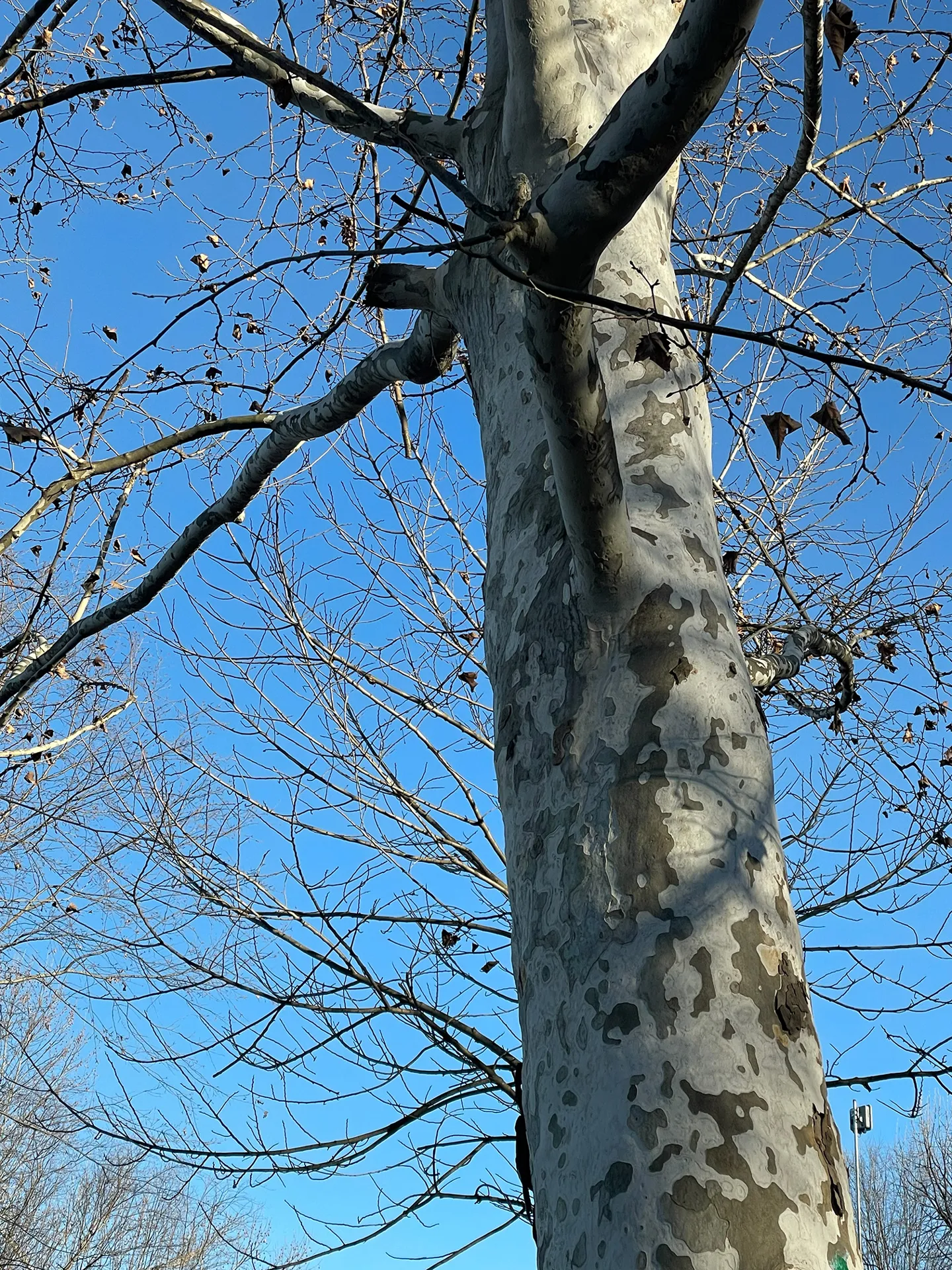
Also — and hear me out here — tree bark can be really fun to look at this time of year!
River Birch bark looks like curls of paper peeling away while the outer layer of an American Sycamore looks like patchy camouflage.
Although they aren’t actually native to Tennessee, I personally love the splotched look of Lacebark Elms. I often see this invasive tree from Asia — also known as Chinese Elm — while walking near our campus in downtown Chattanooga or along parts of the Tennessee Riverwalk.

Winter wonders in the “wet season”
No matter the temperatures outside, natural formations are a consistent gem of the landscape. Tennessee has many amazing geological formations to see on trails. If you’re near the hills or mountains, scenic views are still incredible at this time of year, and the shape of the land is arguably easier to appreciate after the leaves have fallen. And in my opinion, bodies of water are always beautiful, regardless of the season.
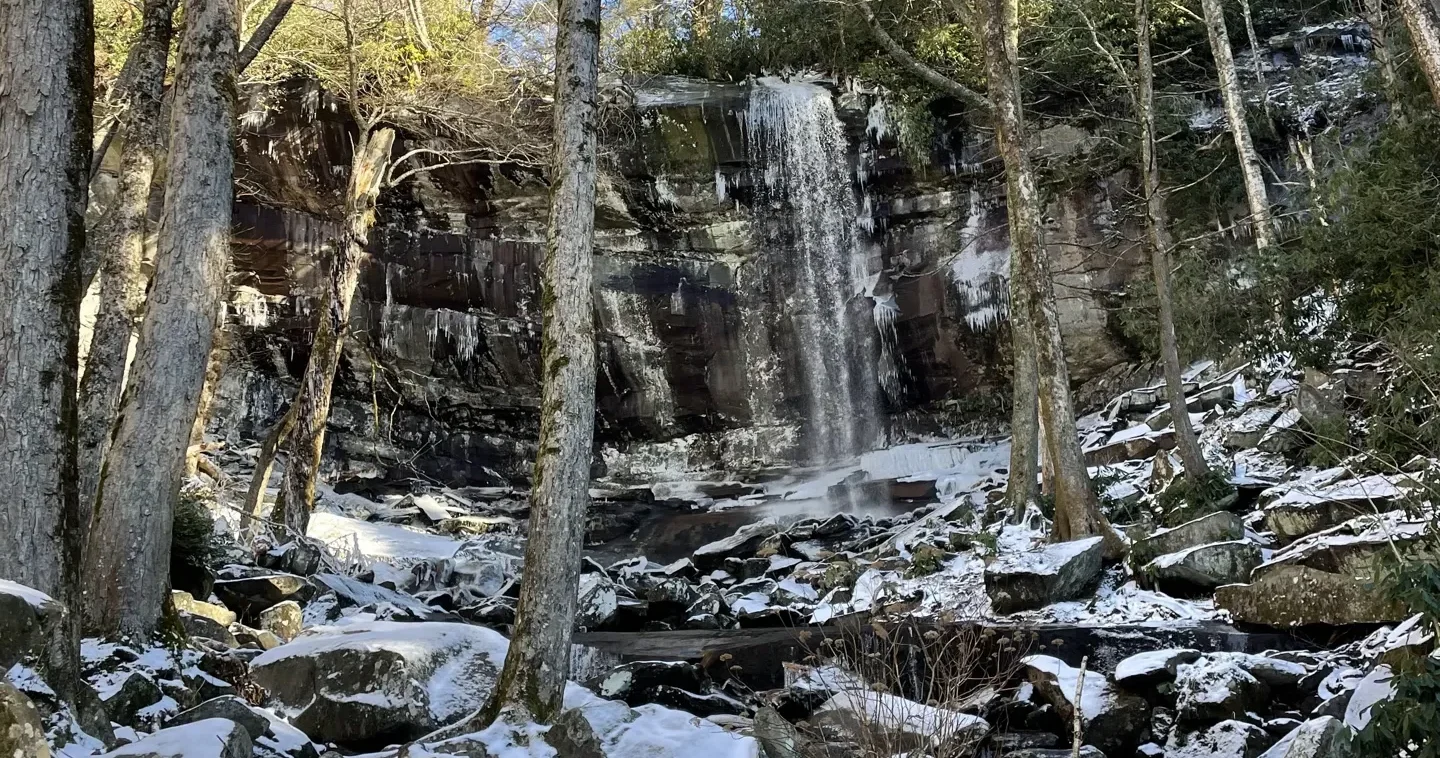
Speaking of water, winter is the time of year with the most rainfall in East Tennessee. That means the numerous waterfall trails in the area are stunning in the winter season. If it’s cold enough, there are some gnarly icicles that form, too.
Frozen precipitation adds a beauty all its own. The forest scenery is extra gorgeous on the rare occasions when East Tennessee gets snow. Since I was born and raised in the Southeast, I haven’t experienced snow very often, but the few times I’ve hiked after a snowfall have been magical.
Another bonus of the rainy season is mushrooms! Fungi thrive in moist environments, so East Tennessee’s “wet season” is the perfect time to find these little natural treasures on fallen trees and underneath leaf litter. I’ve spotted various species of mushrooms on almost every winter hike I’ve been on, and it’s always a treat.
Obviously, it’s easiest to find snow at higher elevations, such as those in the Great Smoky Mountains. As always when going outdoors, though, be prepared with proper clothing and equipment before setting out. Especially on trails that traverse significant elevation changes, weather conditions at the trailhead can be much different further into the mountains — speaking from experience. I recommend dressing in layers and bringing some micro spikes for your hiking boots in case you encounter ice.

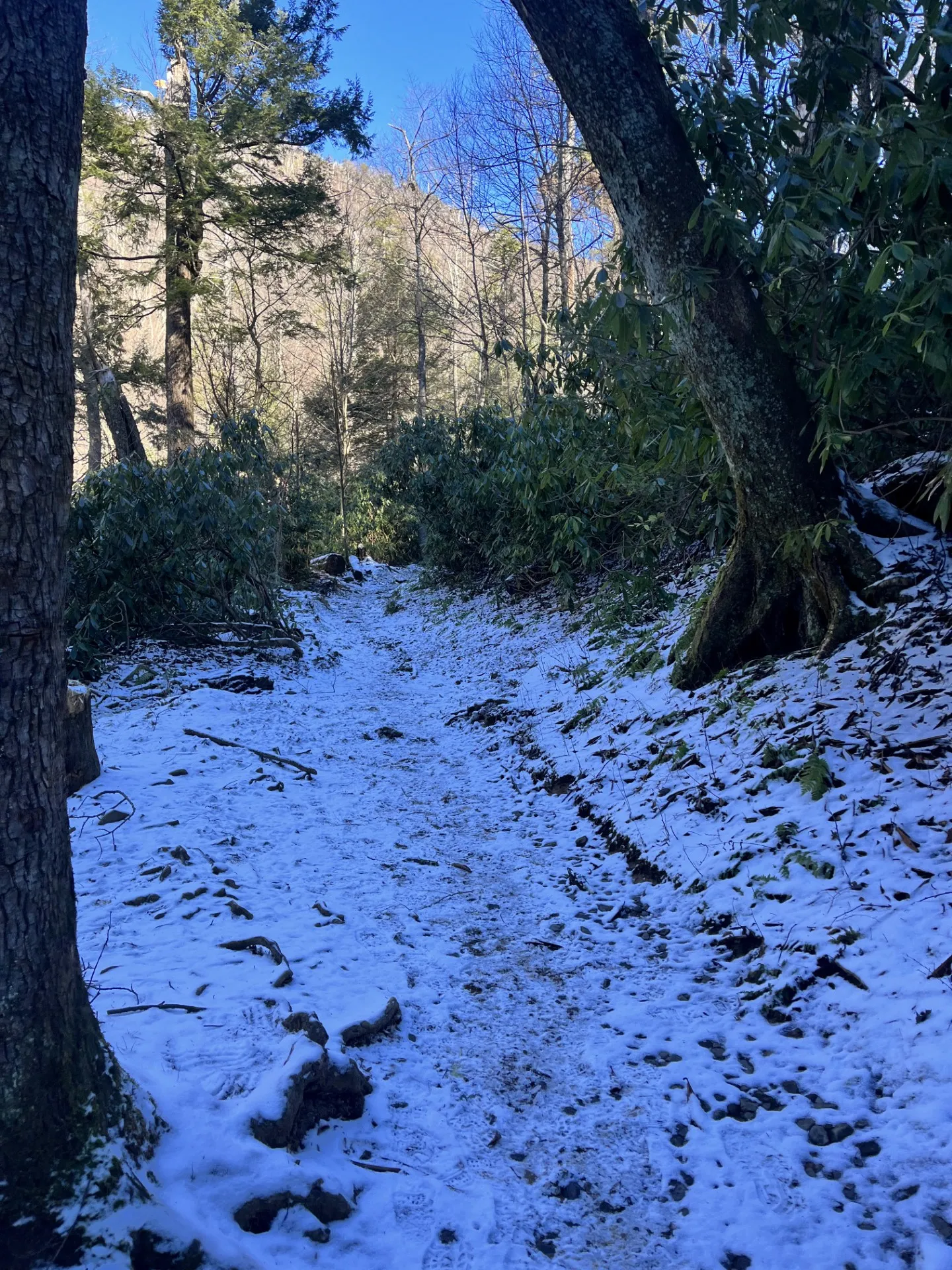
On a January hike to Rainbow Falls in the Great Smoky Mountains, temperature and trail conditions changed drastically throughout my trek.
Bet on the birds in winter
People often associate spring with peak birding season, but it’s actually much easier to spot birds in the trees with fewer leaves. Calhoon — who is also a seasoned birder — tells me that, while species such as Northern Cardinals and Carolina Chickadees live in Southern Appalachia year-round, there are a whole different group of species that specifically migrate to our region in the winter. Many species of waterfowl overwinter in wetlands of East Tennessee. One of these, the Sandhill Crane, has been the focus of the annual Sandhill Crane Festival, which is now in its 35th year.
Overall, I think winter is a great time to slow down, take a break from your day-to-day routine and mitigate cabin fever with some time spent outdoors. And when you do, take a deep breath of the crisp, fresh air, relish the stillness and soak in all the subtle signs of life on display in this supposedly “dead” season.