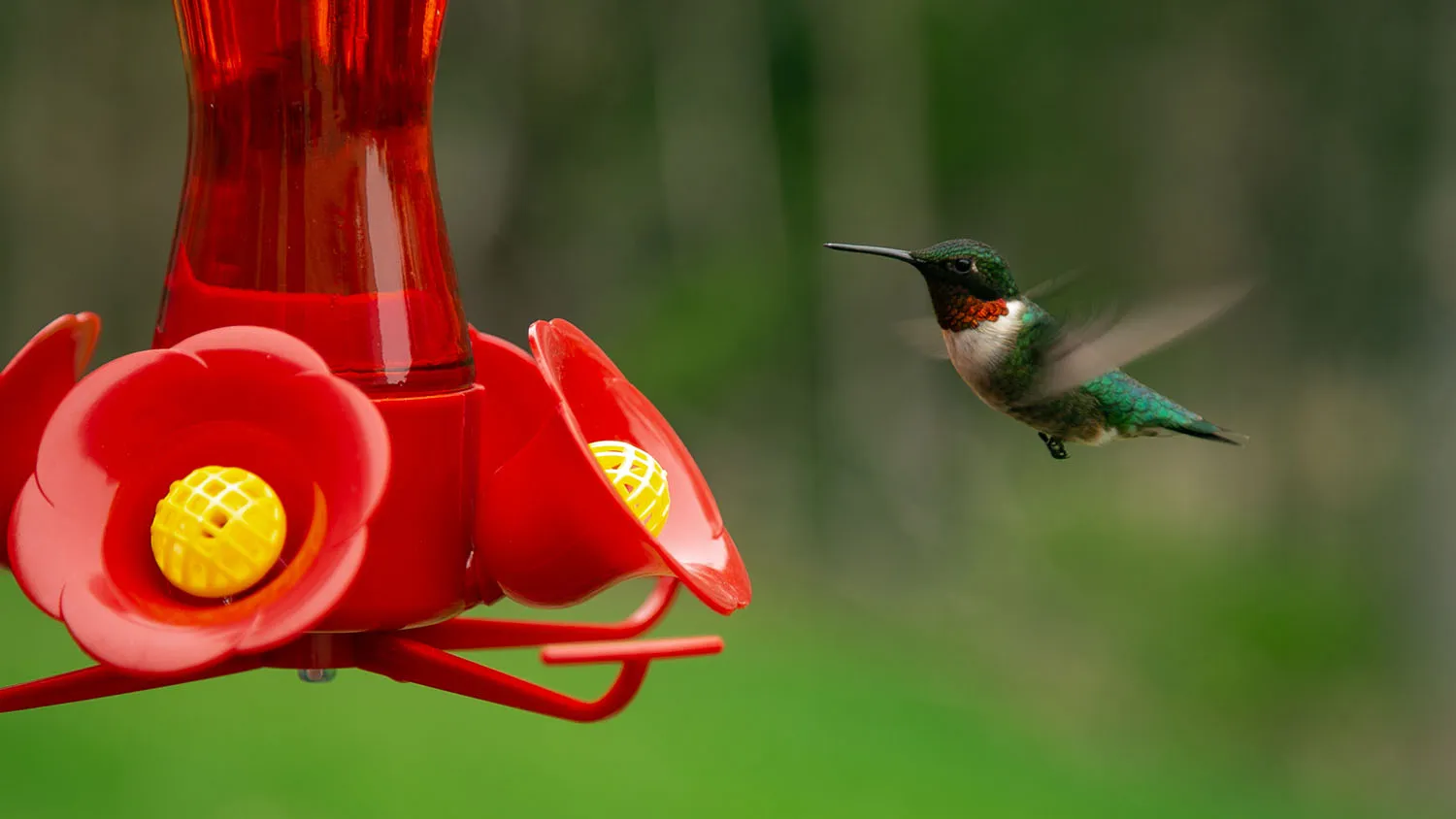
 With their abundance of energy and association with flowers, there’s something undeniably summer-y about a hummingbird. And like summer, most hummingbirds don’t stick around forever — in East Tennessee, at least — preferring to make their way to Central and South America when the weather cools.
As autumn finally makes its presence known in East Tennessee, many bird lovers may wonder whether it’s finally time to take down their hummingbird feeders. Like other migratory species, hummingbirds are also traveling south, so knowing when to remove your feeders will support their natural migration patterns.
Ruby-throated Hummingbirds are the primary species passing through East Tennessee in the fall, though other species like Rufous Hummingbirds can rarely appear if they are thrown off course during their migration.
Ruby-throated Hummingbirds begin their migration in late summer. Most have left the region by mid-October, but there are exceptions. Some individuals may linger due to age or weather, and they still need food as they travel.
The best time to take down hummingbird feeders
To help ensure that even stragglers have a source of food along their migration route, a good rule of thumb is to leave your feeders up for at least two weeks after your last sighting of a hummingbird.
In East Tennessee, this usually means that you should leave your feeders up through mid- or late-October. If you haven’t seen any birds in your yard, the feeders should be taken down by early November.
Following this method helps ensure late-season birds have an energy source as they travel south.
Does leaving my feeders up delay migration?
Good news: leaving up birdfeeders — including hummingbird feeders — does not delay migration, according to experts at the Cornell Lab of Ornithology.
Migration is triggered by a multitude of factors, including day length, but not by the availability of food. In fact, leaving your feeders up can help ensure late birds have a reliable source of energy for their long migration.