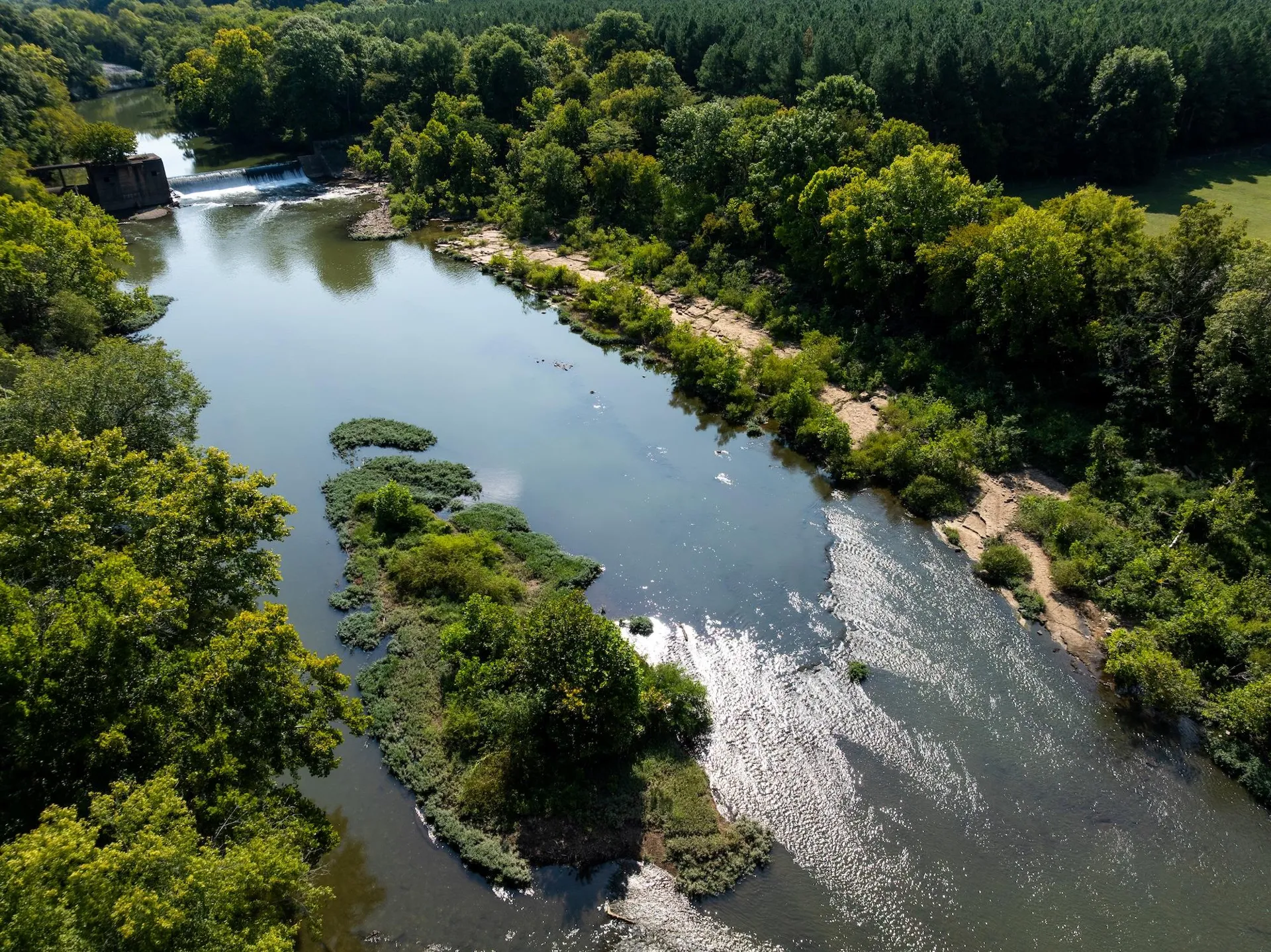
Chattanooga, Tenn. (June 30, 2026) – From a legacy of deep cultural significance to Native Americans and opening up the state’s hinterlands to European exploration to spurring settlement at places like Nashville, Chattanooga and Memphis, rivers are deeply intertwined in Tennessee’s history.
Of course, it helps that there are so many of them.
According to the Environmental Protection Agency, the Volunteer State contains more than 61,000 miles of rivers and streams. United into a single waterway, this vast hydrological network could wind back and forth between Johnson City and Memphis more than 70 times with hundreds of miles to spare.
These rivers and streams aren’t just beautiful flourishes to the state’s landscape. They are sites for recreation and a valuable source of drinking water as well as thruways for commerce.
They are also incomparably rich with aquatic life.
“You might think most of the fishes in the world are in the oceans, but almost half of them are in fresh water, even though it makes up less than 1% of water on Earth,” says Aquatic Conservation Biologist Dr. Bernie Kuhajda.
“An incredible amount of aquatic biodiversity is in big rivers. There are a lot of special rivers in Tennessee, but all of them have one thing in common, which is free-flowing water and a pretty good natural environment.”
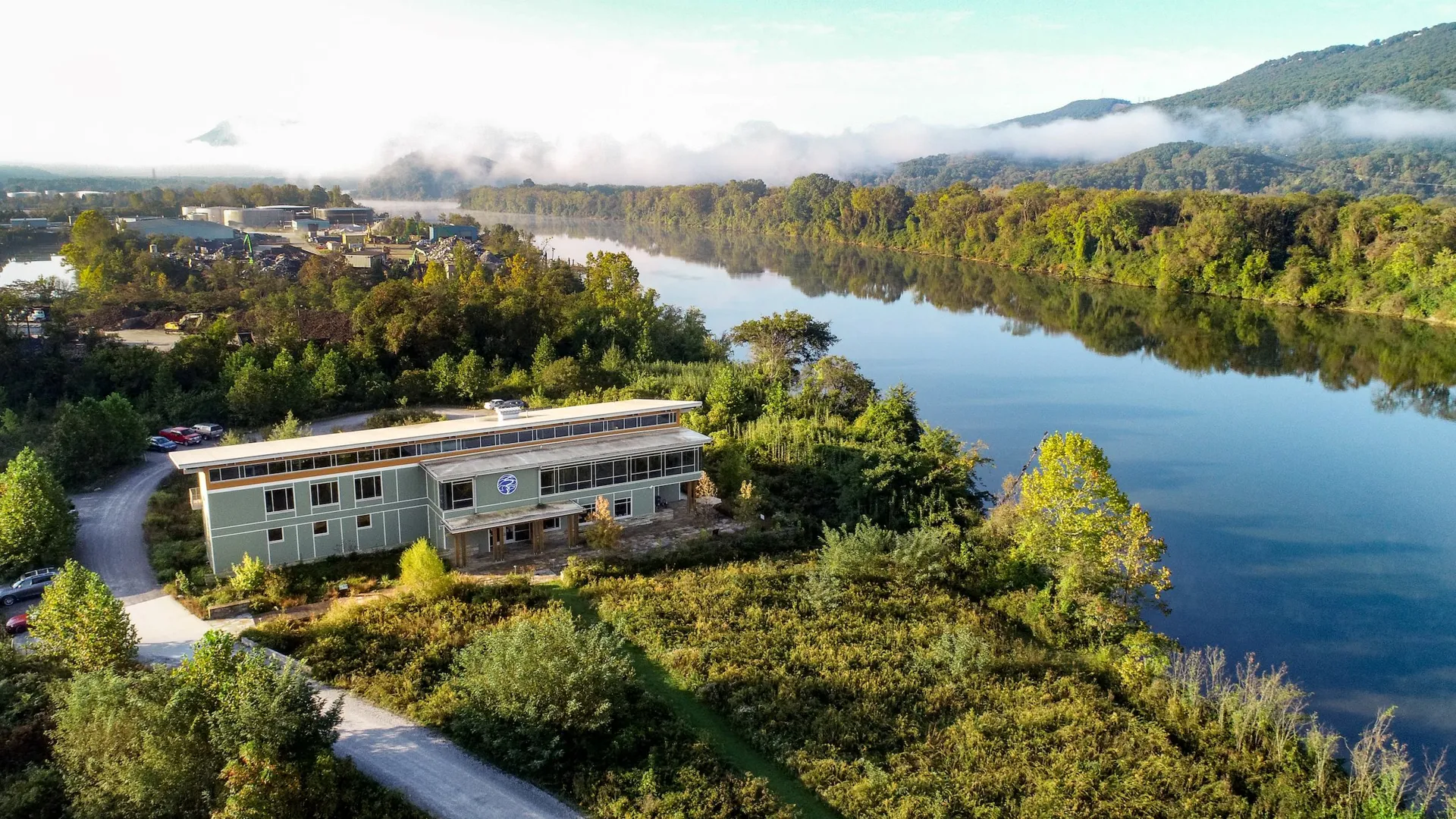
According to the EPA, more than 88% of Tennessee’s tens of thousands of miles of waterways are perennial, meaning they flow freely year-round. Combined with the incredibly diverse geology through which it moves, Tennessee’s aquatic network has become home to an abundance of freshwater life that is almost unparalleled in the temperate world.
Tennessee rivers and streams harbor more than 300 species of fish, 130 species of freshwater mussels, 90 species of crayfish, 16 species of turtles and more than 60 species of salamanders.
Despite rivers’ historic and ecological importance and their continuing significance to the natural heritage of 7.3 million Tennesseans, they are ironically so present in daily life that they risk fading into the background.
This summer, the Tennessee Aquarium hopes to change that.
Since opening its doors in 1992, the Aquarium has championed the importance of freshwater to all life. Thirty-four years later, it remains one of the world’s largest facilities focused on this precious natural resource.
The late journalist Charles Kuralt once wrote: “America is a great story, and there is a river on every page of it.”
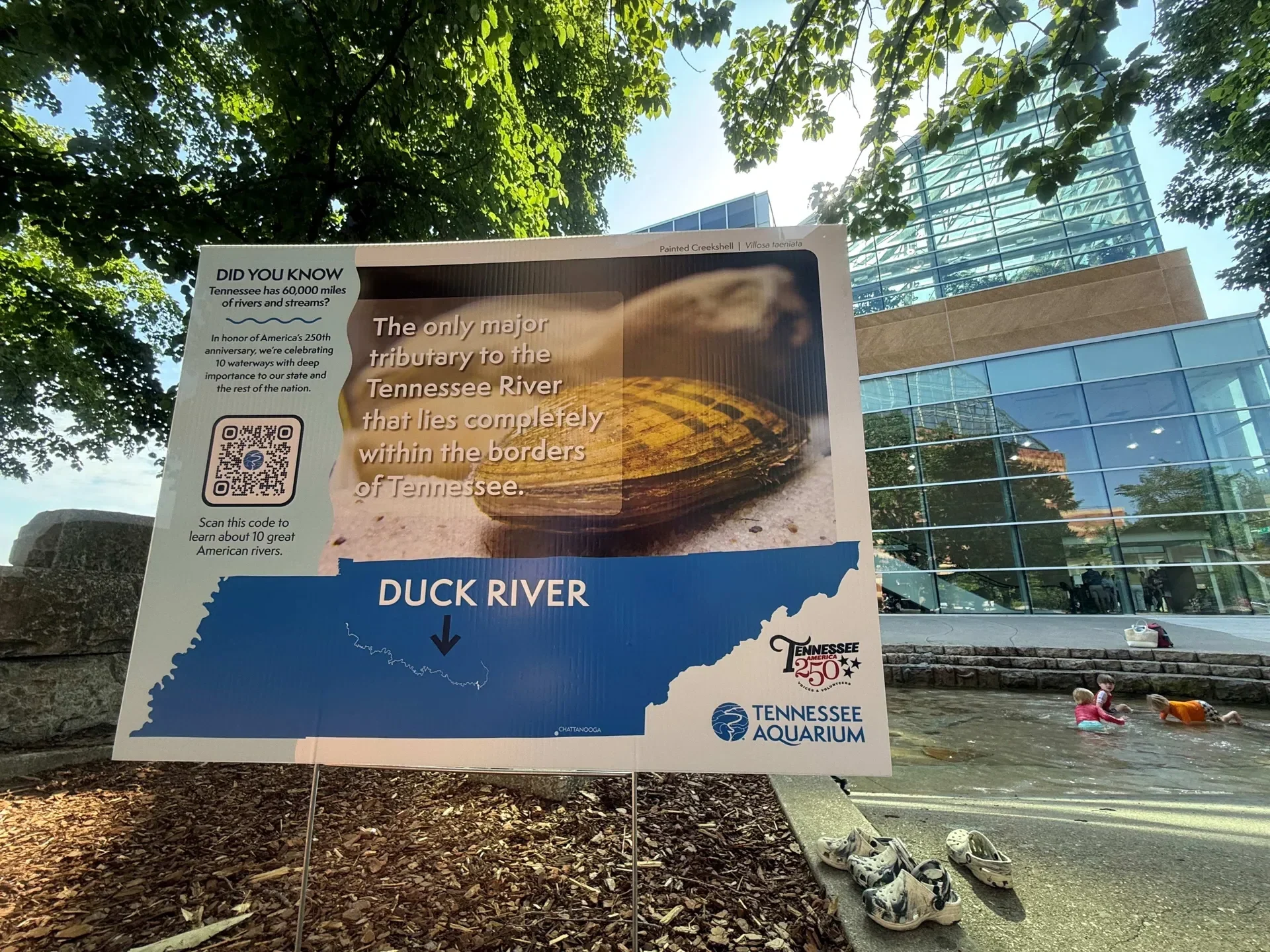
This week, as part of the nationwide celebration of America’s 250th anniversary, signs will be installed throughout the Aquarium Plaza highlighting amazing rivers that have guided the course of history in Tennessee and the rest of America.
Each sign profiles a Tennessee river, showing its course on a state map and quickly highlighting its most-distinctive feature. These waterways were selected by the Aquarium’s freshwater scientists for a variety of reasons, from historic and ecological significance to interesting geographic superlatives.
The selected rivers include:
- Tennessee River
- Mississippi River
- Cumberland River
- Hatchie River
- Conasauga River
- French Broad River
- Clinch River
- Big South Fork
- Duck River
- Buffalo River
The Plaza signs also feature scannable QR codes directing users to a feature on the Aquarium’s digital magazine, Riverwatch, that examines rivers’ significance to America throughout its 250-year history. From the industrial importance of the Ohio to the frontier-opening sprawl of the Missouri, these waterways shaped — and continue to shape — the United States as a whole. (Call it a symptom of state pride, but one waterway, the Tennessee River, made it onto both lists.)
Some of the impactful qualities for which each river was singled out may surprise visitors, even native Tennesseans who grew up next to and regularly drive over or fish on the chosen waterways.
For instance, did you realize the Conasauga contains more fish species, per mile, than any other North American river or that the French Broad is one of the oldest waterways on Earth? Did you know the Clinch River was once the epicenter of a booming freshwater pearl industry?
The signs will remain on the Aquarium Plaza through the end of July as part of the statewide Tennessee America 250 celebration. To learn more, visit tn250.com
To see the 10 Great American Rivers story on the Aquarium’s digital magazine, Riverwatch, visit tnaqua.org/currents/the-flow-of-history/